
Home
The History of Argentina: From Pre-Columbian To Present
Barnes and Noble
Loading Inventory...
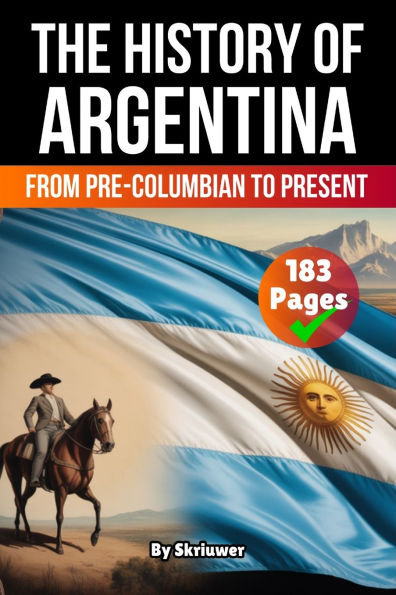
The History of Argentina: From Pre-Columbian To Present in Chattanooga, TN
Current price: $17.99
Barnes and Noble
The History of Argentina: From Pre-Columbian To Present in Chattanooga, TN
Current price: $17.99
Loading Inventory...
Size: OS
Argentina's Dynamic Past: From Ancient Roots to Modern Identity
"The History of Argentina" guides readers through a nation's journey of resilience, revolution, and cultural fusion, evoking the passion of independence fighters and the stakes of unity forged amid diverse landscapes and peoples. From pre-Columbian societies shaped by geography to 20th-century political shifts, this book captures the emotional depth of a land where indigenous legacies meet colonial transformations.
It opens with early inhabitants, exploring cultural diversity and rock art that reflect environmental influences on lifestyles. Spanish arrival brings expeditions and conflicts, founding Buenos Aires amid encomienda systems and missionary efforts.
Colonial growth unfolds under crown policies, with mercantilism and trade restrictions shaping elites. Buenos Aires rises as a port hub, blending settlers, indigenous groups, and enslaved Africans in evolving social classes.
Enlightenment ideas sow seeds of independence, fueling intellectual circles questioning rule. The May Revolution sparks wars, with heroes like Belgrano and San Martín driving patriotic campaigns toward national identity.
Civil strife pits federalists against unitarians, while Rosas's era centralizes power through reforms. Mid-19th-century state-building lays constitutional frameworks, as liberal age immigration spurs economic booms in agriculture and railways.
Political parties and social movements emerge, with radicalism and the Infamous Decade marking instability. Cultural changes thrive in tango, literature, and education, amid urbanization's societal norms.
The Perón era introduces populism and welfare, polarizing society. Military interventions oscillate power, while socioeconomic developments transform agriculture, industry, and cities.
Shifting identities shine in tango's global spread, influential writers, and sports passions. Late 20th-century tensions between democracy and dictatorship set stages for change, with reflections on legacies influencing present identity.
Comparable to Luis Alberto Romero's "A History of Argentina in the Twentieth Century," which delves into political intricacies with narrative flair, this volume aligns with 2025 trends in Latin American histories emphasizing cultural resilience and global ties. Its broad marketability appeals to travelers, students, and enthusiasts, promising steady sales for bookstores in history sections. By highlighting stakes like freedom amid division and progress through diversity, it connects readers to Argentina's enduring spirit, inspiring reflection on how past struggles shape today's world.
"The History of Argentina" guides readers through a nation's journey of resilience, revolution, and cultural fusion, evoking the passion of independence fighters and the stakes of unity forged amid diverse landscapes and peoples. From pre-Columbian societies shaped by geography to 20th-century political shifts, this book captures the emotional depth of a land where indigenous legacies meet colonial transformations.
It opens with early inhabitants, exploring cultural diversity and rock art that reflect environmental influences on lifestyles. Spanish arrival brings expeditions and conflicts, founding Buenos Aires amid encomienda systems and missionary efforts.
Colonial growth unfolds under crown policies, with mercantilism and trade restrictions shaping elites. Buenos Aires rises as a port hub, blending settlers, indigenous groups, and enslaved Africans in evolving social classes.
Enlightenment ideas sow seeds of independence, fueling intellectual circles questioning rule. The May Revolution sparks wars, with heroes like Belgrano and San Martín driving patriotic campaigns toward national identity.
Civil strife pits federalists against unitarians, while Rosas's era centralizes power through reforms. Mid-19th-century state-building lays constitutional frameworks, as liberal age immigration spurs economic booms in agriculture and railways.
Political parties and social movements emerge, with radicalism and the Infamous Decade marking instability. Cultural changes thrive in tango, literature, and education, amid urbanization's societal norms.
The Perón era introduces populism and welfare, polarizing society. Military interventions oscillate power, while socioeconomic developments transform agriculture, industry, and cities.
Shifting identities shine in tango's global spread, influential writers, and sports passions. Late 20th-century tensions between democracy and dictatorship set stages for change, with reflections on legacies influencing present identity.
Comparable to Luis Alberto Romero's "A History of Argentina in the Twentieth Century," which delves into political intricacies with narrative flair, this volume aligns with 2025 trends in Latin American histories emphasizing cultural resilience and global ties. Its broad marketability appeals to travelers, students, and enthusiasts, promising steady sales for bookstores in history sections. By highlighting stakes like freedom amid division and progress through diversity, it connects readers to Argentina's enduring spirit, inspiring reflection on how past struggles shape today's world.
Argentina's Dynamic Past: From Ancient Roots to Modern Identity
"The History of Argentina" guides readers through a nation's journey of resilience, revolution, and cultural fusion, evoking the passion of independence fighters and the stakes of unity forged amid diverse landscapes and peoples. From pre-Columbian societies shaped by geography to 20th-century political shifts, this book captures the emotional depth of a land where indigenous legacies meet colonial transformations.
It opens with early inhabitants, exploring cultural diversity and rock art that reflect environmental influences on lifestyles. Spanish arrival brings expeditions and conflicts, founding Buenos Aires amid encomienda systems and missionary efforts.
Colonial growth unfolds under crown policies, with mercantilism and trade restrictions shaping elites. Buenos Aires rises as a port hub, blending settlers, indigenous groups, and enslaved Africans in evolving social classes.
Enlightenment ideas sow seeds of independence, fueling intellectual circles questioning rule. The May Revolution sparks wars, with heroes like Belgrano and San Martín driving patriotic campaigns toward national identity.
Civil strife pits federalists against unitarians, while Rosas's era centralizes power through reforms. Mid-19th-century state-building lays constitutional frameworks, as liberal age immigration spurs economic booms in agriculture and railways.
Political parties and social movements emerge, with radicalism and the Infamous Decade marking instability. Cultural changes thrive in tango, literature, and education, amid urbanization's societal norms.
The Perón era introduces populism and welfare, polarizing society. Military interventions oscillate power, while socioeconomic developments transform agriculture, industry, and cities.
Shifting identities shine in tango's global spread, influential writers, and sports passions. Late 20th-century tensions between democracy and dictatorship set stages for change, with reflections on legacies influencing present identity.
Comparable to Luis Alberto Romero's "A History of Argentina in the Twentieth Century," which delves into political intricacies with narrative flair, this volume aligns with 2025 trends in Latin American histories emphasizing cultural resilience and global ties. Its broad marketability appeals to travelers, students, and enthusiasts, promising steady sales for bookstores in history sections. By highlighting stakes like freedom amid division and progress through diversity, it connects readers to Argentina's enduring spirit, inspiring reflection on how past struggles shape today's world.
"The History of Argentina" guides readers through a nation's journey of resilience, revolution, and cultural fusion, evoking the passion of independence fighters and the stakes of unity forged amid diverse landscapes and peoples. From pre-Columbian societies shaped by geography to 20th-century political shifts, this book captures the emotional depth of a land where indigenous legacies meet colonial transformations.
It opens with early inhabitants, exploring cultural diversity and rock art that reflect environmental influences on lifestyles. Spanish arrival brings expeditions and conflicts, founding Buenos Aires amid encomienda systems and missionary efforts.
Colonial growth unfolds under crown policies, with mercantilism and trade restrictions shaping elites. Buenos Aires rises as a port hub, blending settlers, indigenous groups, and enslaved Africans in evolving social classes.
Enlightenment ideas sow seeds of independence, fueling intellectual circles questioning rule. The May Revolution sparks wars, with heroes like Belgrano and San Martín driving patriotic campaigns toward national identity.
Civil strife pits federalists against unitarians, while Rosas's era centralizes power through reforms. Mid-19th-century state-building lays constitutional frameworks, as liberal age immigration spurs economic booms in agriculture and railways.
Political parties and social movements emerge, with radicalism and the Infamous Decade marking instability. Cultural changes thrive in tango, literature, and education, amid urbanization's societal norms.
The Perón era introduces populism and welfare, polarizing society. Military interventions oscillate power, while socioeconomic developments transform agriculture, industry, and cities.
Shifting identities shine in tango's global spread, influential writers, and sports passions. Late 20th-century tensions between democracy and dictatorship set stages for change, with reflections on legacies influencing present identity.
Comparable to Luis Alberto Romero's "A History of Argentina in the Twentieth Century," which delves into political intricacies with narrative flair, this volume aligns with 2025 trends in Latin American histories emphasizing cultural resilience and global ties. Its broad marketability appeals to travelers, students, and enthusiasts, promising steady sales for bookstores in history sections. By highlighting stakes like freedom amid division and progress through diversity, it connects readers to Argentina's enduring spirit, inspiring reflection on how past struggles shape today's world.
You May Also Like
















More About Barnes and Noble at Hamilton Place
Barnes & Noble is the world’s largest retail bookseller and a leading retailer of content, digital media and educational products. Our Nook Digital business offers a lineup of NOOK® tablets and e-Readers and an expansive collection of digital reading content through the NOOK Store®. Barnes & Noble’s mission is to operate the best omni-channel specialty retail business in America, helping both our customers and booksellers reach their aspirations, while being a credit to the communities we serve.
2100 Hamilton Pl Blvd, Chattanooga, TN 37421, United States
Find Barnes and Noble at Hamilton Place in Chattanooga, TN
Visit Barnes and Noble at Hamilton Place in Chattanooga, TN
