
Home
the Grove of Eumenides: Essays on Literature, Criticism, and Culture
Barnes and Noble
Loading Inventory...
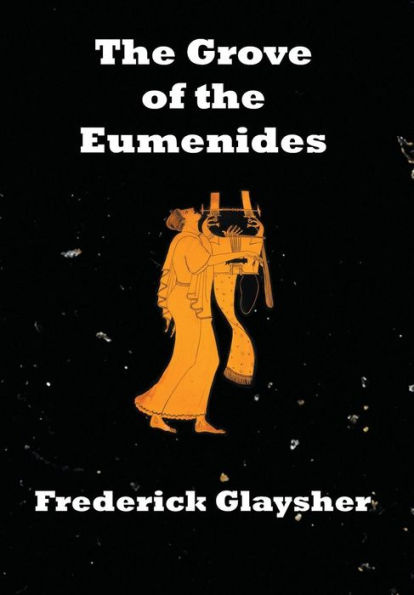
the Grove of Eumenides: Essays on Literature, Criticism, and Culture in Chattanooga, TN
Current price: $38.00
Barnes and Noble
the Grove of Eumenides: Essays on Literature, Criticism, and Culture in Chattanooga, TN
Current price: $38.00
Loading Inventory...
Size: Hardcover
From New Preface (April 4, 2015):
"All the essays in
The Grove of the Eumenides
were written after 1982 when I wrote my first draft of a plot outline for my epic poem
The Parliament of Poets
. These essays constitute and record mybackground study, as it were, over a period of more than twenty years, leading up to their publication in 2007..."
Twenty years in the making
, in
, Frederick Glaysher invokes a global vision beyond the prevailing postmodern conceptions of life and literature that have become firmly entrenched in contemporary world culture. East and West meet in a new synthesis of a global vision of humankind ranging over classic literature, ancient and modern, both Western and non-Western, from the dilemmas of modernity in Yeats, Eliot, Milosz, Bellow, Dostoevsky, to Lu Xun, Ryuichi Tamura, Kenzaburo Oe, Naguib Mahfouz, R. K. Narayan, among others, from mimesis and deconstruction to the United Nations, with extensive essays on Chinese, Japanese, and South-Asian literature.
Clearly the work of a poet-critic attempting to embrace a larger portion of human experience than the personal postmodern self,
reaches toward an epic vision of the twenty-first century. All the muck and glory of American and international experience and history mix in the complex tension of a mind struggling with itself and its Age. Acutely perceptive of the spiritual and moral nuances of literature, criticism, and culture, Glaysher confronts the loss of religious faith in the modern world and breaks through to a vision of the unity of the human longing for transcendence.
"All the essays in
The Grove of the Eumenides
were written after 1982 when I wrote my first draft of a plot outline for my epic poem
The Parliament of Poets
. These essays constitute and record mybackground study, as it were, over a period of more than twenty years, leading up to their publication in 2007..."
Twenty years in the making
, in
, Frederick Glaysher invokes a global vision beyond the prevailing postmodern conceptions of life and literature that have become firmly entrenched in contemporary world culture. East and West meet in a new synthesis of a global vision of humankind ranging over classic literature, ancient and modern, both Western and non-Western, from the dilemmas of modernity in Yeats, Eliot, Milosz, Bellow, Dostoevsky, to Lu Xun, Ryuichi Tamura, Kenzaburo Oe, Naguib Mahfouz, R. K. Narayan, among others, from mimesis and deconstruction to the United Nations, with extensive essays on Chinese, Japanese, and South-Asian literature.
Clearly the work of a poet-critic attempting to embrace a larger portion of human experience than the personal postmodern self,
reaches toward an epic vision of the twenty-first century. All the muck and glory of American and international experience and history mix in the complex tension of a mind struggling with itself and its Age. Acutely perceptive of the spiritual and moral nuances of literature, criticism, and culture, Glaysher confronts the loss of religious faith in the modern world and breaks through to a vision of the unity of the human longing for transcendence.
From New Preface (April 4, 2015):
"All the essays in
The Grove of the Eumenides
were written after 1982 when I wrote my first draft of a plot outline for my epic poem
The Parliament of Poets
. These essays constitute and record mybackground study, as it were, over a period of more than twenty years, leading up to their publication in 2007..."
Twenty years in the making
, in
, Frederick Glaysher invokes a global vision beyond the prevailing postmodern conceptions of life and literature that have become firmly entrenched in contemporary world culture. East and West meet in a new synthesis of a global vision of humankind ranging over classic literature, ancient and modern, both Western and non-Western, from the dilemmas of modernity in Yeats, Eliot, Milosz, Bellow, Dostoevsky, to Lu Xun, Ryuichi Tamura, Kenzaburo Oe, Naguib Mahfouz, R. K. Narayan, among others, from mimesis and deconstruction to the United Nations, with extensive essays on Chinese, Japanese, and South-Asian literature.
Clearly the work of a poet-critic attempting to embrace a larger portion of human experience than the personal postmodern self,
reaches toward an epic vision of the twenty-first century. All the muck and glory of American and international experience and history mix in the complex tension of a mind struggling with itself and its Age. Acutely perceptive of the spiritual and moral nuances of literature, criticism, and culture, Glaysher confronts the loss of religious faith in the modern world and breaks through to a vision of the unity of the human longing for transcendence.
"All the essays in
The Grove of the Eumenides
were written after 1982 when I wrote my first draft of a plot outline for my epic poem
The Parliament of Poets
. These essays constitute and record mybackground study, as it were, over a period of more than twenty years, leading up to their publication in 2007..."
Twenty years in the making
, in
, Frederick Glaysher invokes a global vision beyond the prevailing postmodern conceptions of life and literature that have become firmly entrenched in contemporary world culture. East and West meet in a new synthesis of a global vision of humankind ranging over classic literature, ancient and modern, both Western and non-Western, from the dilemmas of modernity in Yeats, Eliot, Milosz, Bellow, Dostoevsky, to Lu Xun, Ryuichi Tamura, Kenzaburo Oe, Naguib Mahfouz, R. K. Narayan, among others, from mimesis and deconstruction to the United Nations, with extensive essays on Chinese, Japanese, and South-Asian literature.
Clearly the work of a poet-critic attempting to embrace a larger portion of human experience than the personal postmodern self,
reaches toward an epic vision of the twenty-first century. All the muck and glory of American and international experience and history mix in the complex tension of a mind struggling with itself and its Age. Acutely perceptive of the spiritual and moral nuances of literature, criticism, and culture, Glaysher confronts the loss of religious faith in the modern world and breaks through to a vision of the unity of the human longing for transcendence.
You May Also Like










More About Barnes and Noble at Hamilton Place
Barnes & Noble is the world’s largest retail bookseller and a leading retailer of content, digital media and educational products. Our Nook Digital business offers a lineup of NOOK® tablets and e-Readers and an expansive collection of digital reading content through the NOOK Store®. Barnes & Noble’s mission is to operate the best omni-channel specialty retail business in America, helping both our customers and booksellers reach their aspirations, while being a credit to the communities we serve.
2100 Hamilton Pl Blvd, Chattanooga, TN 37421, United States
Find Barnes and Noble at Hamilton Place in Chattanooga, TN
Visit Barnes and Noble at Hamilton Place in Chattanooga, TN
