
Home
The Glory of Arthur: The Legendary King in Epic Poems of Layamon, Spenser and Blake
Barnes and Noble
Loading Inventory...
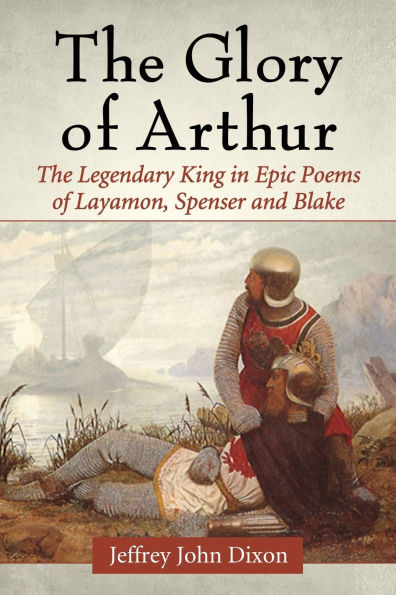
The Glory of Arthur: The Legendary King in Epic Poems of Layamon, Spenser and Blake in Chattanooga, TN
Current price: $19.99
Barnes and Noble
The Glory of Arthur: The Legendary King in Epic Poems of Layamon, Spenser and Blake in Chattanooga, TN
Current price: $19.99
Loading Inventory...
Size: OS
Starting with William Blake's lost painting
The Ancient Britons
, this book shows how the visionary artist and poet reworked the Matter of Britainthe corpus of legends presenting an alternative history of Britaininto his own mythology. He thus adds to a tradition of Arthurian epic begun by Layamon in the 13th century and continued by Edmund Spenser in the 16th, in which a Romano-Celtic warlord becomes an icon of the English imagination.
This book shows how Britain became the promised land of a pagan goddess where mythical events are as important as those of history, and how the figure of Arthur is transformed into a British Messiah whose Christian realm is in continuous interaction with the Otherworld of Faerie, an imagined place between the spiritual and the earthly. Arthur as perceived through Blake's vision is the earthly embodiment of the fallen Albion; this exploration of the mythic underpinnings of the English sense of nationhood reveals an imaginative consciousness that links us to "human existence itself."
The Ancient Britons
, this book shows how the visionary artist and poet reworked the Matter of Britainthe corpus of legends presenting an alternative history of Britaininto his own mythology. He thus adds to a tradition of Arthurian epic begun by Layamon in the 13th century and continued by Edmund Spenser in the 16th, in which a Romano-Celtic warlord becomes an icon of the English imagination.
This book shows how Britain became the promised land of a pagan goddess where mythical events are as important as those of history, and how the figure of Arthur is transformed into a British Messiah whose Christian realm is in continuous interaction with the Otherworld of Faerie, an imagined place between the spiritual and the earthly. Arthur as perceived through Blake's vision is the earthly embodiment of the fallen Albion; this exploration of the mythic underpinnings of the English sense of nationhood reveals an imaginative consciousness that links us to "human existence itself."
Starting with William Blake's lost painting
The Ancient Britons
, this book shows how the visionary artist and poet reworked the Matter of Britainthe corpus of legends presenting an alternative history of Britaininto his own mythology. He thus adds to a tradition of Arthurian epic begun by Layamon in the 13th century and continued by Edmund Spenser in the 16th, in which a Romano-Celtic warlord becomes an icon of the English imagination.
This book shows how Britain became the promised land of a pagan goddess where mythical events are as important as those of history, and how the figure of Arthur is transformed into a British Messiah whose Christian realm is in continuous interaction with the Otherworld of Faerie, an imagined place between the spiritual and the earthly. Arthur as perceived through Blake's vision is the earthly embodiment of the fallen Albion; this exploration of the mythic underpinnings of the English sense of nationhood reveals an imaginative consciousness that links us to "human existence itself."
The Ancient Britons
, this book shows how the visionary artist and poet reworked the Matter of Britainthe corpus of legends presenting an alternative history of Britaininto his own mythology. He thus adds to a tradition of Arthurian epic begun by Layamon in the 13th century and continued by Edmund Spenser in the 16th, in which a Romano-Celtic warlord becomes an icon of the English imagination.
This book shows how Britain became the promised land of a pagan goddess where mythical events are as important as those of history, and how the figure of Arthur is transformed into a British Messiah whose Christian realm is in continuous interaction with the Otherworld of Faerie, an imagined place between the spiritual and the earthly. Arthur as perceived through Blake's vision is the earthly embodiment of the fallen Albion; this exploration of the mythic underpinnings of the English sense of nationhood reveals an imaginative consciousness that links us to "human existence itself."
You May Also Like









More About Barnes and Noble at Hamilton Place
Barnes & Noble is the world’s largest retail bookseller and a leading retailer of content, digital media and educational products. Our Nook Digital business offers a lineup of NOOK® tablets and e-Readers and an expansive collection of digital reading content through the NOOK Store®. Barnes & Noble’s mission is to operate the best omni-channel specialty retail business in America, helping both our customers and booksellers reach their aspirations, while being a credit to the communities we serve.
2100 Hamilton Pl Blvd, Chattanooga, TN 37421, United States
Find Barnes and Noble at Hamilton Place in Chattanooga, TN
Visit Barnes and Noble at Hamilton Place in Chattanooga, TN
