
Home
The Girl from God's Country: Nell Shipman and the Silent Cinema
Barnes and Noble
Loading Inventory...
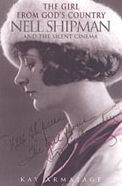
The Girl from God's Country: Nell Shipman and the Silent Cinema in Chattanooga, TN
Current price: $58.00
Barnes and Noble
The Girl from God's Country: Nell Shipman and the Silent Cinema in Chattanooga, TN
Current price: $58.00
Loading Inventory...
Size: OS
In
The Girl from God's Country
, Kay Armatage reintroduces film studies scholars to Nell Shipman, a pioneer in both Canadian and American film, and one of proportionately numerous women from Hollywood's silent era who wrote, directed, produced, and acted in motion pictures. Born and raised in British Columbia, Shipman became a contract actress for Vitagraph Studios, starring in
God's Country and the Woman
(1915) and
Back to God's Country
(1919), among other films. These action-packed adventure melodramas, in which the heroine is called upon to rescue her husband and defeat the villain, were immensely successful. Later, Shipman started up her own production company to make films centred on her screen persona, 'the girl from God’s country.' By the mid 1920s, however, the formation of the large Hollywood studios and vertical integration closed down the independents, Shipman among them. Nevertheless, she continued writing until her death in 1970.
Through the use of social history, feminist film theory, and biography, Armatage creates a portrait of a woman film pioneer. Using Shipman's working life as a window to the profession, Armatage explores the position of women in modernism, the developing film industry, and cinematic practice of the 1920s.
also contextualizes Shipman's work within the development of Hollywood as a locus of artistic production and in relation to women filmmakers from Europe, Australia, Russia and the United States. Armatage brings Shipman back to life in this important book.
The Girl from God's Country
, Kay Armatage reintroduces film studies scholars to Nell Shipman, a pioneer in both Canadian and American film, and one of proportionately numerous women from Hollywood's silent era who wrote, directed, produced, and acted in motion pictures. Born and raised in British Columbia, Shipman became a contract actress for Vitagraph Studios, starring in
God's Country and the Woman
(1915) and
Back to God's Country
(1919), among other films. These action-packed adventure melodramas, in which the heroine is called upon to rescue her husband and defeat the villain, were immensely successful. Later, Shipman started up her own production company to make films centred on her screen persona, 'the girl from God’s country.' By the mid 1920s, however, the formation of the large Hollywood studios and vertical integration closed down the independents, Shipman among them. Nevertheless, she continued writing until her death in 1970.
Through the use of social history, feminist film theory, and biography, Armatage creates a portrait of a woman film pioneer. Using Shipman's working life as a window to the profession, Armatage explores the position of women in modernism, the developing film industry, and cinematic practice of the 1920s.
also contextualizes Shipman's work within the development of Hollywood as a locus of artistic production and in relation to women filmmakers from Europe, Australia, Russia and the United States. Armatage brings Shipman back to life in this important book.
In
The Girl from God's Country
, Kay Armatage reintroduces film studies scholars to Nell Shipman, a pioneer in both Canadian and American film, and one of proportionately numerous women from Hollywood's silent era who wrote, directed, produced, and acted in motion pictures. Born and raised in British Columbia, Shipman became a contract actress for Vitagraph Studios, starring in
God's Country and the Woman
(1915) and
Back to God's Country
(1919), among other films. These action-packed adventure melodramas, in which the heroine is called upon to rescue her husband and defeat the villain, were immensely successful. Later, Shipman started up her own production company to make films centred on her screen persona, 'the girl from God’s country.' By the mid 1920s, however, the formation of the large Hollywood studios and vertical integration closed down the independents, Shipman among them. Nevertheless, she continued writing until her death in 1970.
Through the use of social history, feminist film theory, and biography, Armatage creates a portrait of a woman film pioneer. Using Shipman's working life as a window to the profession, Armatage explores the position of women in modernism, the developing film industry, and cinematic practice of the 1920s.
also contextualizes Shipman's work within the development of Hollywood as a locus of artistic production and in relation to women filmmakers from Europe, Australia, Russia and the United States. Armatage brings Shipman back to life in this important book.
The Girl from God's Country
, Kay Armatage reintroduces film studies scholars to Nell Shipman, a pioneer in both Canadian and American film, and one of proportionately numerous women from Hollywood's silent era who wrote, directed, produced, and acted in motion pictures. Born and raised in British Columbia, Shipman became a contract actress for Vitagraph Studios, starring in
God's Country and the Woman
(1915) and
Back to God's Country
(1919), among other films. These action-packed adventure melodramas, in which the heroine is called upon to rescue her husband and defeat the villain, were immensely successful. Later, Shipman started up her own production company to make films centred on her screen persona, 'the girl from God’s country.' By the mid 1920s, however, the formation of the large Hollywood studios and vertical integration closed down the independents, Shipman among them. Nevertheless, she continued writing until her death in 1970.
Through the use of social history, feminist film theory, and biography, Armatage creates a portrait of a woman film pioneer. Using Shipman's working life as a window to the profession, Armatage explores the position of women in modernism, the developing film industry, and cinematic practice of the 1920s.
also contextualizes Shipman's work within the development of Hollywood as a locus of artistic production and in relation to women filmmakers from Europe, Australia, Russia and the United States. Armatage brings Shipman back to life in this important book.
You May Also Like

















More About Barnes and Noble at Hamilton Place
Barnes & Noble is the world’s largest retail bookseller and a leading retailer of content, digital media and educational products. Our Nook Digital business offers a lineup of NOOK® tablets and e-Readers and an expansive collection of digital reading content through the NOOK Store®. Barnes & Noble’s mission is to operate the best omni-channel specialty retail business in America, helping both our customers and booksellers reach their aspirations, while being a credit to the communities we serve.
2100 Hamilton Pl Blvd, Chattanooga, TN 37421, United States
Find Barnes and Noble at Hamilton Place in Chattanooga, TN
Visit Barnes and Noble at Hamilton Place in Chattanooga, TN
