
Home
The Forger's Creed: Reinventing Art History Early Modern China
Barnes and Noble
Loading Inventory...
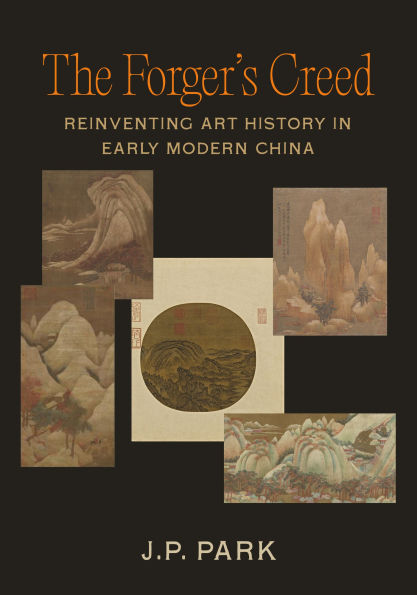
The Forger's Creed: Reinventing Art History Early Modern China in Chattanooga, TN
Current price: $49.95
Barnes and Noble
The Forger's Creed: Reinventing Art History Early Modern China in Chattanooga, TN
Current price: $49.95
Loading Inventory...
Size: Hardcover
The first in-depth look at the history and legacies of forgeries in Chinese art.
In 1634, scholar-official Zhang Taijie (b. ca. 1588) published a book titled
A Record of Treasured Paintings
(C. Baohui lu), presenting an extensive catalogue of a purportedly vast painting collection he claimed to have built. However, the entire book is Zhang's meticulously crafted forgery; he even forged paintings to match the documentation, and profited from trading them. Furthermore, the book intriguingly mirrors unfounded art-historical claims of its time. Prominent figures like Dong Qichang (1555–1636) made entirely fabricated arguments to assert legitimate lineages in Chinese art, designed to create a fictionalized history shaped by preferred beliefs rather than reality.
While presenting the first comprehensive exploration of various forgery practices in early modern China—fabricated texts, forged paintings, and fictitious art history—
The Forger's Creed
examines the cultural, social, and genealogical desires, anxieties, and tensions prevalent in early modern China. Through thorough scrutiny of the historical irregularities introduced by these forgeries, J. P. Park highlights a peculiar and paradoxical phenomenon wherein forgeries transform into legitimate materials across Chinese history.
In 1634, scholar-official Zhang Taijie (b. ca. 1588) published a book titled
A Record of Treasured Paintings
(C. Baohui lu), presenting an extensive catalogue of a purportedly vast painting collection he claimed to have built. However, the entire book is Zhang's meticulously crafted forgery; he even forged paintings to match the documentation, and profited from trading them. Furthermore, the book intriguingly mirrors unfounded art-historical claims of its time. Prominent figures like Dong Qichang (1555–1636) made entirely fabricated arguments to assert legitimate lineages in Chinese art, designed to create a fictionalized history shaped by preferred beliefs rather than reality.
While presenting the first comprehensive exploration of various forgery practices in early modern China—fabricated texts, forged paintings, and fictitious art history—
The Forger's Creed
examines the cultural, social, and genealogical desires, anxieties, and tensions prevalent in early modern China. Through thorough scrutiny of the historical irregularities introduced by these forgeries, J. P. Park highlights a peculiar and paradoxical phenomenon wherein forgeries transform into legitimate materials across Chinese history.
The first in-depth look at the history and legacies of forgeries in Chinese art.
In 1634, scholar-official Zhang Taijie (b. ca. 1588) published a book titled
A Record of Treasured Paintings
(C. Baohui lu), presenting an extensive catalogue of a purportedly vast painting collection he claimed to have built. However, the entire book is Zhang's meticulously crafted forgery; he even forged paintings to match the documentation, and profited from trading them. Furthermore, the book intriguingly mirrors unfounded art-historical claims of its time. Prominent figures like Dong Qichang (1555–1636) made entirely fabricated arguments to assert legitimate lineages in Chinese art, designed to create a fictionalized history shaped by preferred beliefs rather than reality.
While presenting the first comprehensive exploration of various forgery practices in early modern China—fabricated texts, forged paintings, and fictitious art history—
The Forger's Creed
examines the cultural, social, and genealogical desires, anxieties, and tensions prevalent in early modern China. Through thorough scrutiny of the historical irregularities introduced by these forgeries, J. P. Park highlights a peculiar and paradoxical phenomenon wherein forgeries transform into legitimate materials across Chinese history.
In 1634, scholar-official Zhang Taijie (b. ca. 1588) published a book titled
A Record of Treasured Paintings
(C. Baohui lu), presenting an extensive catalogue of a purportedly vast painting collection he claimed to have built. However, the entire book is Zhang's meticulously crafted forgery; he even forged paintings to match the documentation, and profited from trading them. Furthermore, the book intriguingly mirrors unfounded art-historical claims of its time. Prominent figures like Dong Qichang (1555–1636) made entirely fabricated arguments to assert legitimate lineages in Chinese art, designed to create a fictionalized history shaped by preferred beliefs rather than reality.
While presenting the first comprehensive exploration of various forgery practices in early modern China—fabricated texts, forged paintings, and fictitious art history—
The Forger's Creed
examines the cultural, social, and genealogical desires, anxieties, and tensions prevalent in early modern China. Through thorough scrutiny of the historical irregularities introduced by these forgeries, J. P. Park highlights a peculiar and paradoxical phenomenon wherein forgeries transform into legitimate materials across Chinese history.
You May Also Like










More About Barnes and Noble at Hamilton Place
Barnes & Noble is the world’s largest retail bookseller and a leading retailer of content, digital media and educational products. Our Nook Digital business offers a lineup of NOOK® tablets and e-Readers and an expansive collection of digital reading content through the NOOK Store®. Barnes & Noble’s mission is to operate the best omni-channel specialty retail business in America, helping both our customers and booksellers reach their aspirations, while being a credit to the communities we serve.
2100 Hamilton Pl Blvd, Chattanooga, TN 37421, United States
Find Barnes and Noble at Hamilton Place in Chattanooga, TN
Visit Barnes and Noble at Hamilton Place in Chattanooga, TN
