
Home
The First Era of Islamic Leadership: Unity to Civil War: Islamic Timeline 632- 661
Barnes and Noble
Loading Inventory...
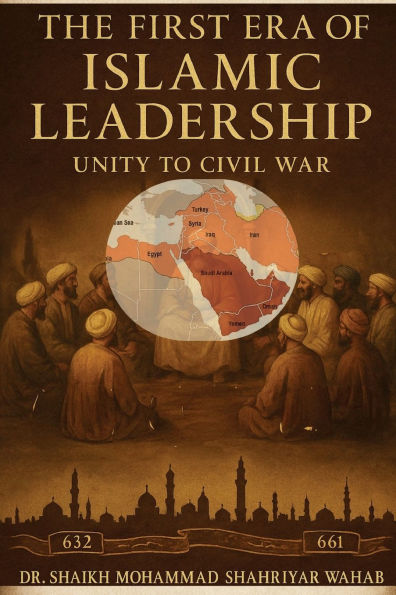
The First Era of Islamic Leadership: Unity to Civil War: Islamic Timeline 632- 661 in Chattanooga, TN
Current price: $20.00
Barnes and Noble
The First Era of Islamic Leadership: Unity to Civil War: Islamic Timeline 632- 661 in Chattanooga, TN
Current price: $20.00
Loading Inventory...
Size: OS
The Rashidun Caliphate, spanning a mere three decades, represents a crucial juncture in the history of Islam and the Middle East. Its legacy extends far beyond its relatively short duration, profoundly influencing the development of Islamic political thought, law, and culture. This period witnessed the remarkable expansion of the newly established Muslim community from the Arabian Peninsula to encompass vast swathes of the former Byzantine and Sasanian empires. This rapid expansion, however, was accompanied by internal challenges that tested the unity and stability of the burgeoning Caliphate.
The succession crises, the Ridda Wars, and the First Fitna contributed to the era's complexities. This book delves into these complexities and provides a detailed account of the reigns of each of the four caliphs.
We examine their leadership styles, administrative reforms, and military strategies, analysing their successes and failures. Each caliph faced unique challenges and made distinctive contributions to shaping the early Islamic state.
Abu Bakr(RA) consolidated power after the death of the Prophet Muhammad(PBUH), while Umar(RA) established a centralised administrative system and oversaw further military conquests. Uthman(RA)'s reign was marked by increasing political dissent, ultimately culminating in his assassination. Ali(RA)'s leadership was challenged by internal conflicts that led to the devastating First Fitna, a civil war that shattered the fragile unity of the Caliphate.
This book will also explore the social and economic structures of the time, illustrating the intricate relationships between different segments of the population and the challenges of governing such a rapidly expanding and diverse empire.
The analysis of the Rashidun Caliphate is not simply a historical exercise; it offers valuable insights into fundamental questions of leadership, governance, and the challenges of building and sustaining a multi-ethnic and multi-religious state.
The lessons learned from this pivotal era remain profoundly relevant to our understanding of political power, social cohesion, and the lasting legacy of historical events.
The succession crises, the Ridda Wars, and the First Fitna contributed to the era's complexities. This book delves into these complexities and provides a detailed account of the reigns of each of the four caliphs.
We examine their leadership styles, administrative reforms, and military strategies, analysing their successes and failures. Each caliph faced unique challenges and made distinctive contributions to shaping the early Islamic state.
Abu Bakr(RA) consolidated power after the death of the Prophet Muhammad(PBUH), while Umar(RA) established a centralised administrative system and oversaw further military conquests. Uthman(RA)'s reign was marked by increasing political dissent, ultimately culminating in his assassination. Ali(RA)'s leadership was challenged by internal conflicts that led to the devastating First Fitna, a civil war that shattered the fragile unity of the Caliphate.
This book will also explore the social and economic structures of the time, illustrating the intricate relationships between different segments of the population and the challenges of governing such a rapidly expanding and diverse empire.
The analysis of the Rashidun Caliphate is not simply a historical exercise; it offers valuable insights into fundamental questions of leadership, governance, and the challenges of building and sustaining a multi-ethnic and multi-religious state.
The lessons learned from this pivotal era remain profoundly relevant to our understanding of political power, social cohesion, and the lasting legacy of historical events.
The Rashidun Caliphate, spanning a mere three decades, represents a crucial juncture in the history of Islam and the Middle East. Its legacy extends far beyond its relatively short duration, profoundly influencing the development of Islamic political thought, law, and culture. This period witnessed the remarkable expansion of the newly established Muslim community from the Arabian Peninsula to encompass vast swathes of the former Byzantine and Sasanian empires. This rapid expansion, however, was accompanied by internal challenges that tested the unity and stability of the burgeoning Caliphate.
The succession crises, the Ridda Wars, and the First Fitna contributed to the era's complexities. This book delves into these complexities and provides a detailed account of the reigns of each of the four caliphs.
We examine their leadership styles, administrative reforms, and military strategies, analysing their successes and failures. Each caliph faced unique challenges and made distinctive contributions to shaping the early Islamic state.
Abu Bakr(RA) consolidated power after the death of the Prophet Muhammad(PBUH), while Umar(RA) established a centralised administrative system and oversaw further military conquests. Uthman(RA)'s reign was marked by increasing political dissent, ultimately culminating in his assassination. Ali(RA)'s leadership was challenged by internal conflicts that led to the devastating First Fitna, a civil war that shattered the fragile unity of the Caliphate.
This book will also explore the social and economic structures of the time, illustrating the intricate relationships between different segments of the population and the challenges of governing such a rapidly expanding and diverse empire.
The analysis of the Rashidun Caliphate is not simply a historical exercise; it offers valuable insights into fundamental questions of leadership, governance, and the challenges of building and sustaining a multi-ethnic and multi-religious state.
The lessons learned from this pivotal era remain profoundly relevant to our understanding of political power, social cohesion, and the lasting legacy of historical events.
The succession crises, the Ridda Wars, and the First Fitna contributed to the era's complexities. This book delves into these complexities and provides a detailed account of the reigns of each of the four caliphs.
We examine their leadership styles, administrative reforms, and military strategies, analysing their successes and failures. Each caliph faced unique challenges and made distinctive contributions to shaping the early Islamic state.
Abu Bakr(RA) consolidated power after the death of the Prophet Muhammad(PBUH), while Umar(RA) established a centralised administrative system and oversaw further military conquests. Uthman(RA)'s reign was marked by increasing political dissent, ultimately culminating in his assassination. Ali(RA)'s leadership was challenged by internal conflicts that led to the devastating First Fitna, a civil war that shattered the fragile unity of the Caliphate.
This book will also explore the social and economic structures of the time, illustrating the intricate relationships between different segments of the population and the challenges of governing such a rapidly expanding and diverse empire.
The analysis of the Rashidun Caliphate is not simply a historical exercise; it offers valuable insights into fundamental questions of leadership, governance, and the challenges of building and sustaining a multi-ethnic and multi-religious state.
The lessons learned from this pivotal era remain profoundly relevant to our understanding of political power, social cohesion, and the lasting legacy of historical events.
You May Also Like

















More About Barnes and Noble at Hamilton Place
Barnes & Noble is the world’s largest retail bookseller and a leading retailer of content, digital media and educational products. Our Nook Digital business offers a lineup of NOOK® tablets and e-Readers and an expansive collection of digital reading content through the NOOK Store®. Barnes & Noble’s mission is to operate the best omni-channel specialty retail business in America, helping both our customers and booksellers reach their aspirations, while being a credit to the communities we serve.
2100 Hamilton Pl Blvd, Chattanooga, TN 37421, United States
Find Barnes and Noble at Hamilton Place in Chattanooga, TN
Visit Barnes and Noble at Hamilton Place in Chattanooga, TN
