
Home
the Fauna and Geography of Maldive Laccadive Archipelagoes: Being Account Work Carried on Collections Made by an Expedition During Years 1899 1900
Barnes and Noble
Loading Inventory...
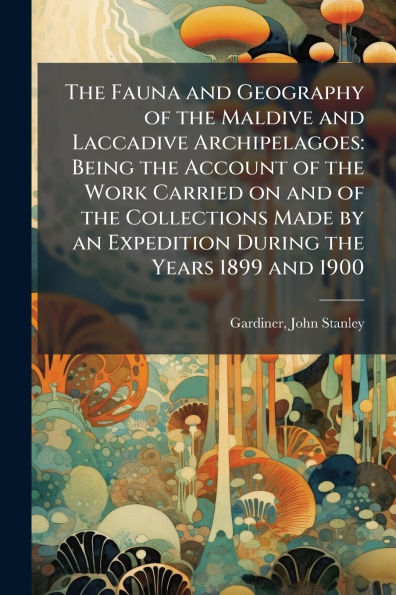
the Fauna and Geography of Maldive Laccadive Archipelagoes: Being Account Work Carried on Collections Made by an Expedition During Years 1899 1900 in Chattanooga, TN
Current price: $31.95
Barnes and Noble
the Fauna and Geography of Maldive Laccadive Archipelagoes: Being Account Work Carried on Collections Made by an Expedition During Years 1899 1900 in Chattanooga, TN
Current price: $31.95
Loading Inventory...
Size: Hardcover
The Fauna and Geography of the Maldive and Laccadive Archipelagoes
recounts the scientific expedition undertaken in 1899 and 1900 to study the biodiversity and physical geography of these island chains. Volume 2, part 3, details the comprehensive work carried out and the extensive collections made during the expedition. Authored by John Stanley Gardiner, a leading zoologist of his time, this work offers invaluable insights into the unique ecosystems of the Maldives and Laccadive Islands.
This detailed account covers a range of topics, providing a historical baseline for understanding the region's natural history. Researchers and enthusiasts interested in marine biology, zoology, and the geography of the Indian Ocean will find this volume an essential resource. The book stands as a testament to early scientific exploration and the enduring importance of documenting the world's biodiversity.
This work has been selected by scholars as being culturally important, and is part of the knowledge base of civilization as we know it. This work was reproduced from the original artifact, and remains as true to the original work as possible. Therefore, you will see the original copyright references, library stamps (as most of these works have been housed in our most important libraries around the world), and other notations in the work.
This work is in the public domain in the United States of America, and possibly other nations. Within the United States, you may freely copy and distribute this work, as no entity (individual or corporate) has a copyright on the body of the work.
As a reproduction of a historical artifact, this work may contain missing or blurred pages, poor pictures, errant marks, etc. Scholars believe, and we concur, that this work is important enough to be preserved, reproduced, and made generally available to the public. We appreciate your support of the preservation process, and thank you for being an important part of keeping this knowledge alive and relevant.
recounts the scientific expedition undertaken in 1899 and 1900 to study the biodiversity and physical geography of these island chains. Volume 2, part 3, details the comprehensive work carried out and the extensive collections made during the expedition. Authored by John Stanley Gardiner, a leading zoologist of his time, this work offers invaluable insights into the unique ecosystems of the Maldives and Laccadive Islands.
This detailed account covers a range of topics, providing a historical baseline for understanding the region's natural history. Researchers and enthusiasts interested in marine biology, zoology, and the geography of the Indian Ocean will find this volume an essential resource. The book stands as a testament to early scientific exploration and the enduring importance of documenting the world's biodiversity.
This work has been selected by scholars as being culturally important, and is part of the knowledge base of civilization as we know it. This work was reproduced from the original artifact, and remains as true to the original work as possible. Therefore, you will see the original copyright references, library stamps (as most of these works have been housed in our most important libraries around the world), and other notations in the work.
This work is in the public domain in the United States of America, and possibly other nations. Within the United States, you may freely copy and distribute this work, as no entity (individual or corporate) has a copyright on the body of the work.
As a reproduction of a historical artifact, this work may contain missing or blurred pages, poor pictures, errant marks, etc. Scholars believe, and we concur, that this work is important enough to be preserved, reproduced, and made generally available to the public. We appreciate your support of the preservation process, and thank you for being an important part of keeping this knowledge alive and relevant.
The Fauna and Geography of the Maldive and Laccadive Archipelagoes
recounts the scientific expedition undertaken in 1899 and 1900 to study the biodiversity and physical geography of these island chains. Volume 2, part 3, details the comprehensive work carried out and the extensive collections made during the expedition. Authored by John Stanley Gardiner, a leading zoologist of his time, this work offers invaluable insights into the unique ecosystems of the Maldives and Laccadive Islands.
This detailed account covers a range of topics, providing a historical baseline for understanding the region's natural history. Researchers and enthusiasts interested in marine biology, zoology, and the geography of the Indian Ocean will find this volume an essential resource. The book stands as a testament to early scientific exploration and the enduring importance of documenting the world's biodiversity.
This work has been selected by scholars as being culturally important, and is part of the knowledge base of civilization as we know it. This work was reproduced from the original artifact, and remains as true to the original work as possible. Therefore, you will see the original copyright references, library stamps (as most of these works have been housed in our most important libraries around the world), and other notations in the work.
This work is in the public domain in the United States of America, and possibly other nations. Within the United States, you may freely copy and distribute this work, as no entity (individual or corporate) has a copyright on the body of the work.
As a reproduction of a historical artifact, this work may contain missing or blurred pages, poor pictures, errant marks, etc. Scholars believe, and we concur, that this work is important enough to be preserved, reproduced, and made generally available to the public. We appreciate your support of the preservation process, and thank you for being an important part of keeping this knowledge alive and relevant.
recounts the scientific expedition undertaken in 1899 and 1900 to study the biodiversity and physical geography of these island chains. Volume 2, part 3, details the comprehensive work carried out and the extensive collections made during the expedition. Authored by John Stanley Gardiner, a leading zoologist of his time, this work offers invaluable insights into the unique ecosystems of the Maldives and Laccadive Islands.
This detailed account covers a range of topics, providing a historical baseline for understanding the region's natural history. Researchers and enthusiasts interested in marine biology, zoology, and the geography of the Indian Ocean will find this volume an essential resource. The book stands as a testament to early scientific exploration and the enduring importance of documenting the world's biodiversity.
This work has been selected by scholars as being culturally important, and is part of the knowledge base of civilization as we know it. This work was reproduced from the original artifact, and remains as true to the original work as possible. Therefore, you will see the original copyright references, library stamps (as most of these works have been housed in our most important libraries around the world), and other notations in the work.
This work is in the public domain in the United States of America, and possibly other nations. Within the United States, you may freely copy and distribute this work, as no entity (individual or corporate) has a copyright on the body of the work.
As a reproduction of a historical artifact, this work may contain missing or blurred pages, poor pictures, errant marks, etc. Scholars believe, and we concur, that this work is important enough to be preserved, reproduced, and made generally available to the public. We appreciate your support of the preservation process, and thank you for being an important part of keeping this knowledge alive and relevant.
You May Also Like

















More About Barnes and Noble at Hamilton Place
Barnes & Noble is the world’s largest retail bookseller and a leading retailer of content, digital media and educational products. Our Nook Digital business offers a lineup of NOOK® tablets and e-Readers and an expansive collection of digital reading content through the NOOK Store®. Barnes & Noble’s mission is to operate the best omni-channel specialty retail business in America, helping both our customers and booksellers reach their aspirations, while being a credit to the communities we serve.
2100 Hamilton Pl Blvd, Chattanooga, TN 37421, United States
Find Barnes and Noble at Hamilton Place in Chattanooga, TN
Visit Barnes and Noble at Hamilton Place in Chattanooga, TN
