
Home
The Epic Mirror: Poetry, Conflict Ethics and Political Community in Colonial Peru
Barnes and Noble
Loading Inventory...
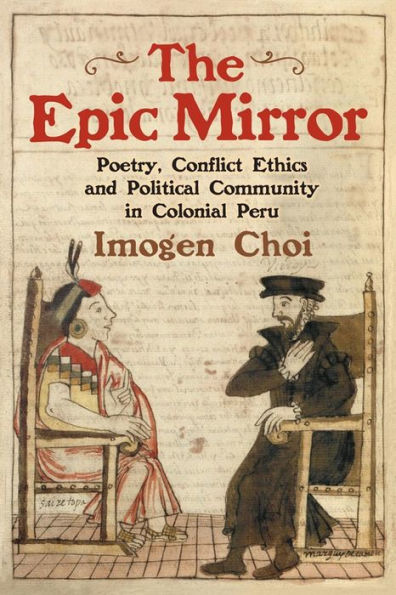
The Epic Mirror: Poetry, Conflict Ethics and Political Community in Colonial Peru in Chattanooga, TN
Current price: $110.00
Barnes and Noble
The Epic Mirror: Poetry, Conflict Ethics and Political Community in Colonial Peru in Chattanooga, TN
Current price: $110.00
Loading Inventory...
Size: OS
How did SpanishAmerican writers and veterans in the late sixteenth and early seventeenth century use epic poetry to search for ethical solutions to the violent conflicts of their age?
Winner of the 201718 AHGBISpanish Embassy Publication Prize
The Epic Mirror
studies how SpanishAmerican writers and veterans in the late sixteenth and early seventeenth century used epic poetry to search for ethical solutions to the violent conflicts of their age. The wars about which they wrote took place at the frontiers of the Spanish empire, where new political communities were emerging: fiercely independent Amerindian republics, rebellious Spanish settlers, maroon kingdoms of fugitive African slaves. This colonial reality generated a distinctive vision of just warfare and political community.
Working across the fields of Hispanic literature, the history of political thought, and studies of empire, colonialism and globalisation, Choi reinterprets three major works of colonial Latin American literature: Alonso de Ercilla's
La Araucana
(156990), Pedro de Oña's
Arauco domado
(1596), and Juan de Miramontes Zuázola's
Armas antárticas
(16089). She argues that these works provide a rare insight into the development of political thought in Viceregal Peru. Through the imaginative mirrors of epic, the reader is forced to ask the same questions of the unfinished conquests of the Americas as of those in Africa, Asia or Europe: when conflicting forces are divided by irreconcilable world views, even if the war is won, how is it possible to achieve peace?
Winner of the 201718 AHGBISpanish Embassy Publication Prize
The Epic Mirror
studies how SpanishAmerican writers and veterans in the late sixteenth and early seventeenth century used epic poetry to search for ethical solutions to the violent conflicts of their age. The wars about which they wrote took place at the frontiers of the Spanish empire, where new political communities were emerging: fiercely independent Amerindian republics, rebellious Spanish settlers, maroon kingdoms of fugitive African slaves. This colonial reality generated a distinctive vision of just warfare and political community.
Working across the fields of Hispanic literature, the history of political thought, and studies of empire, colonialism and globalisation, Choi reinterprets three major works of colonial Latin American literature: Alonso de Ercilla's
La Araucana
(156990), Pedro de Oña's
Arauco domado
(1596), and Juan de Miramontes Zuázola's
Armas antárticas
(16089). She argues that these works provide a rare insight into the development of political thought in Viceregal Peru. Through the imaginative mirrors of epic, the reader is forced to ask the same questions of the unfinished conquests of the Americas as of those in Africa, Asia or Europe: when conflicting forces are divided by irreconcilable world views, even if the war is won, how is it possible to achieve peace?
How did SpanishAmerican writers and veterans in the late sixteenth and early seventeenth century use epic poetry to search for ethical solutions to the violent conflicts of their age?
Winner of the 201718 AHGBISpanish Embassy Publication Prize
The Epic Mirror
studies how SpanishAmerican writers and veterans in the late sixteenth and early seventeenth century used epic poetry to search for ethical solutions to the violent conflicts of their age. The wars about which they wrote took place at the frontiers of the Spanish empire, where new political communities were emerging: fiercely independent Amerindian republics, rebellious Spanish settlers, maroon kingdoms of fugitive African slaves. This colonial reality generated a distinctive vision of just warfare and political community.
Working across the fields of Hispanic literature, the history of political thought, and studies of empire, colonialism and globalisation, Choi reinterprets three major works of colonial Latin American literature: Alonso de Ercilla's
La Araucana
(156990), Pedro de Oña's
Arauco domado
(1596), and Juan de Miramontes Zuázola's
Armas antárticas
(16089). She argues that these works provide a rare insight into the development of political thought in Viceregal Peru. Through the imaginative mirrors of epic, the reader is forced to ask the same questions of the unfinished conquests of the Americas as of those in Africa, Asia or Europe: when conflicting forces are divided by irreconcilable world views, even if the war is won, how is it possible to achieve peace?
Winner of the 201718 AHGBISpanish Embassy Publication Prize
The Epic Mirror
studies how SpanishAmerican writers and veterans in the late sixteenth and early seventeenth century used epic poetry to search for ethical solutions to the violent conflicts of their age. The wars about which they wrote took place at the frontiers of the Spanish empire, where new political communities were emerging: fiercely independent Amerindian republics, rebellious Spanish settlers, maroon kingdoms of fugitive African slaves. This colonial reality generated a distinctive vision of just warfare and political community.
Working across the fields of Hispanic literature, the history of political thought, and studies of empire, colonialism and globalisation, Choi reinterprets three major works of colonial Latin American literature: Alonso de Ercilla's
La Araucana
(156990), Pedro de Oña's
Arauco domado
(1596), and Juan de Miramontes Zuázola's
Armas antárticas
(16089). She argues that these works provide a rare insight into the development of political thought in Viceregal Peru. Through the imaginative mirrors of epic, the reader is forced to ask the same questions of the unfinished conquests of the Americas as of those in Africa, Asia or Europe: when conflicting forces are divided by irreconcilable world views, even if the war is won, how is it possible to achieve peace?
You May Also Like











More About Barnes and Noble at Hamilton Place
Barnes & Noble is the world’s largest retail bookseller and a leading retailer of content, digital media and educational products. Our Nook Digital business offers a lineup of NOOK® tablets and e-Readers and an expansive collection of digital reading content through the NOOK Store®. Barnes & Noble’s mission is to operate the best omni-channel specialty retail business in America, helping both our customers and booksellers reach their aspirations, while being a credit to the communities we serve.
2100 Hamilton Pl Blvd, Chattanooga, TN 37421, United States
Find Barnes and Noble at Hamilton Place in Chattanooga, TN
Visit Barnes and Noble at Hamilton Place in Chattanooga, TN
