
Home
the Enduring Legacies of Global Financial Crisis East Asia: A Quiet Transformation
Barnes and Noble
Loading Inventory...
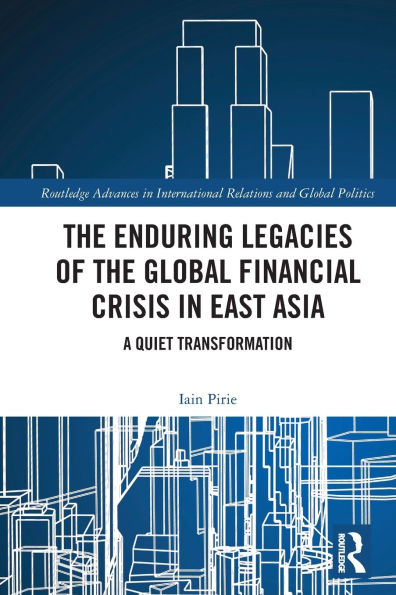
the Enduring Legacies of Global Financial Crisis East Asia: A Quiet Transformation in Chattanooga, TN
Current price: $190.00
Barnes and Noble
the Enduring Legacies of Global Financial Crisis East Asia: A Quiet Transformation in Chattanooga, TN
Current price: $190.00
Loading Inventory...
Size: Hardcover
The Enduring Legacies of the Global Financial Crisis in East Asia
challenges the assumption that the global financial crisis had a limited structural impact on East Asian political economies, arguing that the crisis has led to a significant, if uneven, reorganization of major national political economies within the region where, in response to the crisis, states have promoted domestic processes of financialization as a means of stimulating their economies.
The major East Asian economies, bar Japan, enjoyed strong recoveries from the 2008–2009 financial crisis. However, this success has been achieved by promoting domestic processes of financialization to maintain demand – more precisely, the rapid build-up of household debt (Malaysia, Korea, Taiwan, China) and asset price bubbles (China, Japan). In short, East Asia has employed precisely those practices that the global financial crisis itself illustrated the unsustainability of, to maintain growth. Using a post-Keynesian framework, the book argues that the dependency on these forms of financialization to support demand is a direct product of a failure to address the issue of inequality. High levels of inequality slow the growth of non-debt-based domestic consumption. An alternative approach to supporting demand in the post-crisis period would need to focus on progressive redistribution through strengthening of labour rights and systems of social support, which would directly challenge the interests of economic and political elites. The structural vulnerabilities that accelerated financialization is creating in East Asia demonstrate the necessity of a post-Keynesian growth strategy based on redistribution and curbing financialization. The book also argues that in certain Northeast Asian economies the crisis has led to a consolidation of systems of industrial activism/state control, which could have occurred without accelerated financialization, and vice versa.
This book will be of great interest to students and scholars of political economy and Asian studies.
challenges the assumption that the global financial crisis had a limited structural impact on East Asian political economies, arguing that the crisis has led to a significant, if uneven, reorganization of major national political economies within the region where, in response to the crisis, states have promoted domestic processes of financialization as a means of stimulating their economies.
The major East Asian economies, bar Japan, enjoyed strong recoveries from the 2008–2009 financial crisis. However, this success has been achieved by promoting domestic processes of financialization to maintain demand – more precisely, the rapid build-up of household debt (Malaysia, Korea, Taiwan, China) and asset price bubbles (China, Japan). In short, East Asia has employed precisely those practices that the global financial crisis itself illustrated the unsustainability of, to maintain growth. Using a post-Keynesian framework, the book argues that the dependency on these forms of financialization to support demand is a direct product of a failure to address the issue of inequality. High levels of inequality slow the growth of non-debt-based domestic consumption. An alternative approach to supporting demand in the post-crisis period would need to focus on progressive redistribution through strengthening of labour rights and systems of social support, which would directly challenge the interests of economic and political elites. The structural vulnerabilities that accelerated financialization is creating in East Asia demonstrate the necessity of a post-Keynesian growth strategy based on redistribution and curbing financialization. The book also argues that in certain Northeast Asian economies the crisis has led to a consolidation of systems of industrial activism/state control, which could have occurred without accelerated financialization, and vice versa.
This book will be of great interest to students and scholars of political economy and Asian studies.
The Enduring Legacies of the Global Financial Crisis in East Asia
challenges the assumption that the global financial crisis had a limited structural impact on East Asian political economies, arguing that the crisis has led to a significant, if uneven, reorganization of major national political economies within the region where, in response to the crisis, states have promoted domestic processes of financialization as a means of stimulating their economies.
The major East Asian economies, bar Japan, enjoyed strong recoveries from the 2008–2009 financial crisis. However, this success has been achieved by promoting domestic processes of financialization to maintain demand – more precisely, the rapid build-up of household debt (Malaysia, Korea, Taiwan, China) and asset price bubbles (China, Japan). In short, East Asia has employed precisely those practices that the global financial crisis itself illustrated the unsustainability of, to maintain growth. Using a post-Keynesian framework, the book argues that the dependency on these forms of financialization to support demand is a direct product of a failure to address the issue of inequality. High levels of inequality slow the growth of non-debt-based domestic consumption. An alternative approach to supporting demand in the post-crisis period would need to focus on progressive redistribution through strengthening of labour rights and systems of social support, which would directly challenge the interests of economic and political elites. The structural vulnerabilities that accelerated financialization is creating in East Asia demonstrate the necessity of a post-Keynesian growth strategy based on redistribution and curbing financialization. The book also argues that in certain Northeast Asian economies the crisis has led to a consolidation of systems of industrial activism/state control, which could have occurred without accelerated financialization, and vice versa.
This book will be of great interest to students and scholars of political economy and Asian studies.
challenges the assumption that the global financial crisis had a limited structural impact on East Asian political economies, arguing that the crisis has led to a significant, if uneven, reorganization of major national political economies within the region where, in response to the crisis, states have promoted domestic processes of financialization as a means of stimulating their economies.
The major East Asian economies, bar Japan, enjoyed strong recoveries from the 2008–2009 financial crisis. However, this success has been achieved by promoting domestic processes of financialization to maintain demand – more precisely, the rapid build-up of household debt (Malaysia, Korea, Taiwan, China) and asset price bubbles (China, Japan). In short, East Asia has employed precisely those practices that the global financial crisis itself illustrated the unsustainability of, to maintain growth. Using a post-Keynesian framework, the book argues that the dependency on these forms of financialization to support demand is a direct product of a failure to address the issue of inequality. High levels of inequality slow the growth of non-debt-based domestic consumption. An alternative approach to supporting demand in the post-crisis period would need to focus on progressive redistribution through strengthening of labour rights and systems of social support, which would directly challenge the interests of economic and political elites. The structural vulnerabilities that accelerated financialization is creating in East Asia demonstrate the necessity of a post-Keynesian growth strategy based on redistribution and curbing financialization. The book also argues that in certain Northeast Asian economies the crisis has led to a consolidation of systems of industrial activism/state control, which could have occurred without accelerated financialization, and vice versa.
This book will be of great interest to students and scholars of political economy and Asian studies.
You May Also Like











More About Barnes and Noble at Hamilton Place
Barnes & Noble is the world’s largest retail bookseller and a leading retailer of content, digital media and educational products. Our Nook Digital business offers a lineup of NOOK® tablets and e-Readers and an expansive collection of digital reading content through the NOOK Store®. Barnes & Noble’s mission is to operate the best omni-channel specialty retail business in America, helping both our customers and booksellers reach their aspirations, while being a credit to the communities we serve.
2100 Hamilton Pl Blvd, Chattanooga, TN 37421, United States
Find Barnes and Noble at Hamilton Place in Chattanooga, TN
Visit Barnes and Noble at Hamilton Place in Chattanooga, TN
