
Home
The Empire Remains Shop
Barnes and Noble
Loading Inventory...
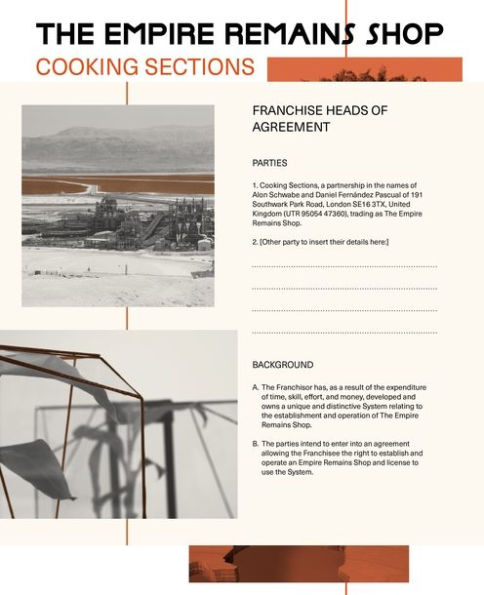
The Empire Remains Shop in Chattanooga, TN
Current price: $32.00
Barnes and Noble
The Empire Remains Shop in Chattanooga, TN
Current price: $32.00
Loading Inventory...
Size: OS
"Empire shops" were first developed in London in the 1920s to teach the British to consume foodstuffs from the colonies and overseas territories. Although none of the stores ever opened, they were intended to make previously unfamiliar produce and products—sultanas from Australia, oranges from Palestine, cloves from Zanzibar, and rum from Jamaica—available in the British Isles.
The Empire Remains Shop
speculates on the possibility and implications of selling back the remains of the British Empire in London today.
Based on a public installation in London in the fall of 2016, the book catalogues and develops the installation's critical program of discussions, performances, dinners, installations, and screenings hosted at 91–93 Baker Street. The pieces in this book use food to trace new geographies across the present and future of our postcolonial planet. Structured as a franchise agreement,
lays out some of the landscapes, imaginaries, economies, and aesthetics that future iterations of the shop would need to address in order to think through political counterstructures for a better distributed, hyper-globalized world.
The Empire Remains Shop
speculates on the possibility and implications of selling back the remains of the British Empire in London today.
Based on a public installation in London in the fall of 2016, the book catalogues and develops the installation's critical program of discussions, performances, dinners, installations, and screenings hosted at 91–93 Baker Street. The pieces in this book use food to trace new geographies across the present and future of our postcolonial planet. Structured as a franchise agreement,
lays out some of the landscapes, imaginaries, economies, and aesthetics that future iterations of the shop would need to address in order to think through political counterstructures for a better distributed, hyper-globalized world.
"Empire shops" were first developed in London in the 1920s to teach the British to consume foodstuffs from the colonies and overseas territories. Although none of the stores ever opened, they were intended to make previously unfamiliar produce and products—sultanas from Australia, oranges from Palestine, cloves from Zanzibar, and rum from Jamaica—available in the British Isles.
The Empire Remains Shop
speculates on the possibility and implications of selling back the remains of the British Empire in London today.
Based on a public installation in London in the fall of 2016, the book catalogues and develops the installation's critical program of discussions, performances, dinners, installations, and screenings hosted at 91–93 Baker Street. The pieces in this book use food to trace new geographies across the present and future of our postcolonial planet. Structured as a franchise agreement,
lays out some of the landscapes, imaginaries, economies, and aesthetics that future iterations of the shop would need to address in order to think through political counterstructures for a better distributed, hyper-globalized world.
The Empire Remains Shop
speculates on the possibility and implications of selling back the remains of the British Empire in London today.
Based on a public installation in London in the fall of 2016, the book catalogues and develops the installation's critical program of discussions, performances, dinners, installations, and screenings hosted at 91–93 Baker Street. The pieces in this book use food to trace new geographies across the present and future of our postcolonial planet. Structured as a franchise agreement,
lays out some of the landscapes, imaginaries, economies, and aesthetics that future iterations of the shop would need to address in order to think through political counterstructures for a better distributed, hyper-globalized world.
You May Also Like









More About Barnes and Noble at Hamilton Place
Barnes & Noble is the world’s largest retail bookseller and a leading retailer of content, digital media and educational products. Our Nook Digital business offers a lineup of NOOK® tablets and e-Readers and an expansive collection of digital reading content through the NOOK Store®. Barnes & Noble’s mission is to operate the best omni-channel specialty retail business in America, helping both our customers and booksellers reach their aspirations, while being a credit to the communities we serve.
2100 Hamilton Pl Blvd, Chattanooga, TN 37421, United States
Find Barnes and Noble at Hamilton Place in Chattanooga, TN
Visit Barnes and Noble at Hamilton Place in Chattanooga, TN