
Home
The Dead: A Novel
Barnes and Noble
Loading Inventory...
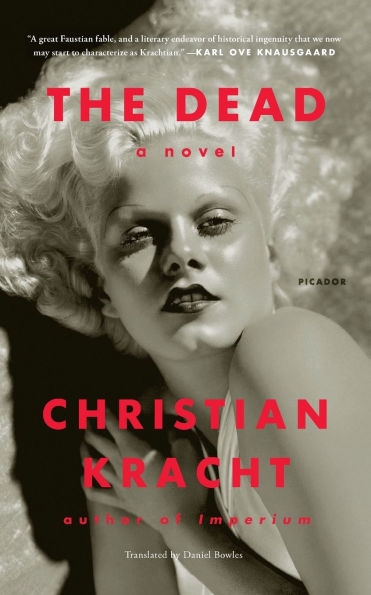
The Dead: A Novel in Chattanooga, TN
Current price: $12.99
Barnes and Noble
The Dead: A Novel in Chattanooga, TN
Current price: $12.99
Loading Inventory...
Size: Audiobook
“A great Faustian fable, and a literary endeavor of historical ingenuity that we now may start to characterize as Krachtian.” —Karl Ove Knausgaard
The follow-up to Christian Kracht's acclaimed novel
Imperium
(a
Publishers Weekly
Best Book of the Year),
The Dead
mines the feverish early years of the Nazis' rise to power for a Gothic tale of global conspiracy, personal loss, and historical entanglements large and small.
In Berlin, Germany, in the early 1930s, the acclaimed Swiss film director Emil Nägeli receives the assignment of a lifetime: travel to Japan and make a film to establish the dominance of Adolf Hitler’s Nazi empire once and for all. But his handlers are unaware that Nägeli has colluded with the Jewish film critics to pursue an alternative objective—to create a monumental, modernist, allegorical spectacle to warn the world of the horror to come.
Meanwhile, in Japan, the film minister Masahiko Amakasu intends to counter Hollywood’s growing influence and usher in a new golden age of Japanese cinema by exploiting his Swiss visitor. The arrival of Nägeli’s film-star fiancée and a strangely thuggish, pistol-packing Charlie Chaplin—as well as the first stirrings of the winds of war—soon complicates both Amakasu’s and Nägeli’s plans, forcing them to face their demons . . . and their doom.
"
is the beautiful, brilliant, and utterly mad novel that Thomas Mann would have written had he known the East like Yukio Mishima and loved his adopted Hollywood with the gusto of Nathanael West." —Joshua Cohen
is a story of love and sadness in times when the weak were broken by the unforgiving ideologies of fascism and National Socialism . . . I read
twice in a row, first for the story and then for the beauty of the prose." —Sjón
The follow-up to Christian Kracht's acclaimed novel
Imperium
(a
Publishers Weekly
Best Book of the Year),
The Dead
mines the feverish early years of the Nazis' rise to power for a Gothic tale of global conspiracy, personal loss, and historical entanglements large and small.
In Berlin, Germany, in the early 1930s, the acclaimed Swiss film director Emil Nägeli receives the assignment of a lifetime: travel to Japan and make a film to establish the dominance of Adolf Hitler’s Nazi empire once and for all. But his handlers are unaware that Nägeli has colluded with the Jewish film critics to pursue an alternative objective—to create a monumental, modernist, allegorical spectacle to warn the world of the horror to come.
Meanwhile, in Japan, the film minister Masahiko Amakasu intends to counter Hollywood’s growing influence and usher in a new golden age of Japanese cinema by exploiting his Swiss visitor. The arrival of Nägeli’s film-star fiancée and a strangely thuggish, pistol-packing Charlie Chaplin—as well as the first stirrings of the winds of war—soon complicates both Amakasu’s and Nägeli’s plans, forcing them to face their demons . . . and their doom.
"
is the beautiful, brilliant, and utterly mad novel that Thomas Mann would have written had he known the East like Yukio Mishima and loved his adopted Hollywood with the gusto of Nathanael West." —Joshua Cohen
is a story of love and sadness in times when the weak were broken by the unforgiving ideologies of fascism and National Socialism . . . I read
twice in a row, first for the story and then for the beauty of the prose." —Sjón
“A great Faustian fable, and a literary endeavor of historical ingenuity that we now may start to characterize as Krachtian.” —Karl Ove Knausgaard
The follow-up to Christian Kracht's acclaimed novel
Imperium
(a
Publishers Weekly
Best Book of the Year),
The Dead
mines the feverish early years of the Nazis' rise to power for a Gothic tale of global conspiracy, personal loss, and historical entanglements large and small.
In Berlin, Germany, in the early 1930s, the acclaimed Swiss film director Emil Nägeli receives the assignment of a lifetime: travel to Japan and make a film to establish the dominance of Adolf Hitler’s Nazi empire once and for all. But his handlers are unaware that Nägeli has colluded with the Jewish film critics to pursue an alternative objective—to create a monumental, modernist, allegorical spectacle to warn the world of the horror to come.
Meanwhile, in Japan, the film minister Masahiko Amakasu intends to counter Hollywood’s growing influence and usher in a new golden age of Japanese cinema by exploiting his Swiss visitor. The arrival of Nägeli’s film-star fiancée and a strangely thuggish, pistol-packing Charlie Chaplin—as well as the first stirrings of the winds of war—soon complicates both Amakasu’s and Nägeli’s plans, forcing them to face their demons . . . and their doom.
"
is the beautiful, brilliant, and utterly mad novel that Thomas Mann would have written had he known the East like Yukio Mishima and loved his adopted Hollywood with the gusto of Nathanael West." —Joshua Cohen
is a story of love and sadness in times when the weak were broken by the unforgiving ideologies of fascism and National Socialism . . . I read
twice in a row, first for the story and then for the beauty of the prose." —Sjón
The follow-up to Christian Kracht's acclaimed novel
Imperium
(a
Publishers Weekly
Best Book of the Year),
The Dead
mines the feverish early years of the Nazis' rise to power for a Gothic tale of global conspiracy, personal loss, and historical entanglements large and small.
In Berlin, Germany, in the early 1930s, the acclaimed Swiss film director Emil Nägeli receives the assignment of a lifetime: travel to Japan and make a film to establish the dominance of Adolf Hitler’s Nazi empire once and for all. But his handlers are unaware that Nägeli has colluded with the Jewish film critics to pursue an alternative objective—to create a monumental, modernist, allegorical spectacle to warn the world of the horror to come.
Meanwhile, in Japan, the film minister Masahiko Amakasu intends to counter Hollywood’s growing influence and usher in a new golden age of Japanese cinema by exploiting his Swiss visitor. The arrival of Nägeli’s film-star fiancée and a strangely thuggish, pistol-packing Charlie Chaplin—as well as the first stirrings of the winds of war—soon complicates both Amakasu’s and Nägeli’s plans, forcing them to face their demons . . . and their doom.
"
is the beautiful, brilliant, and utterly mad novel that Thomas Mann would have written had he known the East like Yukio Mishima and loved his adopted Hollywood with the gusto of Nathanael West." —Joshua Cohen
is a story of love and sadness in times when the weak were broken by the unforgiving ideologies of fascism and National Socialism . . . I read
twice in a row, first for the story and then for the beauty of the prose." —Sjón
You May Also Like












More About Barnes and Noble at Hamilton Place
Barnes & Noble is the world’s largest retail bookseller and a leading retailer of content, digital media and educational products. Our Nook Digital business offers a lineup of NOOK® tablets and e-Readers and an expansive collection of digital reading content through the NOOK Store®. Barnes & Noble’s mission is to operate the best omni-channel specialty retail business in America, helping both our customers and booksellers reach their aspirations, while being a credit to the communities we serve.
2100 Hamilton Pl Blvd, Chattanooga, TN 37421, United States
Find Barnes and Noble at Hamilton Place in Chattanooga, TN
Visit Barnes and Noble at Hamilton Place in Chattanooga, TN
