
Home
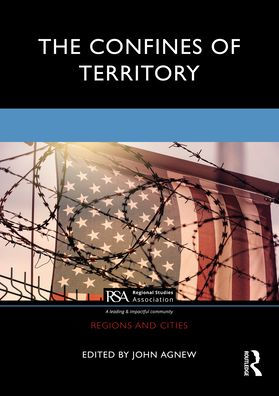
The Confines of Territory
Barnes and Noble
Loading Inventory...
The Confines of Territory in Chattanooga, TN
Current price: $190.00
Barnes and Noble
The Confines of Territory in Chattanooga, TN
Current price: $190.00
Loading Inventory...
Size: Hardcover
The word ‘territory’ has taken on renewed significance in a world where its close association with state sovereignty has made a serious comeback, invoked alike by proponents of Brexit in the UK, ‘Making America Great Again’ in the USA, and myriad populists from India to Brazil by way of Italy and Hungary. The word has had a contentious history in social science and political theory. In its first seven years, the journal
Territory, Politics, Governance
has published numerous articles examining the ways in which territory figures into contemporary political debates and its limits as a concept when applied to a world in which sovereignty never has simply pooled up within self-evidently distinctive blocs of space named as ‘territories.’ Among other things, the limits of territory are apparent in terms of the history of a global capitalism that always bursts beyond established boundaries, the fact that some states are much more powerful and exercise much more spatial reach than do others, and that the political uses of territory in its current usage date back predominantly to seventeenth century Europe rather than being historically transcendental or worldwide.
The articles in this book are selected from
to survey many of the dilemmas and questions that haunt the concept of territory even as its current efflorescence in political discourse ignores them.
Territory, Politics, Governance
has published numerous articles examining the ways in which territory figures into contemporary political debates and its limits as a concept when applied to a world in which sovereignty never has simply pooled up within self-evidently distinctive blocs of space named as ‘territories.’ Among other things, the limits of territory are apparent in terms of the history of a global capitalism that always bursts beyond established boundaries, the fact that some states are much more powerful and exercise much more spatial reach than do others, and that the political uses of territory in its current usage date back predominantly to seventeenth century Europe rather than being historically transcendental or worldwide.
The articles in this book are selected from
to survey many of the dilemmas and questions that haunt the concept of territory even as its current efflorescence in political discourse ignores them.
The word ‘territory’ has taken on renewed significance in a world where its close association with state sovereignty has made a serious comeback, invoked alike by proponents of Brexit in the UK, ‘Making America Great Again’ in the USA, and myriad populists from India to Brazil by way of Italy and Hungary. The word has had a contentious history in social science and political theory. In its first seven years, the journal
Territory, Politics, Governance
has published numerous articles examining the ways in which territory figures into contemporary political debates and its limits as a concept when applied to a world in which sovereignty never has simply pooled up within self-evidently distinctive blocs of space named as ‘territories.’ Among other things, the limits of territory are apparent in terms of the history of a global capitalism that always bursts beyond established boundaries, the fact that some states are much more powerful and exercise much more spatial reach than do others, and that the political uses of territory in its current usage date back predominantly to seventeenth century Europe rather than being historically transcendental or worldwide.
The articles in this book are selected from
to survey many of the dilemmas and questions that haunt the concept of territory even as its current efflorescence in political discourse ignores them.
Territory, Politics, Governance
has published numerous articles examining the ways in which territory figures into contemporary political debates and its limits as a concept when applied to a world in which sovereignty never has simply pooled up within self-evidently distinctive blocs of space named as ‘territories.’ Among other things, the limits of territory are apparent in terms of the history of a global capitalism that always bursts beyond established boundaries, the fact that some states are much more powerful and exercise much more spatial reach than do others, and that the political uses of territory in its current usage date back predominantly to seventeenth century Europe rather than being historically transcendental or worldwide.
The articles in this book are selected from
to survey many of the dilemmas and questions that haunt the concept of territory even as its current efflorescence in political discourse ignores them.
You May Also Like












More About Barnes and Noble at Hamilton Place
Barnes & Noble is the world’s largest retail bookseller and a leading retailer of content, digital media and educational products. Our Nook Digital business offers a lineup of NOOK® tablets and e-Readers and an expansive collection of digital reading content through the NOOK Store®. Barnes & Noble’s mission is to operate the best omni-channel specialty retail business in America, helping both our customers and booksellers reach their aspirations, while being a credit to the communities we serve.
2100 Hamilton Pl Blvd, Chattanooga, TN 37421, United States
Find Barnes and Noble at Hamilton Place in Chattanooga, TN
Visit Barnes and Noble at Hamilton Place in Chattanooga, TN
