
Home
the Causes and Cures of Neurosis (Psychology Revivals): An introduction to modern behaviour therapy based on learning theory principles conditioning
Barnes and Noble
Loading Inventory...
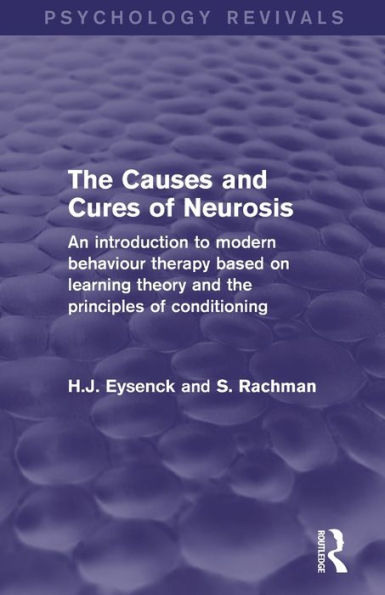
the Causes and Cures of Neurosis (Psychology Revivals): An introduction to modern behaviour therapy based on learning theory principles conditioning in Chattanooga, TN
Current price: $66.99
Barnes and Noble
the Causes and Cures of Neurosis (Psychology Revivals): An introduction to modern behaviour therapy based on learning theory principles conditioning in Chattanooga, TN
Current price: $66.99
Loading Inventory...
Size: Hardcover
Originally published in 1965 this book was an introduction to post-Freudian methods of diagnosing and treating neurotics of the time. These methods were known collectively as ‘behaviour therapy’, a term indicating their derivation from modern behaviourism, learning theory, and conditioning principles. In the early twentieth century John B. Watson pointed out that ‘psychology, as the behaviourist views it, is a purely objective experimental branch of natural science. Its theoretical goal is the prediction and control of behaviour.’ Behaviour therapy attempts to extend this control to the field of neurotic disorders, and in doing so it makes use of experimental laboratory findings, and of theories based on these. It was seen as the very opposite of the position taken by psychoanalysis.
The authors believed that, by the late twentieth century, behaviour therapy would be ‘firmly established as one of the most important, if not
the
most important, weapon in the hands of psychiatrists and clinical psychologists’.
The authors believed that, by the late twentieth century, behaviour therapy would be ‘firmly established as one of the most important, if not
the
most important, weapon in the hands of psychiatrists and clinical psychologists’.
Originally published in 1965 this book was an introduction to post-Freudian methods of diagnosing and treating neurotics of the time. These methods were known collectively as ‘behaviour therapy’, a term indicating their derivation from modern behaviourism, learning theory, and conditioning principles. In the early twentieth century John B. Watson pointed out that ‘psychology, as the behaviourist views it, is a purely objective experimental branch of natural science. Its theoretical goal is the prediction and control of behaviour.’ Behaviour therapy attempts to extend this control to the field of neurotic disorders, and in doing so it makes use of experimental laboratory findings, and of theories based on these. It was seen as the very opposite of the position taken by psychoanalysis.
The authors believed that, by the late twentieth century, behaviour therapy would be ‘firmly established as one of the most important, if not
the
most important, weapon in the hands of psychiatrists and clinical psychologists’.
The authors believed that, by the late twentieth century, behaviour therapy would be ‘firmly established as one of the most important, if not
the
most important, weapon in the hands of psychiatrists and clinical psychologists’.
You May Also Like















More About Barnes and Noble at Hamilton Place
Barnes & Noble is the world’s largest retail bookseller and a leading retailer of content, digital media and educational products. Our Nook Digital business offers a lineup of NOOK® tablets and e-Readers and an expansive collection of digital reading content through the NOOK Store®. Barnes & Noble’s mission is to operate the best omni-channel specialty retail business in America, helping both our customers and booksellers reach their aspirations, while being a credit to the communities we serve.
2100 Hamilton Pl Blvd, Chattanooga, TN 37421, United States
Find Barnes and Noble at Hamilton Place in Chattanooga, TN
Visit Barnes and Noble at Hamilton Place in Chattanooga, TN
