
Home
The Bureaucratic Struggle For Control Of U.s. Foreign Aid: Diplomacy Vs. Development Southern Africa
Barnes and Noble
Loading Inventory...
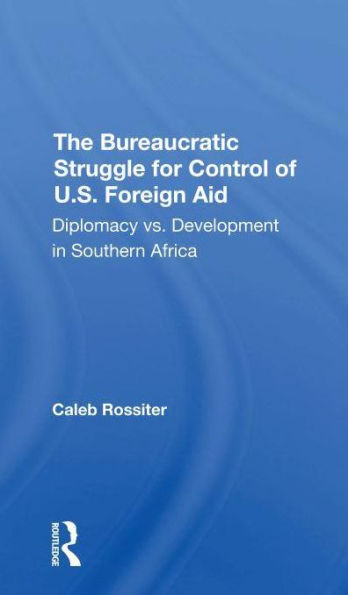
The Bureaucratic Struggle For Control Of U.s. Foreign Aid: Diplomacy Vs. Development Southern Africa in Chattanooga, TN
Current price: $190.00
Barnes and Noble
The Bureaucratic Struggle For Control Of U.s. Foreign Aid: Diplomacy Vs. Development Southern Africa in Chattanooga, TN
Current price: $190.00
Loading Inventory...
Size: Hardcover
This study of executive-branch decision making explores the conflict between the diplomatic and developmental mandates of U.S. foreign-aid programs on two levels. First, a given amount of programming funded for a country must be divided among various activities, some of which are directed toward long-term development while others encourage short-term diplomatic cooperation with U.S. initiatives. Second, individual federal agencies favor certain types of aid and are engaged in a constant struggle to preserve and expand their favored programs at the expense of others. Dr. Rossiter examines this conflict in a case study of the State Department's use of foreign-aid programs to induce the "frontline" states of southern Africa to cooperate with President Carter's initiative to resolve the civil war in Rhodesia/Zimbabwe. According to Dr. Rossiter, the Agency for International Development (AID) lost control over foreign aid in the region to the State Department because the constituency for development objectives was relatively weak, both inside and outside the U.S. government. He concludes by discussing the implications of AID's unsuccessful attempt to free itself from the State Department's control during the reorganization of the foreign-aid bureaucracy under President Carter.
This study of executive-branch decision making explores the conflict between the diplomatic and developmental mandates of U.S. foreign-aid programs on two levels. First, a given amount of programming funded for a country must be divided among various activities, some of which are directed toward long-term development while others encourage short-term diplomatic cooperation with U.S. initiatives. Second, individual federal agencies favor certain types of aid and are engaged in a constant struggle to preserve and expand their favored programs at the expense of others. Dr. Rossiter examines this conflict in a case study of the State Department's use of foreign-aid programs to induce the "frontline" states of southern Africa to cooperate with President Carter's initiative to resolve the civil war in Rhodesia/Zimbabwe. According to Dr. Rossiter, the Agency for International Development (AID) lost control over foreign aid in the region to the State Department because the constituency for development objectives was relatively weak, both inside and outside the U.S. government. He concludes by discussing the implications of AID's unsuccessful attempt to free itself from the State Department's control during the reorganization of the foreign-aid bureaucracy under President Carter.
You May Also Like








More About Barnes and Noble at Hamilton Place
Barnes & Noble is the world’s largest retail bookseller and a leading retailer of content, digital media and educational products. Our Nook Digital business offers a lineup of NOOK® tablets and e-Readers and an expansive collection of digital reading content through the NOOK Store®. Barnes & Noble’s mission is to operate the best omni-channel specialty retail business in America, helping both our customers and booksellers reach their aspirations, while being a credit to the communities we serve.
2100 Hamilton Pl Blvd, Chattanooga, TN 37421, United States
Find Barnes and Noble at Hamilton Place in Chattanooga, TN
Visit Barnes and Noble at Hamilton Place in Chattanooga, TN
