
Home
The Book of Bodies
Barnes and Noble
Loading Inventory...
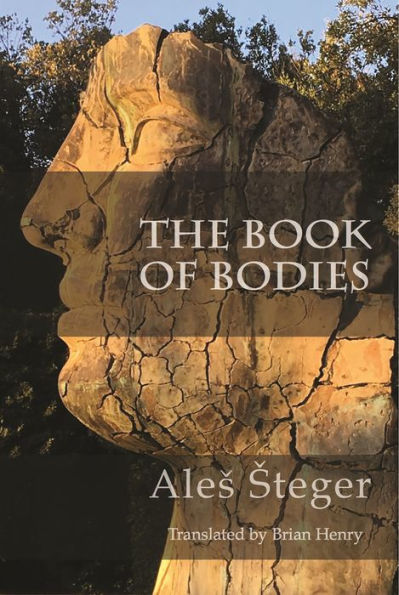
The Book of Bodies in Chattanooga, TN
Current price: $17.00
Barnes and Noble
The Book of Bodies in Chattanooga, TN
Current price: $17.00
Loading Inventory...
Size: OS
The poems in Aleš Šteger’s
The Book of Bodies
roam across personal experience, human history, and the natural world to unlock intellectual and emotional connections.
Aleš Šteger’s
directly follows—and builds on and veers from—
The Book of Things
. The 50 poems in
focus on such everyday objects as umbrellas, chairs, and candles, and in so doing illuminate the human condition, particularly its propensity for violence, deception, and forgetting. The 50 poems in
manage to be simultaneously more and less restrictive: half the poems are prose poems (of five paragraphs each) that roam across personal experience, human history (individual and collective), and the natural world to unlock intellectual and emotional connections; the other half are narrow stanzaless poems that focus on a single word. These poems have a sinuous, almost vaporous quality on the page—lines so thin that they serve as a response to the prose that dominates the first half of the book. Both types of poems in
are essential to Šteger’s understanding of the world.
“Esteemed American readers, Aleš Šteger is the real thing! He is the poet of inimitable gifts! He is one of the best Eastern European poets of his generation! It is the truth: Šteger is a marvelous voice, one that takes some of the playfulness of his Yugoslavian compatriots Vasko Popa and Tomaž Šalamun to the whole new level.”
— Ilya Kaminsky
Slovenian writer Aleš Šteger has published eight books of poetry, three novels, and two books of essays. A Chevalier des Artes et Lettres in France and a member of the Berlin Academy of Arts, he received the 1998 Veronika Prize for the best Slovenian poetry book, the 1999 Petrarch Prize for young European authors, the 2007 Rožanc Award for the best Slovenian book of essays, and the 2016 International Bienek Prize. His work has been translated into over 15 languages, including Chinese, German, Czech, Croatian, Hungarian, and Spanish. Four of his books have been published in English:
, which won the 2011 Best Translated Book Award;
Berlin
; the novel
Absolution
; and
Above the Sky Beneath the Earth
. He also has worked in the field of visual arts (most recently with a large scale installation at the International Kochi-Muziris Biennale in India), completed several collaborations with musicians (Godalika, Uroš Rojko, Peter N. Gruber), and collaborated with Peter Zach on the film
Beyond Boundaries
.
Brian Henry
is the author of eleven books of poetry, most recently
Permanent State
. He co-edited the international magazine Verse from 1995 to 2018 and established the Tomaž Šalamun Prize in 2015. His translation of Aleš Šteger’s
appeared from BOA Editions in 2010 and won the Best Translated Book Award. He also has translated Tomaž Šalamun’s
Woods and Chalices
(Harcourt, 2008), Aleš Debeljak’s
Smugglers
(BOA, 2015), and Aleš Šteger’s
(White Pine, 2019) and
(Counterpath, 2015). His work has appeared in
The New Yorker, The Paris Review
, the
New York Times, Poetry, The New Republic, American Poetry Review
, and many other places. His poetry and translations have received numerous honors, including two NEA fellowships, the Alice Fay di Castagnola Award, a Howard Foundation fellowship, the Carole Weinstein Poetry Prize, the Cecil B. Hemley Memorial Award, the George Bogin Memorial Award, and a Slovenian Academy of Arts and Sciences grant.
The Book of Bodies
roam across personal experience, human history, and the natural world to unlock intellectual and emotional connections.
Aleš Šteger’s
directly follows—and builds on and veers from—
The Book of Things
. The 50 poems in
focus on such everyday objects as umbrellas, chairs, and candles, and in so doing illuminate the human condition, particularly its propensity for violence, deception, and forgetting. The 50 poems in
manage to be simultaneously more and less restrictive: half the poems are prose poems (of five paragraphs each) that roam across personal experience, human history (individual and collective), and the natural world to unlock intellectual and emotional connections; the other half are narrow stanzaless poems that focus on a single word. These poems have a sinuous, almost vaporous quality on the page—lines so thin that they serve as a response to the prose that dominates the first half of the book. Both types of poems in
are essential to Šteger’s understanding of the world.
“Esteemed American readers, Aleš Šteger is the real thing! He is the poet of inimitable gifts! He is one of the best Eastern European poets of his generation! It is the truth: Šteger is a marvelous voice, one that takes some of the playfulness of his Yugoslavian compatriots Vasko Popa and Tomaž Šalamun to the whole new level.”
— Ilya Kaminsky
Slovenian writer Aleš Šteger has published eight books of poetry, three novels, and two books of essays. A Chevalier des Artes et Lettres in France and a member of the Berlin Academy of Arts, he received the 1998 Veronika Prize for the best Slovenian poetry book, the 1999 Petrarch Prize for young European authors, the 2007 Rožanc Award for the best Slovenian book of essays, and the 2016 International Bienek Prize. His work has been translated into over 15 languages, including Chinese, German, Czech, Croatian, Hungarian, and Spanish. Four of his books have been published in English:
, which won the 2011 Best Translated Book Award;
Berlin
; the novel
Absolution
; and
Above the Sky Beneath the Earth
. He also has worked in the field of visual arts (most recently with a large scale installation at the International Kochi-Muziris Biennale in India), completed several collaborations with musicians (Godalika, Uroš Rojko, Peter N. Gruber), and collaborated with Peter Zach on the film
Beyond Boundaries
.
Brian Henry
is the author of eleven books of poetry, most recently
Permanent State
. He co-edited the international magazine Verse from 1995 to 2018 and established the Tomaž Šalamun Prize in 2015. His translation of Aleš Šteger’s
appeared from BOA Editions in 2010 and won the Best Translated Book Award. He also has translated Tomaž Šalamun’s
Woods and Chalices
(Harcourt, 2008), Aleš Debeljak’s
Smugglers
(BOA, 2015), and Aleš Šteger’s
(White Pine, 2019) and
(Counterpath, 2015). His work has appeared in
The New Yorker, The Paris Review
, the
New York Times, Poetry, The New Republic, American Poetry Review
, and many other places. His poetry and translations have received numerous honors, including two NEA fellowships, the Alice Fay di Castagnola Award, a Howard Foundation fellowship, the Carole Weinstein Poetry Prize, the Cecil B. Hemley Memorial Award, the George Bogin Memorial Award, and a Slovenian Academy of Arts and Sciences grant.
The poems in Aleš Šteger’s
The Book of Bodies
roam across personal experience, human history, and the natural world to unlock intellectual and emotional connections.
Aleš Šteger’s
directly follows—and builds on and veers from—
The Book of Things
. The 50 poems in
focus on such everyday objects as umbrellas, chairs, and candles, and in so doing illuminate the human condition, particularly its propensity for violence, deception, and forgetting. The 50 poems in
manage to be simultaneously more and less restrictive: half the poems are prose poems (of five paragraphs each) that roam across personal experience, human history (individual and collective), and the natural world to unlock intellectual and emotional connections; the other half are narrow stanzaless poems that focus on a single word. These poems have a sinuous, almost vaporous quality on the page—lines so thin that they serve as a response to the prose that dominates the first half of the book. Both types of poems in
are essential to Šteger’s understanding of the world.
“Esteemed American readers, Aleš Šteger is the real thing! He is the poet of inimitable gifts! He is one of the best Eastern European poets of his generation! It is the truth: Šteger is a marvelous voice, one that takes some of the playfulness of his Yugoslavian compatriots Vasko Popa and Tomaž Šalamun to the whole new level.”
— Ilya Kaminsky
Slovenian writer Aleš Šteger has published eight books of poetry, three novels, and two books of essays. A Chevalier des Artes et Lettres in France and a member of the Berlin Academy of Arts, he received the 1998 Veronika Prize for the best Slovenian poetry book, the 1999 Petrarch Prize for young European authors, the 2007 Rožanc Award for the best Slovenian book of essays, and the 2016 International Bienek Prize. His work has been translated into over 15 languages, including Chinese, German, Czech, Croatian, Hungarian, and Spanish. Four of his books have been published in English:
, which won the 2011 Best Translated Book Award;
Berlin
; the novel
Absolution
; and
Above the Sky Beneath the Earth
. He also has worked in the field of visual arts (most recently with a large scale installation at the International Kochi-Muziris Biennale in India), completed several collaborations with musicians (Godalika, Uroš Rojko, Peter N. Gruber), and collaborated with Peter Zach on the film
Beyond Boundaries
.
Brian Henry
is the author of eleven books of poetry, most recently
Permanent State
. He co-edited the international magazine Verse from 1995 to 2018 and established the Tomaž Šalamun Prize in 2015. His translation of Aleš Šteger’s
appeared from BOA Editions in 2010 and won the Best Translated Book Award. He also has translated Tomaž Šalamun’s
Woods and Chalices
(Harcourt, 2008), Aleš Debeljak’s
Smugglers
(BOA, 2015), and Aleš Šteger’s
(White Pine, 2019) and
(Counterpath, 2015). His work has appeared in
The New Yorker, The Paris Review
, the
New York Times, Poetry, The New Republic, American Poetry Review
, and many other places. His poetry and translations have received numerous honors, including two NEA fellowships, the Alice Fay di Castagnola Award, a Howard Foundation fellowship, the Carole Weinstein Poetry Prize, the Cecil B. Hemley Memorial Award, the George Bogin Memorial Award, and a Slovenian Academy of Arts and Sciences grant.
The Book of Bodies
roam across personal experience, human history, and the natural world to unlock intellectual and emotional connections.
Aleš Šteger’s
directly follows—and builds on and veers from—
The Book of Things
. The 50 poems in
focus on such everyday objects as umbrellas, chairs, and candles, and in so doing illuminate the human condition, particularly its propensity for violence, deception, and forgetting. The 50 poems in
manage to be simultaneously more and less restrictive: half the poems are prose poems (of five paragraphs each) that roam across personal experience, human history (individual and collective), and the natural world to unlock intellectual and emotional connections; the other half are narrow stanzaless poems that focus on a single word. These poems have a sinuous, almost vaporous quality on the page—lines so thin that they serve as a response to the prose that dominates the first half of the book. Both types of poems in
are essential to Šteger’s understanding of the world.
“Esteemed American readers, Aleš Šteger is the real thing! He is the poet of inimitable gifts! He is one of the best Eastern European poets of his generation! It is the truth: Šteger is a marvelous voice, one that takes some of the playfulness of his Yugoslavian compatriots Vasko Popa and Tomaž Šalamun to the whole new level.”
— Ilya Kaminsky
Slovenian writer Aleš Šteger has published eight books of poetry, three novels, and two books of essays. A Chevalier des Artes et Lettres in France and a member of the Berlin Academy of Arts, he received the 1998 Veronika Prize for the best Slovenian poetry book, the 1999 Petrarch Prize for young European authors, the 2007 Rožanc Award for the best Slovenian book of essays, and the 2016 International Bienek Prize. His work has been translated into over 15 languages, including Chinese, German, Czech, Croatian, Hungarian, and Spanish. Four of his books have been published in English:
, which won the 2011 Best Translated Book Award;
Berlin
; the novel
Absolution
; and
Above the Sky Beneath the Earth
. He also has worked in the field of visual arts (most recently with a large scale installation at the International Kochi-Muziris Biennale in India), completed several collaborations with musicians (Godalika, Uroš Rojko, Peter N. Gruber), and collaborated with Peter Zach on the film
Beyond Boundaries
.
Brian Henry
is the author of eleven books of poetry, most recently
Permanent State
. He co-edited the international magazine Verse from 1995 to 2018 and established the Tomaž Šalamun Prize in 2015. His translation of Aleš Šteger’s
appeared from BOA Editions in 2010 and won the Best Translated Book Award. He also has translated Tomaž Šalamun’s
Woods and Chalices
(Harcourt, 2008), Aleš Debeljak’s
Smugglers
(BOA, 2015), and Aleš Šteger’s
(White Pine, 2019) and
(Counterpath, 2015). His work has appeared in
The New Yorker, The Paris Review
, the
New York Times, Poetry, The New Republic, American Poetry Review
, and many other places. His poetry and translations have received numerous honors, including two NEA fellowships, the Alice Fay di Castagnola Award, a Howard Foundation fellowship, the Carole Weinstein Poetry Prize, the Cecil B. Hemley Memorial Award, the George Bogin Memorial Award, and a Slovenian Academy of Arts and Sciences grant.
You May Also Like













More About Barnes and Noble at Hamilton Place
Barnes & Noble is the world’s largest retail bookseller and a leading retailer of content, digital media and educational products. Our Nook Digital business offers a lineup of NOOK® tablets and e-Readers and an expansive collection of digital reading content through the NOOK Store®. Barnes & Noble’s mission is to operate the best omni-channel specialty retail business in America, helping both our customers and booksellers reach their aspirations, while being a credit to the communities we serve.
2100 Hamilton Pl Blvd, Chattanooga, TN 37421, United States
Find Barnes and Noble at Hamilton Place in Chattanooga, TN
Visit Barnes and Noble at Hamilton Place in Chattanooga, TN
