
Home
The Book of Barely Imagined Beings: A 21st Century Bestiary
Barnes and Noble
Loading Inventory...
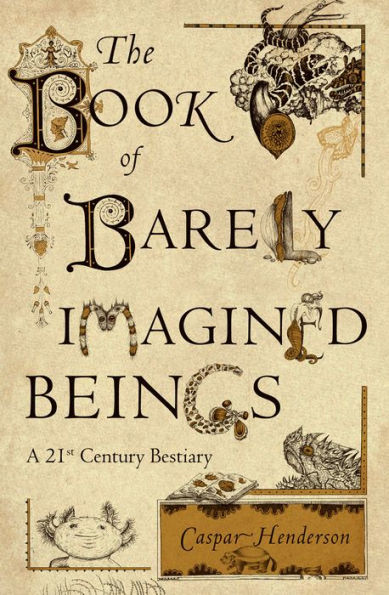
The Book of Barely Imagined Beings: A 21st Century Bestiary in Chattanooga, TN
Current price: $23.00
Barnes and Noble
The Book of Barely Imagined Beings: A 21st Century Bestiary in Chattanooga, TN
Current price: $23.00
Loading Inventory...
Size: Paperback
From medieval bestiaries to Borges’s
Book of Imaginary Beings
, we’ve long been enchanted by extraordinary animals, be they terrifying three-headed dogs or asps impervious to a snake charmer’s song. But bestiaries are more than just zany zoologythey are artful attempts to convey broader beliefs about human beings and the natural order. Today, we no longer fear sea monsters or banshees. But from the infamous honey badger to the giant squid, animals continue to captivate us with the things they can do and the things they cannot, what we know about them and what we don’t.
With
The Book of Barely Imagined Beings
, Caspar Henderson offers readers a fascinating, beautifully produced modern-day menagerie. But whereas medieval bestiaries were often based on folklore and myth, the creatures that abound in Henderson’s bookfrom the axolotl to the zebrafishare, with one exception, very much with us, albeit sometimes in depleted numbers.
transports readers to a world of real creatures that seem as if they should be made upthat are somehow more astonishing than anything we might have imagined. The yeti crab, for example, uses its furry claws to farm the bacteria on which it feeds. The waterbear, meanwhile, is among nature’s “extreme survivors,” able to withstand a week unprotected in outer space. These and other strange and surprising species invite readers to reflect on what we valueor fail to valueand what we might change.
A powerful combination of wit, cutting-edge natural history, and philosophical meditation,
is an infectious and inspiring celebration of the sheer ingenuity and variety of life in a time of crisis and change.
Book of Imaginary Beings
, we’ve long been enchanted by extraordinary animals, be they terrifying three-headed dogs or asps impervious to a snake charmer’s song. But bestiaries are more than just zany zoologythey are artful attempts to convey broader beliefs about human beings and the natural order. Today, we no longer fear sea monsters or banshees. But from the infamous honey badger to the giant squid, animals continue to captivate us with the things they can do and the things they cannot, what we know about them and what we don’t.
With
The Book of Barely Imagined Beings
, Caspar Henderson offers readers a fascinating, beautifully produced modern-day menagerie. But whereas medieval bestiaries were often based on folklore and myth, the creatures that abound in Henderson’s bookfrom the axolotl to the zebrafishare, with one exception, very much with us, albeit sometimes in depleted numbers.
transports readers to a world of real creatures that seem as if they should be made upthat are somehow more astonishing than anything we might have imagined. The yeti crab, for example, uses its furry claws to farm the bacteria on which it feeds. The waterbear, meanwhile, is among nature’s “extreme survivors,” able to withstand a week unprotected in outer space. These and other strange and surprising species invite readers to reflect on what we valueor fail to valueand what we might change.
A powerful combination of wit, cutting-edge natural history, and philosophical meditation,
is an infectious and inspiring celebration of the sheer ingenuity and variety of life in a time of crisis and change.
From medieval bestiaries to Borges’s
Book of Imaginary Beings
, we’ve long been enchanted by extraordinary animals, be they terrifying three-headed dogs or asps impervious to a snake charmer’s song. But bestiaries are more than just zany zoologythey are artful attempts to convey broader beliefs about human beings and the natural order. Today, we no longer fear sea monsters or banshees. But from the infamous honey badger to the giant squid, animals continue to captivate us with the things they can do and the things they cannot, what we know about them and what we don’t.
With
The Book of Barely Imagined Beings
, Caspar Henderson offers readers a fascinating, beautifully produced modern-day menagerie. But whereas medieval bestiaries were often based on folklore and myth, the creatures that abound in Henderson’s bookfrom the axolotl to the zebrafishare, with one exception, very much with us, albeit sometimes in depleted numbers.
transports readers to a world of real creatures that seem as if they should be made upthat are somehow more astonishing than anything we might have imagined. The yeti crab, for example, uses its furry claws to farm the bacteria on which it feeds. The waterbear, meanwhile, is among nature’s “extreme survivors,” able to withstand a week unprotected in outer space. These and other strange and surprising species invite readers to reflect on what we valueor fail to valueand what we might change.
A powerful combination of wit, cutting-edge natural history, and philosophical meditation,
is an infectious and inspiring celebration of the sheer ingenuity and variety of life in a time of crisis and change.
Book of Imaginary Beings
, we’ve long been enchanted by extraordinary animals, be they terrifying three-headed dogs or asps impervious to a snake charmer’s song. But bestiaries are more than just zany zoologythey are artful attempts to convey broader beliefs about human beings and the natural order. Today, we no longer fear sea monsters or banshees. But from the infamous honey badger to the giant squid, animals continue to captivate us with the things they can do and the things they cannot, what we know about them and what we don’t.
With
The Book of Barely Imagined Beings
, Caspar Henderson offers readers a fascinating, beautifully produced modern-day menagerie. But whereas medieval bestiaries were often based on folklore and myth, the creatures that abound in Henderson’s bookfrom the axolotl to the zebrafishare, with one exception, very much with us, albeit sometimes in depleted numbers.
transports readers to a world of real creatures that seem as if they should be made upthat are somehow more astonishing than anything we might have imagined. The yeti crab, for example, uses its furry claws to farm the bacteria on which it feeds. The waterbear, meanwhile, is among nature’s “extreme survivors,” able to withstand a week unprotected in outer space. These and other strange and surprising species invite readers to reflect on what we valueor fail to valueand what we might change.
A powerful combination of wit, cutting-edge natural history, and philosophical meditation,
is an infectious and inspiring celebration of the sheer ingenuity and variety of life in a time of crisis and change.
You May Also Like















More About Barnes and Noble at Hamilton Place
Barnes & Noble is the world’s largest retail bookseller and a leading retailer of content, digital media and educational products. Our Nook Digital business offers a lineup of NOOK® tablets and e-Readers and an expansive collection of digital reading content through the NOOK Store®. Barnes & Noble’s mission is to operate the best omni-channel specialty retail business in America, helping both our customers and booksellers reach their aspirations, while being a credit to the communities we serve.
2100 Hamilton Pl Blvd, Chattanooga, TN 37421, United States
Find Barnes and Noble at Hamilton Place in Chattanooga, TN
Visit Barnes and Noble at Hamilton Place in Chattanooga, TN
