
Home
The Astonishment Tapes: Talks on Poetry and Autobiography with Robin Blaser Friends
Barnes and Noble
Loading Inventory...
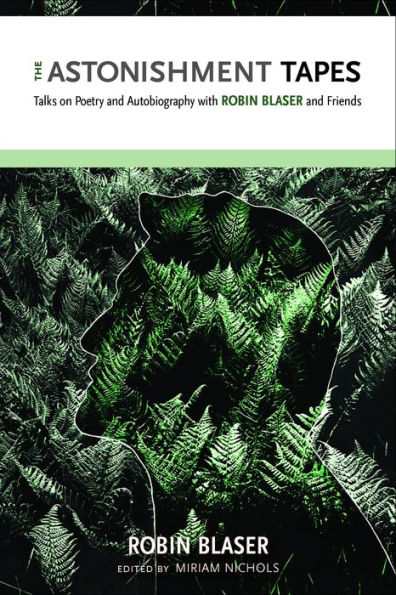
The Astonishment Tapes: Talks on Poetry and Autobiography with Robin Blaser Friends in Chattanooga, TN
Current price: $49.95
Barnes and Noble
The Astonishment Tapes: Talks on Poetry and Autobiography with Robin Blaser Friends in Chattanooga, TN
Current price: $49.95
Loading Inventory...
Size: Paperback
The edited transcript of revealing autobiographical audiotapes recorded by the groundbreaking poet Robin Blaser
Robin Blaser moved from his native Idaho to attend the University of California, Berkeley, in 1944. While there, he developed as a poet, explored his homosexuality, engaged in a lively arts community, and met fellow travelers and poets Robert Duncan and Jack Spicer. The three men became the founding members of the Berkeley core of what is now known as the San Francisco Renaissance in New American Poetry.
In the company of a small group of friends and writers in 1974, Blaser was asked to narrate his personal story and to comment on the Berkeley poetry scene. In twenty autobiographical audiotapes, Blaser talks about his childhood in Idaho, his time in Berkeley, and his participation in the making of a new kind of poetry.
The Astonishment Tapes
is the expertly edited transcript of these recordings by Miriam Nichols, Blaser’s editor and biographer.
In
Blaser comments extensively on the poetic principles that he, Duncan, and Spicer worked through, as well as the differences and dissonances between the three of them. Nichols has edited the transcripts only minimally, allowing readers to make their own interpretations of Blaser’s intentions.
Sometimes gossipy, sometimes profound, Blaser offers his version on the inside story of one of the most significant moments in mid-twentieth century American poetry.
is of considerable value and interest, not only to readers of Blaser, Duncan, and Spicer, but also to scholars of the early postmodern and twentieth-century American poetry.
Robin Blaser moved from his native Idaho to attend the University of California, Berkeley, in 1944. While there, he developed as a poet, explored his homosexuality, engaged in a lively arts community, and met fellow travelers and poets Robert Duncan and Jack Spicer. The three men became the founding members of the Berkeley core of what is now known as the San Francisco Renaissance in New American Poetry.
In the company of a small group of friends and writers in 1974, Blaser was asked to narrate his personal story and to comment on the Berkeley poetry scene. In twenty autobiographical audiotapes, Blaser talks about his childhood in Idaho, his time in Berkeley, and his participation in the making of a new kind of poetry.
The Astonishment Tapes
is the expertly edited transcript of these recordings by Miriam Nichols, Blaser’s editor and biographer.
In
Blaser comments extensively on the poetic principles that he, Duncan, and Spicer worked through, as well as the differences and dissonances between the three of them. Nichols has edited the transcripts only minimally, allowing readers to make their own interpretations of Blaser’s intentions.
Sometimes gossipy, sometimes profound, Blaser offers his version on the inside story of one of the most significant moments in mid-twentieth century American poetry.
is of considerable value and interest, not only to readers of Blaser, Duncan, and Spicer, but also to scholars of the early postmodern and twentieth-century American poetry.
The edited transcript of revealing autobiographical audiotapes recorded by the groundbreaking poet Robin Blaser
Robin Blaser moved from his native Idaho to attend the University of California, Berkeley, in 1944. While there, he developed as a poet, explored his homosexuality, engaged in a lively arts community, and met fellow travelers and poets Robert Duncan and Jack Spicer. The three men became the founding members of the Berkeley core of what is now known as the San Francisco Renaissance in New American Poetry.
In the company of a small group of friends and writers in 1974, Blaser was asked to narrate his personal story and to comment on the Berkeley poetry scene. In twenty autobiographical audiotapes, Blaser talks about his childhood in Idaho, his time in Berkeley, and his participation in the making of a new kind of poetry.
The Astonishment Tapes
is the expertly edited transcript of these recordings by Miriam Nichols, Blaser’s editor and biographer.
In
Blaser comments extensively on the poetic principles that he, Duncan, and Spicer worked through, as well as the differences and dissonances between the three of them. Nichols has edited the transcripts only minimally, allowing readers to make their own interpretations of Blaser’s intentions.
Sometimes gossipy, sometimes profound, Blaser offers his version on the inside story of one of the most significant moments in mid-twentieth century American poetry.
is of considerable value and interest, not only to readers of Blaser, Duncan, and Spicer, but also to scholars of the early postmodern and twentieth-century American poetry.
Robin Blaser moved from his native Idaho to attend the University of California, Berkeley, in 1944. While there, he developed as a poet, explored his homosexuality, engaged in a lively arts community, and met fellow travelers and poets Robert Duncan and Jack Spicer. The three men became the founding members of the Berkeley core of what is now known as the San Francisco Renaissance in New American Poetry.
In the company of a small group of friends and writers in 1974, Blaser was asked to narrate his personal story and to comment on the Berkeley poetry scene. In twenty autobiographical audiotapes, Blaser talks about his childhood in Idaho, his time in Berkeley, and his participation in the making of a new kind of poetry.
The Astonishment Tapes
is the expertly edited transcript of these recordings by Miriam Nichols, Blaser’s editor and biographer.
In
Blaser comments extensively on the poetic principles that he, Duncan, and Spicer worked through, as well as the differences and dissonances between the three of them. Nichols has edited the transcripts only minimally, allowing readers to make their own interpretations of Blaser’s intentions.
Sometimes gossipy, sometimes profound, Blaser offers his version on the inside story of one of the most significant moments in mid-twentieth century American poetry.
is of considerable value and interest, not only to readers of Blaser, Duncan, and Spicer, but also to scholars of the early postmodern and twentieth-century American poetry.
You May Also Like









More About Barnes and Noble at Hamilton Place
Barnes & Noble is the world’s largest retail bookseller and a leading retailer of content, digital media and educational products. Our Nook Digital business offers a lineup of NOOK® tablets and e-Readers and an expansive collection of digital reading content through the NOOK Store®. Barnes & Noble’s mission is to operate the best omni-channel specialty retail business in America, helping both our customers and booksellers reach their aspirations, while being a credit to the communities we serve.
2100 Hamilton Pl Blvd, Chattanooga, TN 37421, United States
Find Barnes and Noble at Hamilton Place in Chattanooga, TN
Visit Barnes and Noble at Hamilton Place in Chattanooga, TN
