
Home
The Assessment and Treatment of Children Who Abuse Animals: AniCare Child Approach
Barnes and Noble
Loading Inventory...
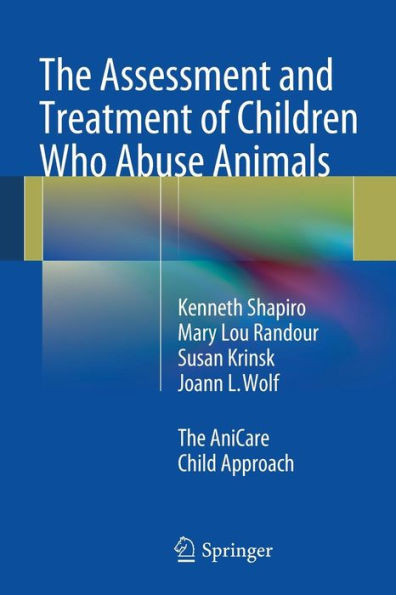
The Assessment and Treatment of Children Who Abuse Animals: AniCare Child Approach in Chattanooga, TN
Current price: $69.99
Barnes and Noble
The Assessment and Treatment of Children Who Abuse Animals: AniCare Child Approach in Chattanooga, TN
Current price: $69.99
Loading Inventory...
Size: Paperback
Empirical research has clearly demonstrated that animal abuse in childhood is associated with family violence and violent behavior towards humans in general. Such abuse is accordingly of increasing interest within human services and the criminal justice system.
This handbook will serve as an ideal resource for therapists in social work, psychology, psychiatry, and allied fields who work with children who have abused animals. It provides step-by-step guidance on how to assess, develop appropriate treatment plans for, and treat children who commit animal abuse, based on the AniCare model developed by the Animals and Society Institute. Exercises cover the identification and expression of feelings, the development of empathy, self-management skills, and working with parents. Careful consideration is also paid to the effects of witnessing animal abuse. The theoretical framework is eclectic, encompassing cognitive behavioral, psychodynamic, and attachment theories. A number of illustrative case studies are included, along with excerpts from treatment sessions. Accompanying electronic supplementary material demonstrates role-played assessment and treatment and includes workshop presentations of pedagogic material.
This handbook will serve as an ideal resource for therapists in social work, psychology, psychiatry, and allied fields who work with children who have abused animals. It provides step-by-step guidance on how to assess, develop appropriate treatment plans for, and treat children who commit animal abuse, based on the AniCare model developed by the Animals and Society Institute. Exercises cover the identification and expression of feelings, the development of empathy, self-management skills, and working with parents. Careful consideration is also paid to the effects of witnessing animal abuse. The theoretical framework is eclectic, encompassing cognitive behavioral, psychodynamic, and attachment theories. A number of illustrative case studies are included, along with excerpts from treatment sessions. Accompanying electronic supplementary material demonstrates role-played assessment and treatment and includes workshop presentations of pedagogic material.
Empirical research has clearly demonstrated that animal abuse in childhood is associated with family violence and violent behavior towards humans in general. Such abuse is accordingly of increasing interest within human services and the criminal justice system.
This handbook will serve as an ideal resource for therapists in social work, psychology, psychiatry, and allied fields who work with children who have abused animals. It provides step-by-step guidance on how to assess, develop appropriate treatment plans for, and treat children who commit animal abuse, based on the AniCare model developed by the Animals and Society Institute. Exercises cover the identification and expression of feelings, the development of empathy, self-management skills, and working with parents. Careful consideration is also paid to the effects of witnessing animal abuse. The theoretical framework is eclectic, encompassing cognitive behavioral, psychodynamic, and attachment theories. A number of illustrative case studies are included, along with excerpts from treatment sessions. Accompanying electronic supplementary material demonstrates role-played assessment and treatment and includes workshop presentations of pedagogic material.
This handbook will serve as an ideal resource for therapists in social work, psychology, psychiatry, and allied fields who work with children who have abused animals. It provides step-by-step guidance on how to assess, develop appropriate treatment plans for, and treat children who commit animal abuse, based on the AniCare model developed by the Animals and Society Institute. Exercises cover the identification and expression of feelings, the development of empathy, self-management skills, and working with parents. Careful consideration is also paid to the effects of witnessing animal abuse. The theoretical framework is eclectic, encompassing cognitive behavioral, psychodynamic, and attachment theories. A number of illustrative case studies are included, along with excerpts from treatment sessions. Accompanying electronic supplementary material demonstrates role-played assessment and treatment and includes workshop presentations of pedagogic material.
You May Also Like










More About Barnes and Noble at Hamilton Place
Barnes & Noble is the world’s largest retail bookseller and a leading retailer of content, digital media and educational products. Our Nook Digital business offers a lineup of NOOK® tablets and e-Readers and an expansive collection of digital reading content through the NOOK Store®. Barnes & Noble’s mission is to operate the best omni-channel specialty retail business in America, helping both our customers and booksellers reach their aspirations, while being a credit to the communities we serve.
2100 Hamilton Pl Blvd, Chattanooga, TN 37421, United States
Find Barnes and Noble at Hamilton Place in Chattanooga, TN
Visit Barnes and Noble at Hamilton Place in Chattanooga, TN
