
Home
The Anti-Christian
Barnes and Noble
Loading Inventory...
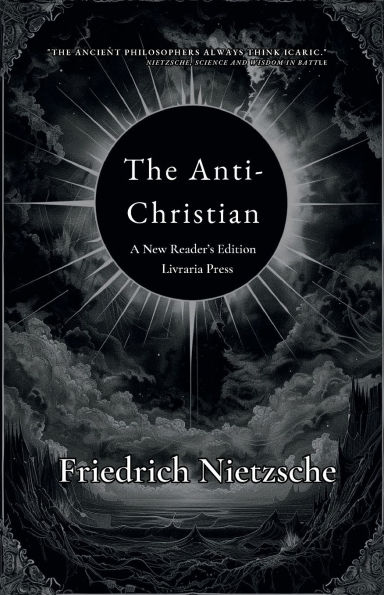
The Anti-Christian in Chattanooga, TN
Current price: $14.20
Barnes and Noble
The Anti-Christian in Chattanooga, TN
Current price: $14.20
Loading Inventory...
Size: Paperback
"The Anti-Christian: The Curse of Christianity" is Nietzsche's scathing critique of Christianity and its influence on Western culture and morality. Although most English translations have rendered the title as "The Anti-Christ ", the German word for "Christian" is "Christ", so this work can also be translated as ""The Anti-Christian"". As he is referring to himself as the ""ender of Christianity"", not only the Biblical Antichrist, this translation communicates the intent of the title better. The text is one of Nietzsche's last works, and it delivers a critique of Christianity in a sharp, polemical and extremely hostile style. Nietzsche denounces Christianity as a religion of weakness and resentment, arguing that it has suppressed the natural instincts and vitality of humanity in favor of a morality based on guilt, self-denial, and the promise of an afterlife. He contrasts the Christian worldview with his own vision of a life-affirming trans-humanist, Dionysian philosophy that celebrates strength over goodness, creativity over truth, and the embrace of the Nihilism of material existence. "The Antichrist" is an attempt by Nietzsche to repudiate all religious and metaphysical dogma, ironically asserting metaphysical dogmas of his own, a reality on which Heidegger comments on extensively. Nietzsche's father was a Protestant pastor, and many of his family members were pastors (including his brother-in-law), so the image of Christianity he attacks here is clearly the Protestant one. Eastern Orthodoxy is not mentioned at all, and Catholicism is rarely mentioned.
"The Anti-Christian: The Curse of Christianity" is Nietzsche's scathing critique of Christianity and its influence on Western culture and morality. Although most English translations have rendered the title as "The Anti-Christ ", the German word for "Christian" is "Christ", so this work can also be translated as ""The Anti-Christian"". As he is referring to himself as the ""ender of Christianity"", not only the Biblical Antichrist, this translation communicates the intent of the title better. The text is one of Nietzsche's last works, and it delivers a critique of Christianity in a sharp, polemical and extremely hostile style. Nietzsche denounces Christianity as a religion of weakness and resentment, arguing that it has suppressed the natural instincts and vitality of humanity in favor of a morality based on guilt, self-denial, and the promise of an afterlife. He contrasts the Christian worldview with his own vision of a life-affirming trans-humanist, Dionysian philosophy that celebrates strength over goodness, creativity over truth, and the embrace of the Nihilism of material existence. "The Antichrist" is an attempt by Nietzsche to repudiate all religious and metaphysical dogma, ironically asserting metaphysical dogmas of his own, a reality on which Heidegger comments on extensively. Nietzsche's father was a Protestant pastor, and many of his family members were pastors (including his brother-in-law), so the image of Christianity he attacks here is clearly the Protestant one. Eastern Orthodoxy is not mentioned at all, and Catholicism is rarely mentioned.
You May Also Like











More About Barnes and Noble at Hamilton Place
Barnes & Noble is the world’s largest retail bookseller and a leading retailer of content, digital media and educational products. Our Nook Digital business offers a lineup of NOOK® tablets and e-Readers and an expansive collection of digital reading content through the NOOK Store®. Barnes & Noble’s mission is to operate the best omni-channel specialty retail business in America, helping both our customers and booksellers reach their aspirations, while being a credit to the communities we serve.
2100 Hamilton Pl Blvd, Chattanooga, TN 37421, United States
Find Barnes and Noble at Hamilton Place in Chattanooga, TN
Visit Barnes and Noble at Hamilton Place in Chattanooga, TN
