
Home
The Agriculture Course Koberwitz, Whitsun 1924: Rudolf Steiner and the Beginnings of Biodynamics
Barnes and Noble
Loading Inventory...
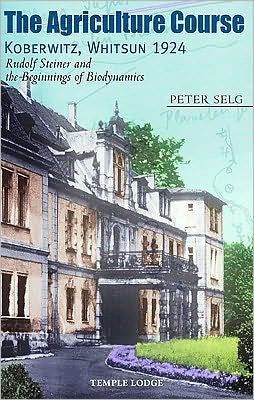
The Agriculture Course Koberwitz, Whitsun 1924: Rudolf Steiner and the Beginnings of Biodynamics in Chattanooga, TN
Current price: $26.00
Barnes and Noble
The Agriculture Course Koberwitz, Whitsun 1924: Rudolf Steiner and the Beginnings of Biodynamics in Chattanooga, TN
Current price: $26.00
Loading Inventory...
Size: OS
"I grew up entirely among peasant folk, and in my spirit I have always remained there--I indicated this in my autobiography. Though it was not on a large farming estate as you have here, in a smaller domain I myself planted potatoes, and though I did not breed horses, at any rate I helped to breed pigs. And in the farmyard of our immediate neighborhood I lent a hand with the cattle. These things were very close to me for a long time. I took part in them actively. Thus I do at any rate have a love of farming..." --
Rudolf Steiner
Biodynamic agriculture, which has increased consistently in popularity over the years, was born in June 1924 from a single course of eight lectures by Rudolf Steiner in Koberwitz (now in Poland).
In
The Agriculture Course
,
Peter Selg presents a remarkable study of the context of those lectures, conveying a tangible sense of the celebratory mood and atmosphere of those events at Pentecost. He highlights Steiner's intentions for the course--and parallel lectures in Breslau--by drawing widely on the available literature and numerous archival sources.
Recognizing that chemical manipulation of agriculture was neither desirable nor sustainable, Steiner helped launch an agricultural movement whose outlook is truly pioneering in spirit. As Selg describes, Steiner saw that "what was needed instead was new, conscious insight into life forces and laws, into the nature of organisms, into the diverse realms of nature, and the determining factors of both Earth and cosmos that influence them." The vivid picture painted here reveals the importance that Steiner placed on launching this work, as well as the extent to which his initiative offered an answer to the emerging forces of cultural and political destruction that would lead to World War II.
The Agriculture Course, Koberwitz, Whitsun 1924
is a translation from German of
Koberwitz 1924: Rudolf Steiner und der Landwirtschaftliche Kurs
(Rudolf Steiner Verlag, 2009).
Rudolf Steiner
Biodynamic agriculture, which has increased consistently in popularity over the years, was born in June 1924 from a single course of eight lectures by Rudolf Steiner in Koberwitz (now in Poland).
In
The Agriculture Course
,
Peter Selg presents a remarkable study of the context of those lectures, conveying a tangible sense of the celebratory mood and atmosphere of those events at Pentecost. He highlights Steiner's intentions for the course--and parallel lectures in Breslau--by drawing widely on the available literature and numerous archival sources.
Recognizing that chemical manipulation of agriculture was neither desirable nor sustainable, Steiner helped launch an agricultural movement whose outlook is truly pioneering in spirit. As Selg describes, Steiner saw that "what was needed instead was new, conscious insight into life forces and laws, into the nature of organisms, into the diverse realms of nature, and the determining factors of both Earth and cosmos that influence them." The vivid picture painted here reveals the importance that Steiner placed on launching this work, as well as the extent to which his initiative offered an answer to the emerging forces of cultural and political destruction that would lead to World War II.
The Agriculture Course, Koberwitz, Whitsun 1924
is a translation from German of
Koberwitz 1924: Rudolf Steiner und der Landwirtschaftliche Kurs
(Rudolf Steiner Verlag, 2009).
"I grew up entirely among peasant folk, and in my spirit I have always remained there--I indicated this in my autobiography. Though it was not on a large farming estate as you have here, in a smaller domain I myself planted potatoes, and though I did not breed horses, at any rate I helped to breed pigs. And in the farmyard of our immediate neighborhood I lent a hand with the cattle. These things were very close to me for a long time. I took part in them actively. Thus I do at any rate have a love of farming..." --
Rudolf Steiner
Biodynamic agriculture, which has increased consistently in popularity over the years, was born in June 1924 from a single course of eight lectures by Rudolf Steiner in Koberwitz (now in Poland).
In
The Agriculture Course
,
Peter Selg presents a remarkable study of the context of those lectures, conveying a tangible sense of the celebratory mood and atmosphere of those events at Pentecost. He highlights Steiner's intentions for the course--and parallel lectures in Breslau--by drawing widely on the available literature and numerous archival sources.
Recognizing that chemical manipulation of agriculture was neither desirable nor sustainable, Steiner helped launch an agricultural movement whose outlook is truly pioneering in spirit. As Selg describes, Steiner saw that "what was needed instead was new, conscious insight into life forces and laws, into the nature of organisms, into the diverse realms of nature, and the determining factors of both Earth and cosmos that influence them." The vivid picture painted here reveals the importance that Steiner placed on launching this work, as well as the extent to which his initiative offered an answer to the emerging forces of cultural and political destruction that would lead to World War II.
The Agriculture Course, Koberwitz, Whitsun 1924
is a translation from German of
Koberwitz 1924: Rudolf Steiner und der Landwirtschaftliche Kurs
(Rudolf Steiner Verlag, 2009).
Rudolf Steiner
Biodynamic agriculture, which has increased consistently in popularity over the years, was born in June 1924 from a single course of eight lectures by Rudolf Steiner in Koberwitz (now in Poland).
In
The Agriculture Course
,
Peter Selg presents a remarkable study of the context of those lectures, conveying a tangible sense of the celebratory mood and atmosphere of those events at Pentecost. He highlights Steiner's intentions for the course--and parallel lectures in Breslau--by drawing widely on the available literature and numerous archival sources.
Recognizing that chemical manipulation of agriculture was neither desirable nor sustainable, Steiner helped launch an agricultural movement whose outlook is truly pioneering in spirit. As Selg describes, Steiner saw that "what was needed instead was new, conscious insight into life forces and laws, into the nature of organisms, into the diverse realms of nature, and the determining factors of both Earth and cosmos that influence them." The vivid picture painted here reveals the importance that Steiner placed on launching this work, as well as the extent to which his initiative offered an answer to the emerging forces of cultural and political destruction that would lead to World War II.
The Agriculture Course, Koberwitz, Whitsun 1924
is a translation from German of
Koberwitz 1924: Rudolf Steiner und der Landwirtschaftliche Kurs
(Rudolf Steiner Verlag, 2009).
You May Also Like














More About Barnes and Noble at Hamilton Place
Barnes & Noble is the world’s largest retail bookseller and a leading retailer of content, digital media and educational products. Our Nook Digital business offers a lineup of NOOK® tablets and e-Readers and an expansive collection of digital reading content through the NOOK Store®. Barnes & Noble’s mission is to operate the best omni-channel specialty retail business in America, helping both our customers and booksellers reach their aspirations, while being a credit to the communities we serve.
2100 Hamilton Pl Blvd, Chattanooga, TN 37421, United States
Find Barnes and Noble at Hamilton Place in Chattanooga, TN
Visit Barnes and Noble at Hamilton Place in Chattanooga, TN
