
Home
The Ages of Gaia: A Biography of Our Living Earth
Barnes and Noble
Loading Inventory...
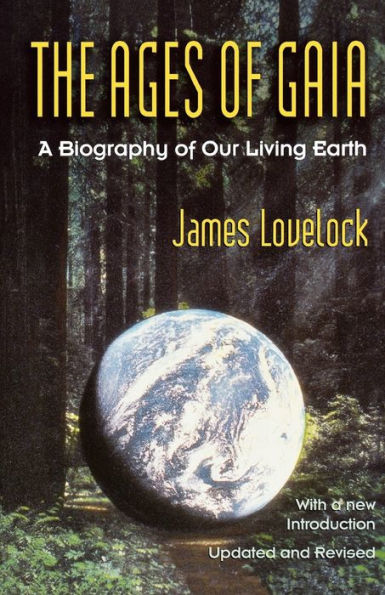
The Ages of Gaia: A Biography of Our Living Earth in Chattanooga, TN
Current price: $22.95
Barnes and Noble
The Ages of Gaia: A Biography of Our Living Earth in Chattanooga, TN
Current price: $22.95
Loading Inventory...
Size: OS
James Lovelock proposes that all living species are components of that organism, as cells are components of the human body.
Lovelock first sketched out his theory in his bestseller,
Gaia: A New Look at Life on Earth
. People all over the world embraced the theory, and in less than ten years it moved from the margins of scientific research to the mainstream. Lovelock argues that such things as the level of oxygen, the formation of clouds, and the saltiness of the oceans may all be controlled by biological processes. He believes that "living organisms create the optimum conditions for their own existence, and in so doing create the superorganism Gaia."
The New York Times Book Review
has called his arguments in favor of Gaia "plausible and above all illuminating."
Lovelock first sketched out his theory in his bestseller,
Gaia: A New Look at Life on Earth
. People all over the world embraced the theory, and in less than ten years it moved from the margins of scientific research to the mainstream. Lovelock argues that such things as the level of oxygen, the formation of clouds, and the saltiness of the oceans may all be controlled by biological processes. He believes that "living organisms create the optimum conditions for their own existence, and in so doing create the superorganism Gaia."
The New York Times Book Review
has called his arguments in favor of Gaia "plausible and above all illuminating."
James Lovelock proposes that all living species are components of that organism, as cells are components of the human body.
Lovelock first sketched out his theory in his bestseller,
Gaia: A New Look at Life on Earth
. People all over the world embraced the theory, and in less than ten years it moved from the margins of scientific research to the mainstream. Lovelock argues that such things as the level of oxygen, the formation of clouds, and the saltiness of the oceans may all be controlled by biological processes. He believes that "living organisms create the optimum conditions for their own existence, and in so doing create the superorganism Gaia."
The New York Times Book Review
has called his arguments in favor of Gaia "plausible and above all illuminating."
Lovelock first sketched out his theory in his bestseller,
Gaia: A New Look at Life on Earth
. People all over the world embraced the theory, and in less than ten years it moved from the margins of scientific research to the mainstream. Lovelock argues that such things as the level of oxygen, the formation of clouds, and the saltiness of the oceans may all be controlled by biological processes. He believes that "living organisms create the optimum conditions for their own existence, and in so doing create the superorganism Gaia."
The New York Times Book Review
has called his arguments in favor of Gaia "plausible and above all illuminating."
You May Also Like














More About Barnes and Noble at Hamilton Place
Barnes & Noble is the world’s largest retail bookseller and a leading retailer of content, digital media and educational products. Our Nook Digital business offers a lineup of NOOK® tablets and e-Readers and an expansive collection of digital reading content through the NOOK Store®. Barnes & Noble’s mission is to operate the best omni-channel specialty retail business in America, helping both our customers and booksellers reach their aspirations, while being a credit to the communities we serve.
2100 Hamilton Pl Blvd, Chattanooga, TN 37421, United States
Find Barnes and Noble at Hamilton Place in Chattanooga, TN
Visit Barnes and Noble at Hamilton Place in Chattanooga, TN
