
Home
Textual Life: Islam, Africa, and the Fate of Humanities
Barnes and Noble
Loading Inventory...
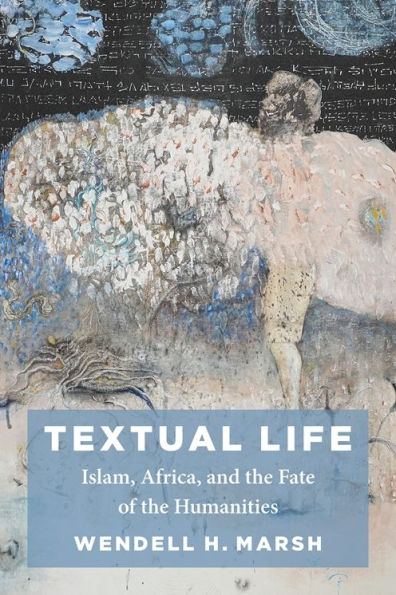
Textual Life: Islam, Africa, and the Fate of Humanities in Chattanooga, TN
Current price: $145.00
Barnes and Noble
Textual Life: Islam, Africa, and the Fate of Humanities in Chattanooga, TN
Current price: $145.00
Loading Inventory...
Size: Hardcover
Textual Life
is a groundbreaking book that recasts the role of knowledge in the making of a colonial and postcolonial nation. It makes a case for a new literary and intellectual-historical approach to Islam in Africa.
The Senegalese Muslim scholar Shaykh Musa Kamara (1864–1945) wrote
History of the Blacks
, a monumental history of West Africa, in a time when colonial discourses asserted that Africans lacked both writing and history. He sought to publish a bilingual Arabic and French edition of the book by working with humanists in colonial institutions, but the project was ultimately undermined by the disregard of the French state.
considers Kamara’s story as a parable about the fate of the humanities amid epistemic and technological change. Wendell H. Marsh argues that Kamara’s scholarship reflected what he calls the textual attitude, an orientation to the world mediated by reading. Colonial humanists shared this attitude even while upholding racial and religious hierarchies, and they took an interest in African texts and traditions. The bureaucrats and technocrats who succeeded them, however, disdained such dialogue—for reasons that bear a striking resemblance to the algorithmic antihumanism that is ascendant today.
Drawing on Kamara’s body of work, colonial archival documents, and postcolonial knowledge production within Senegal,
offers a decolonial vision of the humanities. By engaging with African and Muslim intellectual resources, Marsh shows how thinkers like Kamara who were subjected to colonialism can help us find a future after empire.
is a groundbreaking book that recasts the role of knowledge in the making of a colonial and postcolonial nation. It makes a case for a new literary and intellectual-historical approach to Islam in Africa.
The Senegalese Muslim scholar Shaykh Musa Kamara (1864–1945) wrote
History of the Blacks
, a monumental history of West Africa, in a time when colonial discourses asserted that Africans lacked both writing and history. He sought to publish a bilingual Arabic and French edition of the book by working with humanists in colonial institutions, but the project was ultimately undermined by the disregard of the French state.
considers Kamara’s story as a parable about the fate of the humanities amid epistemic and technological change. Wendell H. Marsh argues that Kamara’s scholarship reflected what he calls the textual attitude, an orientation to the world mediated by reading. Colonial humanists shared this attitude even while upholding racial and religious hierarchies, and they took an interest in African texts and traditions. The bureaucrats and technocrats who succeeded them, however, disdained such dialogue—for reasons that bear a striking resemblance to the algorithmic antihumanism that is ascendant today.
Drawing on Kamara’s body of work, colonial archival documents, and postcolonial knowledge production within Senegal,
offers a decolonial vision of the humanities. By engaging with African and Muslim intellectual resources, Marsh shows how thinkers like Kamara who were subjected to colonialism can help us find a future after empire.
Textual Life
is a groundbreaking book that recasts the role of knowledge in the making of a colonial and postcolonial nation. It makes a case for a new literary and intellectual-historical approach to Islam in Africa.
The Senegalese Muslim scholar Shaykh Musa Kamara (1864–1945) wrote
History of the Blacks
, a monumental history of West Africa, in a time when colonial discourses asserted that Africans lacked both writing and history. He sought to publish a bilingual Arabic and French edition of the book by working with humanists in colonial institutions, but the project was ultimately undermined by the disregard of the French state.
considers Kamara’s story as a parable about the fate of the humanities amid epistemic and technological change. Wendell H. Marsh argues that Kamara’s scholarship reflected what he calls the textual attitude, an orientation to the world mediated by reading. Colonial humanists shared this attitude even while upholding racial and religious hierarchies, and they took an interest in African texts and traditions. The bureaucrats and technocrats who succeeded them, however, disdained such dialogue—for reasons that bear a striking resemblance to the algorithmic antihumanism that is ascendant today.
Drawing on Kamara’s body of work, colonial archival documents, and postcolonial knowledge production within Senegal,
offers a decolonial vision of the humanities. By engaging with African and Muslim intellectual resources, Marsh shows how thinkers like Kamara who were subjected to colonialism can help us find a future after empire.
is a groundbreaking book that recasts the role of knowledge in the making of a colonial and postcolonial nation. It makes a case for a new literary and intellectual-historical approach to Islam in Africa.
The Senegalese Muslim scholar Shaykh Musa Kamara (1864–1945) wrote
History of the Blacks
, a monumental history of West Africa, in a time when colonial discourses asserted that Africans lacked both writing and history. He sought to publish a bilingual Arabic and French edition of the book by working with humanists in colonial institutions, but the project was ultimately undermined by the disregard of the French state.
considers Kamara’s story as a parable about the fate of the humanities amid epistemic and technological change. Wendell H. Marsh argues that Kamara’s scholarship reflected what he calls the textual attitude, an orientation to the world mediated by reading. Colonial humanists shared this attitude even while upholding racial and religious hierarchies, and they took an interest in African texts and traditions. The bureaucrats and technocrats who succeeded them, however, disdained such dialogue—for reasons that bear a striking resemblance to the algorithmic antihumanism that is ascendant today.
Drawing on Kamara’s body of work, colonial archival documents, and postcolonial knowledge production within Senegal,
offers a decolonial vision of the humanities. By engaging with African and Muslim intellectual resources, Marsh shows how thinkers like Kamara who were subjected to colonialism can help us find a future after empire.
You May Also Like










More About Barnes and Noble at Hamilton Place
Barnes & Noble is the world’s largest retail bookseller and a leading retailer of content, digital media and educational products. Our Nook Digital business offers a lineup of NOOK® tablets and e-Readers and an expansive collection of digital reading content through the NOOK Store®. Barnes & Noble’s mission is to operate the best omni-channel specialty retail business in America, helping both our customers and booksellers reach their aspirations, while being a credit to the communities we serve.
2100 Hamilton Pl Blvd, Chattanooga, TN 37421, United States
Find Barnes and Noble at Hamilton Place in Chattanooga, TN
Visit Barnes and Noble at Hamilton Place in Chattanooga, TN
