
Home
Tandem learning on the Internet: Learner interactions in virtual online environments (MOOs)
Barnes and Noble
Loading Inventory...
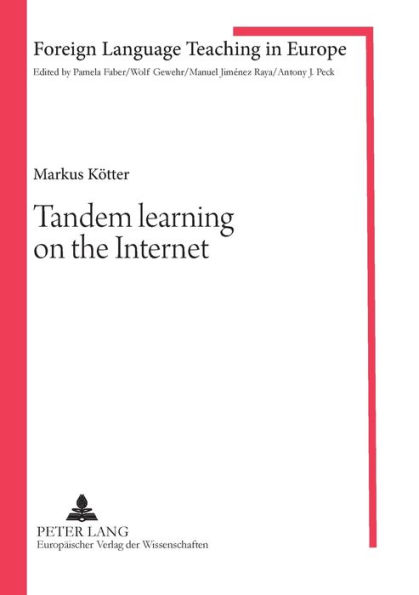
Tandem learning on the Internet: Learner interactions in virtual online environments (MOOs) in Chattanooga, TN
Current price: $114.50
Barnes and Noble
Tandem learning on the Internet: Learner interactions in virtual online environments (MOOs) in Chattanooga, TN
Current price: $114.50
Loading Inventory...
Size: OS
The study investigates interactions between 29 tandem partners from a German and a North American university, who met twice a week in a text-based online environment that allowed them to communicate with each other in real time via a computer keyboard. The analysis focuses on learners’ codeswitching, negotiation of meaning, error correction, and the use of specific spellings and punctuation.
The data suggest that most partners complied with the principle of reciprocity and that the non-threatening atmosphere of the MOO encouraged them to test their hypotheses about their L2. Moreover, the analysis revealed a noticeable increase in learners’ awareness of the target language. All students frequently engaged in negotiation of meaning, but there was a conspicuous absence of corrective feedback.
The data suggest that most partners complied with the principle of reciprocity and that the non-threatening atmosphere of the MOO encouraged them to test their hypotheses about their L2. Moreover, the analysis revealed a noticeable increase in learners’ awareness of the target language. All students frequently engaged in negotiation of meaning, but there was a conspicuous absence of corrective feedback.
The study investigates interactions between 29 tandem partners from a German and a North American university, who met twice a week in a text-based online environment that allowed them to communicate with each other in real time via a computer keyboard. The analysis focuses on learners’ codeswitching, negotiation of meaning, error correction, and the use of specific spellings and punctuation.
The data suggest that most partners complied with the principle of reciprocity and that the non-threatening atmosphere of the MOO encouraged them to test their hypotheses about their L2. Moreover, the analysis revealed a noticeable increase in learners’ awareness of the target language. All students frequently engaged in negotiation of meaning, but there was a conspicuous absence of corrective feedback.
The data suggest that most partners complied with the principle of reciprocity and that the non-threatening atmosphere of the MOO encouraged them to test their hypotheses about their L2. Moreover, the analysis revealed a noticeable increase in learners’ awareness of the target language. All students frequently engaged in negotiation of meaning, but there was a conspicuous absence of corrective feedback.
You May Also Like










More About Barnes and Noble at Hamilton Place
Barnes & Noble is the world’s largest retail bookseller and a leading retailer of content, digital media and educational products. Our Nook Digital business offers a lineup of NOOK® tablets and e-Readers and an expansive collection of digital reading content through the NOOK Store®. Barnes & Noble’s mission is to operate the best omni-channel specialty retail business in America, helping both our customers and booksellers reach their aspirations, while being a credit to the communities we serve.
2100 Hamilton Pl Blvd, Chattanooga, TN 37421, United States
Find Barnes and Noble at Hamilton Place in Chattanooga, TN
Visit Barnes and Noble at Hamilton Place in Chattanooga, TN
