
Home
Sustainability in Chemical Processes through Digitalization and Green Chemistry Approaches
Barnes and Noble
Loading Inventory...
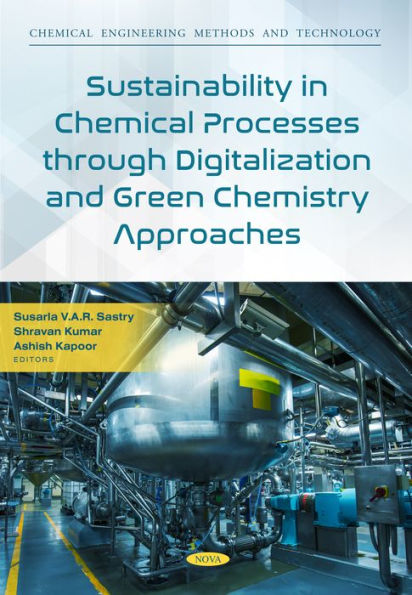
Sustainability in Chemical Processes through Digitalization and Green Chemistry Approaches in Chattanooga, TN
Current price: $230.00
Barnes and Noble
Sustainability in Chemical Processes through Digitalization and Green Chemistry Approaches in Chattanooga, TN
Current price: $230.00
Loading Inventory...
Size: OS
The sustainability of chemical processes extends beyond the physical and chemical sciences to include the biological sciences – reflected by bio and green modifiers, and other resources like alternate energy, alternate feedstock, green processes with minimal footprint and minimal environmental impact, process intensification, recycling etc. Digitalization has transformed the chemical industry rapidly across its entire value chain through predictive maintenance and process automation. There are applications of artificial intelligence in the chemical engineering field, such as modeling, optimization, process control, reaction engineering, fault detection and diagnosis. Artificial Intelligence (AI) could provide a significant impact in problem-solving, mathematical analysis and information technology by optimizing processes in chemical industries. AI has promising applications in new areas that include materials designs such as catalysts, nanostructures, pharmaceuticals, additives, polymeric composites, rubber compounds and alloys. Also, machine learning is an area of AI that has been used to integrate physical models and computational techniques for autonomous molecular design in the chemical and pharmaceutical industries, especially in the manufacturing of soft bio-inspired materials. AI can make industrial processes safer and cleaner, and help invent new molecules for specific customer needs, including the increased circularity of materials. Over the next few years it will be critical for the chemical sector to find the right applications of AI technologies that can bring benefits in terms of reducing energy consumption, the reduction of environmental pollution, the realization of a full circular economy, cost reductions and product quality improvements. Sustainability chemistry focuses on the design of products and processes that eliminate the use and generation of hazardous substances and make the global environment clean and safe. Increased drive for sustainable products and technologies, enhanced customer specifications, new performance requirements and the ground-breaking integration of mass data technologies is creating a vibrant and evolving landscape of opportunities and challenges. This book will provide an excellent opportunity to all the stake holders in the industries, consumer interest organizations, regulatory agencies, policy implementers and research organizations by providing future directions in the areas of soaps and detergents; vegetable oils; food and beverages; paints and coatings; bimolecular and bioprocesses technologies; packaging; leather products; petrochemicals and polymers; essential oils and cosmetics, and biofuels and lubricants.
The sustainability of chemical processes extends beyond the physical and chemical sciences to include the biological sciences – reflected by bio and green modifiers, and other resources like alternate energy, alternate feedstock, green processes with minimal footprint and minimal environmental impact, process intensification, recycling etc. Digitalization has transformed the chemical industry rapidly across its entire value chain through predictive maintenance and process automation. There are applications of artificial intelligence in the chemical engineering field, such as modeling, optimization, process control, reaction engineering, fault detection and diagnosis. Artificial Intelligence (AI) could provide a significant impact in problem-solving, mathematical analysis and information technology by optimizing processes in chemical industries. AI has promising applications in new areas that include materials designs such as catalysts, nanostructures, pharmaceuticals, additives, polymeric composites, rubber compounds and alloys. Also, machine learning is an area of AI that has been used to integrate physical models and computational techniques for autonomous molecular design in the chemical and pharmaceutical industries, especially in the manufacturing of soft bio-inspired materials. AI can make industrial processes safer and cleaner, and help invent new molecules for specific customer needs, including the increased circularity of materials. Over the next few years it will be critical for the chemical sector to find the right applications of AI technologies that can bring benefits in terms of reducing energy consumption, the reduction of environmental pollution, the realization of a full circular economy, cost reductions and product quality improvements. Sustainability chemistry focuses on the design of products and processes that eliminate the use and generation of hazardous substances and make the global environment clean and safe. Increased drive for sustainable products and technologies, enhanced customer specifications, new performance requirements and the ground-breaking integration of mass data technologies is creating a vibrant and evolving landscape of opportunities and challenges. This book will provide an excellent opportunity to all the stake holders in the industries, consumer interest organizations, regulatory agencies, policy implementers and research organizations by providing future directions in the areas of soaps and detergents; vegetable oils; food and beverages; paints and coatings; bimolecular and bioprocesses technologies; packaging; leather products; petrochemicals and polymers; essential oils and cosmetics, and biofuels and lubricants.
You May Also Like







More About Barnes and Noble at Hamilton Place
Barnes & Noble is the world’s largest retail bookseller and a leading retailer of content, digital media and educational products. Our Nook Digital business offers a lineup of NOOK® tablets and e-Readers and an expansive collection of digital reading content through the NOOK Store®. Barnes & Noble’s mission is to operate the best omni-channel specialty retail business in America, helping both our customers and booksellers reach their aspirations, while being a credit to the communities we serve.
2100 Hamilton Pl Blvd, Chattanooga, TN 37421, United States
Find Barnes and Noble at Hamilton Place in Chattanooga, TN
Visit Barnes and Noble at Hamilton Place in Chattanooga, TN
