
Home
Superstorm 1950: the Greatest Simultaneous Blizzard, Ice Storm, Windstorm, and Cold Outbreak of Twentieth Century
Barnes and Noble
Loading Inventory...
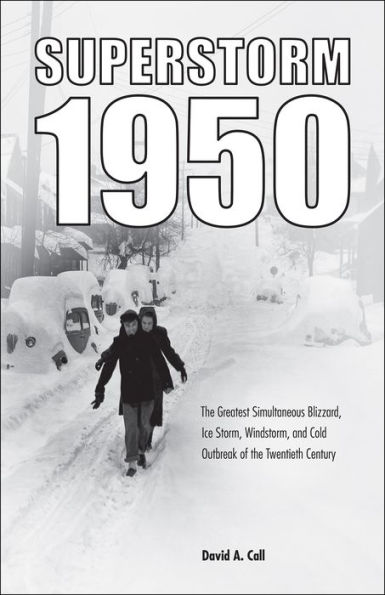
Superstorm 1950: the Greatest Simultaneous Blizzard, Ice Storm, Windstorm, and Cold Outbreak of Twentieth Century in Chattanooga, TN
Current price: $25.99
Barnes and Noble
Superstorm 1950: the Greatest Simultaneous Blizzard, Ice Storm, Windstorm, and Cold Outbreak of Twentieth Century in Chattanooga, TN
Current price: $25.99
Loading Inventory...
Size: Paperback
In November 1950, the greatest storm of the twentieth century crippled the eastern United States, affecting more than 100 million people. Sometimes referred to as the Great Appalachian or Thanksgiving storm, this was no ordinary weather event. Its giant size and multiple recordsetting hazards—including snow, ice, flooding, wind, and cold temperatures—were cataclysmic. This superstorm was the most costly weatherrelated disaster when it occurred. Only two other storms that affected the US mainland since then, both hurricanes, have exceeded its death toll. The weather records it established remain benchmarks of extreme weather to this day.
Superstorm 1950
examines the immediate impact of the storm, covering not just meteorology, but also its wideranging social impacts, which varied by race, class, and gender. The repercussions continue to affect us today, in obvious areas like weather forecasting, and in surprising areas like Ohio State football and government tax policy. Because superstorms are not as familiar as hurricanes or tornadoes, they can be overlooked in terms of weatherrelated disasters. This is a mistake. Vulnerability to weather disasters is increasing, and a similar storm today would likely be the most expensive weather disaster ever in the United States.
serves not only as a riveting account of one of the greatest disasters in US history, but also provides a premonition of what may come if global climate change is not confronted.
Superstorm 1950
examines the immediate impact of the storm, covering not just meteorology, but also its wideranging social impacts, which varied by race, class, and gender. The repercussions continue to affect us today, in obvious areas like weather forecasting, and in surprising areas like Ohio State football and government tax policy. Because superstorms are not as familiar as hurricanes or tornadoes, they can be overlooked in terms of weatherrelated disasters. This is a mistake. Vulnerability to weather disasters is increasing, and a similar storm today would likely be the most expensive weather disaster ever in the United States.
serves not only as a riveting account of one of the greatest disasters in US history, but also provides a premonition of what may come if global climate change is not confronted.
In November 1950, the greatest storm of the twentieth century crippled the eastern United States, affecting more than 100 million people. Sometimes referred to as the Great Appalachian or Thanksgiving storm, this was no ordinary weather event. Its giant size and multiple recordsetting hazards—including snow, ice, flooding, wind, and cold temperatures—were cataclysmic. This superstorm was the most costly weatherrelated disaster when it occurred. Only two other storms that affected the US mainland since then, both hurricanes, have exceeded its death toll. The weather records it established remain benchmarks of extreme weather to this day.
Superstorm 1950
examines the immediate impact of the storm, covering not just meteorology, but also its wideranging social impacts, which varied by race, class, and gender. The repercussions continue to affect us today, in obvious areas like weather forecasting, and in surprising areas like Ohio State football and government tax policy. Because superstorms are not as familiar as hurricanes or tornadoes, they can be overlooked in terms of weatherrelated disasters. This is a mistake. Vulnerability to weather disasters is increasing, and a similar storm today would likely be the most expensive weather disaster ever in the United States.
serves not only as a riveting account of one of the greatest disasters in US history, but also provides a premonition of what may come if global climate change is not confronted.
Superstorm 1950
examines the immediate impact of the storm, covering not just meteorology, but also its wideranging social impacts, which varied by race, class, and gender. The repercussions continue to affect us today, in obvious areas like weather forecasting, and in surprising areas like Ohio State football and government tax policy. Because superstorms are not as familiar as hurricanes or tornadoes, they can be overlooked in terms of weatherrelated disasters. This is a mistake. Vulnerability to weather disasters is increasing, and a similar storm today would likely be the most expensive weather disaster ever in the United States.
serves not only as a riveting account of one of the greatest disasters in US history, but also provides a premonition of what may come if global climate change is not confronted.
You May Also Like









More About Barnes and Noble at Hamilton Place
Barnes & Noble is the world’s largest retail bookseller and a leading retailer of content, digital media and educational products. Our Nook Digital business offers a lineup of NOOK® tablets and e-Readers and an expansive collection of digital reading content through the NOOK Store®. Barnes & Noble’s mission is to operate the best omni-channel specialty retail business in America, helping both our customers and booksellers reach their aspirations, while being a credit to the communities we serve.
2100 Hamilton Pl Blvd, Chattanooga, TN 37421, United States
Find Barnes and Noble at Hamilton Place in Chattanooga, TN
Visit Barnes and Noble at Hamilton Place in Chattanooga, TN
