
Home
Studies in Thought, Polity and Economy of Medieval India 1000-1500
Barnes and Noble
Loading Inventory...
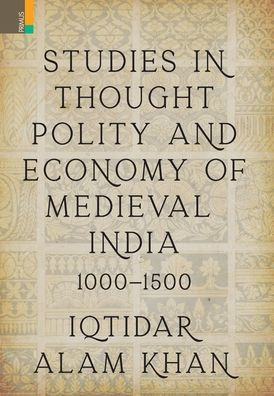
Studies in Thought, Polity and Economy of Medieval India 1000-1500 in Chattanooga, TN
Current price: $46.95
Barnes and Noble
Studies in Thought, Polity and Economy of Medieval India 1000-1500 in Chattanooga, TN
Current price: $46.95
Loading Inventory...
Size: OS
This book attempts to comprehend the history of the Delhi Sultanate with reference to its Islamic identity.
The Turkish chiefs, despite having a military advantage due to their expertise in horsemanship, could only consolidate their rule through adjustment and sharing of power with local kshatriya rulers, and, therefore, tended to incorporate an increasing number of Hindu chiefs in the ruling establishment. This process was sought to be made durable by conceding to the chiefs many of the pecuniary gains and social clout they had enjoyed before the conquests. According to Barani, the ulema endorsed the view that in the given situation, provisions of fiqah evolved in Arabia were not practicable in the Delhi Sultanate. By the same logic, settlements conceding to the village chiefs' important roles in the fiscal administration of rural tracts were justified. Additionally, the Islamic characteristics of the State system in the Delhi Sultanate were profoundly impacted by Sassanid and Turkish traditions of statecraft. With the passage of time many notions of Hindu caste culture also became influential in the mental makeup of the ruling elites of the Delhi Sultanate.
The Turkish chiefs, despite having a military advantage due to their expertise in horsemanship, could only consolidate their rule through adjustment and sharing of power with local kshatriya rulers, and, therefore, tended to incorporate an increasing number of Hindu chiefs in the ruling establishment. This process was sought to be made durable by conceding to the chiefs many of the pecuniary gains and social clout they had enjoyed before the conquests. According to Barani, the ulema endorsed the view that in the given situation, provisions of fiqah evolved in Arabia were not practicable in the Delhi Sultanate. By the same logic, settlements conceding to the village chiefs' important roles in the fiscal administration of rural tracts were justified. Additionally, the Islamic characteristics of the State system in the Delhi Sultanate were profoundly impacted by Sassanid and Turkish traditions of statecraft. With the passage of time many notions of Hindu caste culture also became influential in the mental makeup of the ruling elites of the Delhi Sultanate.
This book attempts to comprehend the history of the Delhi Sultanate with reference to its Islamic identity.
The Turkish chiefs, despite having a military advantage due to their expertise in horsemanship, could only consolidate their rule through adjustment and sharing of power with local kshatriya rulers, and, therefore, tended to incorporate an increasing number of Hindu chiefs in the ruling establishment. This process was sought to be made durable by conceding to the chiefs many of the pecuniary gains and social clout they had enjoyed before the conquests. According to Barani, the ulema endorsed the view that in the given situation, provisions of fiqah evolved in Arabia were not practicable in the Delhi Sultanate. By the same logic, settlements conceding to the village chiefs' important roles in the fiscal administration of rural tracts were justified. Additionally, the Islamic characteristics of the State system in the Delhi Sultanate were profoundly impacted by Sassanid and Turkish traditions of statecraft. With the passage of time many notions of Hindu caste culture also became influential in the mental makeup of the ruling elites of the Delhi Sultanate.
The Turkish chiefs, despite having a military advantage due to their expertise in horsemanship, could only consolidate their rule through adjustment and sharing of power with local kshatriya rulers, and, therefore, tended to incorporate an increasing number of Hindu chiefs in the ruling establishment. This process was sought to be made durable by conceding to the chiefs many of the pecuniary gains and social clout they had enjoyed before the conquests. According to Barani, the ulema endorsed the view that in the given situation, provisions of fiqah evolved in Arabia were not practicable in the Delhi Sultanate. By the same logic, settlements conceding to the village chiefs' important roles in the fiscal administration of rural tracts were justified. Additionally, the Islamic characteristics of the State system in the Delhi Sultanate were profoundly impacted by Sassanid and Turkish traditions of statecraft. With the passage of time many notions of Hindu caste culture also became influential in the mental makeup of the ruling elites of the Delhi Sultanate.
You May Also Like











More About Barnes and Noble at Hamilton Place
Barnes & Noble is the world’s largest retail bookseller and a leading retailer of content, digital media and educational products. Our Nook Digital business offers a lineup of NOOK® tablets and e-Readers and an expansive collection of digital reading content through the NOOK Store®. Barnes & Noble’s mission is to operate the best omni-channel specialty retail business in America, helping both our customers and booksellers reach their aspirations, while being a credit to the communities we serve.
2100 Hamilton Pl Blvd, Chattanooga, TN 37421, United States
Find Barnes and Noble at Hamilton Place in Chattanooga, TN
Visit Barnes and Noble at Hamilton Place in Chattanooga, TN
