
Home
Structural Mechanics: Bridging Theoretical Foundations and Real-World Disasters
Barnes and Noble
Loading Inventory...
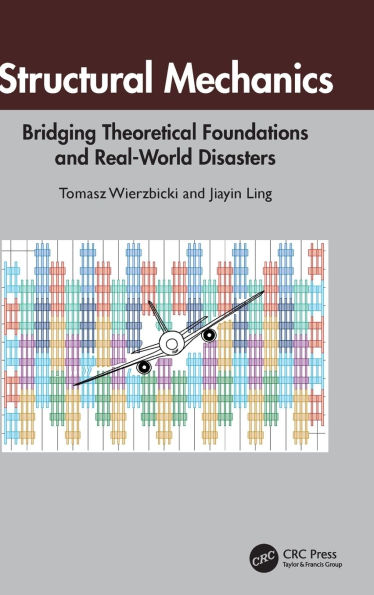
Structural Mechanics: Bridging Theoretical Foundations and Real-World Disasters in Chattanooga, TN
Current price: $200.00
Barnes and Noble
Structural Mechanics: Bridging Theoretical Foundations and Real-World Disasters in Chattanooga, TN
Current price: $200.00
Loading Inventory...
Size: OS
Structural Mechanics
covers three different aspects of modern engineering: the foundation of structural mechanics, the solution to urgent industrial problems, and the reconstruction of major accidents. This book offers six case studies that teach how to identify the most important phase of the collapse or fracture of a complex system, develop a simple mathematically tractable model, and offer a discussion of the analytical and numerical solutions.
This book originated from the lecture notes of Professor Tomasz Wierzbicki who taught at MIT and Stanford University. The notes were amended and improved many times over the years to provide a link between rigorous theoretical foundations with solutions to important engineering problems. The book discusses complex man-made structures under accidental impact or explosive loads, resulting in the loss of life and/or extensive property, infrastructural, and environmental damage. The book deals with reconstructing the sequence of events of such accidents from the structural point of view. The book is not restricted to the accident reconstruction only - concepts and solutions of the elasticity, advance plasticity and ductile fracture were used throughout the reconstruction of the accidents. The additional 17 lectures provide theoretical foundations for the elastic structures, plastic plates and shells, and ductile fracture.
Not only is this an essential textbook for graduate students studying structural mechanics, it is also relevant to industry professionals, researchers, and academics in the field of engineering.
covers three different aspects of modern engineering: the foundation of structural mechanics, the solution to urgent industrial problems, and the reconstruction of major accidents. This book offers six case studies that teach how to identify the most important phase of the collapse or fracture of a complex system, develop a simple mathematically tractable model, and offer a discussion of the analytical and numerical solutions.
This book originated from the lecture notes of Professor Tomasz Wierzbicki who taught at MIT and Stanford University. The notes were amended and improved many times over the years to provide a link between rigorous theoretical foundations with solutions to important engineering problems. The book discusses complex man-made structures under accidental impact or explosive loads, resulting in the loss of life and/or extensive property, infrastructural, and environmental damage. The book deals with reconstructing the sequence of events of such accidents from the structural point of view. The book is not restricted to the accident reconstruction only - concepts and solutions of the elasticity, advance plasticity and ductile fracture were used throughout the reconstruction of the accidents. The additional 17 lectures provide theoretical foundations for the elastic structures, plastic plates and shells, and ductile fracture.
Not only is this an essential textbook for graduate students studying structural mechanics, it is also relevant to industry professionals, researchers, and academics in the field of engineering.
Structural Mechanics
covers three different aspects of modern engineering: the foundation of structural mechanics, the solution to urgent industrial problems, and the reconstruction of major accidents. This book offers six case studies that teach how to identify the most important phase of the collapse or fracture of a complex system, develop a simple mathematically tractable model, and offer a discussion of the analytical and numerical solutions.
This book originated from the lecture notes of Professor Tomasz Wierzbicki who taught at MIT and Stanford University. The notes were amended and improved many times over the years to provide a link between rigorous theoretical foundations with solutions to important engineering problems. The book discusses complex man-made structures under accidental impact or explosive loads, resulting in the loss of life and/or extensive property, infrastructural, and environmental damage. The book deals with reconstructing the sequence of events of such accidents from the structural point of view. The book is not restricted to the accident reconstruction only - concepts and solutions of the elasticity, advance plasticity and ductile fracture were used throughout the reconstruction of the accidents. The additional 17 lectures provide theoretical foundations for the elastic structures, plastic plates and shells, and ductile fracture.
Not only is this an essential textbook for graduate students studying structural mechanics, it is also relevant to industry professionals, researchers, and academics in the field of engineering.
covers three different aspects of modern engineering: the foundation of structural mechanics, the solution to urgent industrial problems, and the reconstruction of major accidents. This book offers six case studies that teach how to identify the most important phase of the collapse or fracture of a complex system, develop a simple mathematically tractable model, and offer a discussion of the analytical and numerical solutions.
This book originated from the lecture notes of Professor Tomasz Wierzbicki who taught at MIT and Stanford University. The notes were amended and improved many times over the years to provide a link between rigorous theoretical foundations with solutions to important engineering problems. The book discusses complex man-made structures under accidental impact or explosive loads, resulting in the loss of life and/or extensive property, infrastructural, and environmental damage. The book deals with reconstructing the sequence of events of such accidents from the structural point of view. The book is not restricted to the accident reconstruction only - concepts and solutions of the elasticity, advance plasticity and ductile fracture were used throughout the reconstruction of the accidents. The additional 17 lectures provide theoretical foundations for the elastic structures, plastic plates and shells, and ductile fracture.
Not only is this an essential textbook for graduate students studying structural mechanics, it is also relevant to industry professionals, researchers, and academics in the field of engineering.
You May Also Like











More About Barnes and Noble at Hamilton Place
Barnes & Noble is the world’s largest retail bookseller and a leading retailer of content, digital media and educational products. Our Nook Digital business offers a lineup of NOOK® tablets and e-Readers and an expansive collection of digital reading content through the NOOK Store®. Barnes & Noble’s mission is to operate the best omni-channel specialty retail business in America, helping both our customers and booksellers reach their aspirations, while being a credit to the communities we serve.
2100 Hamilton Pl Blvd, Chattanooga, TN 37421, United States
Find Barnes and Noble at Hamilton Place in Chattanooga, TN
Visit Barnes and Noble at Hamilton Place in Chattanooga, TN
