
Home
Strange Relation: A Memoir of Marriage, Dementia, and Poetry
Barnes and Noble
Loading Inventory...
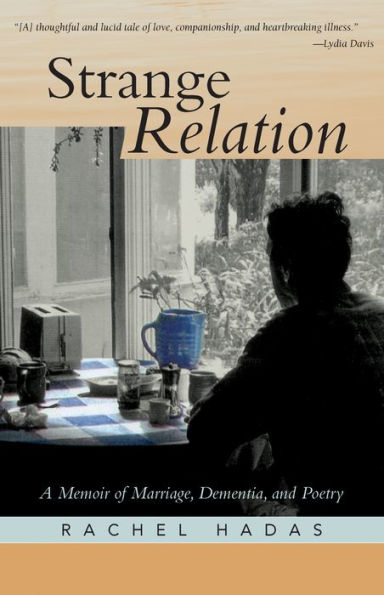
Strange Relation: A Memoir of Marriage, Dementia, and Poetry in Chattanooga, TN
Current price: $16.95
Barnes and Noble
Strange Relation: A Memoir of Marriage, Dementia, and Poetry in Chattanooga, TN
Current price: $16.95
Loading Inventory...
Size: Paperback
"[A] thoughtful and lucid tale of love, companionship, and heartbreaking illness." Lydia Davis
In 2004 Rachel Hadas's husband, George Edwards, a composer and professor of music at Columbia University, was diagnosed with early-onset dementia at the age of sixty-one.
Strange Relation
is her account of "losing" George. Her narrative begins when George's illness can no longer be ignored, and ends in 2008 soon after his move to a dementia facility (when, after thirty years of marriage, she finds herself no longer living with her husband). Within the cloudy confines of those difficult years, years when reading and writing were an essential part of what kept her going, she "tried to keep track tried to tell the truth."
"If only all doctors and nurses and social workers who care for the chronically ill could read this book. If only patients and family members stricken with such losses could receive what this book can give them. While
relates one illness and the life of one family, it is also, poetically, about all illnesses, all families, all struggles, all living. The art achieves the dual life of the universal and the particular, marking it as timeless, making it for us all necessary."Rita Charon, MD, PhD, Program in Narrative Medicine, Columbia University
"Rachel Hadas's own wonderfully resonant poems, along with the rich collection of verse and prose by other writers that she weaves into her story, clarify and illuminate over and over again this thoughtful and lucid tale of love, companionship, and heartbreaking illnessillness that, as she shows us so well, is at once frighteningly alien and also deeply a part of our unavoidable vulnerability as mortal beings. Beautifully written, totally engrossing, and very sad."Lydia Davis
"
is a deeply moving, deeply personal, beautifully written exploration of how the power of grief can be met with the power of literature, and how solace can be found in the space between them."Frank Huyler
"A poignant memoir of love, creativity and human vulnerability. Rachel Hadas brings a poet's incisive eye to the labyrinth of dementia."Danielle Ofri, MD, PhD, author of
Medicine in Translation
and
Singular Intimacies
"Like an elegy,
is about loss and grief. Like all elegies, it also memorializes and celebrates. Rachel Hadas, in the course of her personal narrative, cites accounts of dementia, in its social and personal meanings."Robert Pinsky
"Brilliant and tough-minded, poignant but clear-headed, Rachel Hadas shines a steady light on her experience as the wife of an accomplished composer who, at a comparatively early age, descended into dementia.
never sacrifices truth for easy answers. Instead, Hadas uses literature to chart a course through wrenching complexities. This lauded and exceptional poet shows how language itself, the very thing her husband loses, became her shield as she crossed the ravaged lands of decision-making, making new discoveries, new friends, and new sense of the world.
snaps with bravery, intelligence, and Hadas' tart, candid wisdom."Molly Peacock
is a beautifully written and piercingly honest account of life with a brilliant man as he descends into dementia, in his sixties."Reeve Lindbergh
Rachel Hadas
is Board of Governors Professor of English at Rutgers Universityin Newark. She is the author of many books, including
The River of Forgetfulness
,
Laws
Indelible
, and
Halfway Down the Hall: New & Selected Poems
. She co-edited the anthology
The Greek Poets: Homer to the Present
. She lives in Manhattan.
In 2004 Rachel Hadas's husband, George Edwards, a composer and professor of music at Columbia University, was diagnosed with early-onset dementia at the age of sixty-one.
Strange Relation
is her account of "losing" George. Her narrative begins when George's illness can no longer be ignored, and ends in 2008 soon after his move to a dementia facility (when, after thirty years of marriage, she finds herself no longer living with her husband). Within the cloudy confines of those difficult years, years when reading and writing were an essential part of what kept her going, she "tried to keep track tried to tell the truth."
"If only all doctors and nurses and social workers who care for the chronically ill could read this book. If only patients and family members stricken with such losses could receive what this book can give them. While
relates one illness and the life of one family, it is also, poetically, about all illnesses, all families, all struggles, all living. The art achieves the dual life of the universal and the particular, marking it as timeless, making it for us all necessary."Rita Charon, MD, PhD, Program in Narrative Medicine, Columbia University
"Rachel Hadas's own wonderfully resonant poems, along with the rich collection of verse and prose by other writers that she weaves into her story, clarify and illuminate over and over again this thoughtful and lucid tale of love, companionship, and heartbreaking illnessillness that, as she shows us so well, is at once frighteningly alien and also deeply a part of our unavoidable vulnerability as mortal beings. Beautifully written, totally engrossing, and very sad."Lydia Davis
"
is a deeply moving, deeply personal, beautifully written exploration of how the power of grief can be met with the power of literature, and how solace can be found in the space between them."Frank Huyler
"A poignant memoir of love, creativity and human vulnerability. Rachel Hadas brings a poet's incisive eye to the labyrinth of dementia."Danielle Ofri, MD, PhD, author of
Medicine in Translation
and
Singular Intimacies
"Like an elegy,
is about loss and grief. Like all elegies, it also memorializes and celebrates. Rachel Hadas, in the course of her personal narrative, cites accounts of dementia, in its social and personal meanings."Robert Pinsky
"Brilliant and tough-minded, poignant but clear-headed, Rachel Hadas shines a steady light on her experience as the wife of an accomplished composer who, at a comparatively early age, descended into dementia.
never sacrifices truth for easy answers. Instead, Hadas uses literature to chart a course through wrenching complexities. This lauded and exceptional poet shows how language itself, the very thing her husband loses, became her shield as she crossed the ravaged lands of decision-making, making new discoveries, new friends, and new sense of the world.
snaps with bravery, intelligence, and Hadas' tart, candid wisdom."Molly Peacock
is a beautifully written and piercingly honest account of life with a brilliant man as he descends into dementia, in his sixties."Reeve Lindbergh
Rachel Hadas
is Board of Governors Professor of English at Rutgers Universityin Newark. She is the author of many books, including
The River of Forgetfulness
,
Laws
Indelible
, and
Halfway Down the Hall: New & Selected Poems
. She co-edited the anthology
The Greek Poets: Homer to the Present
. She lives in Manhattan.
"[A] thoughtful and lucid tale of love, companionship, and heartbreaking illness." Lydia Davis
In 2004 Rachel Hadas's husband, George Edwards, a composer and professor of music at Columbia University, was diagnosed with early-onset dementia at the age of sixty-one.
Strange Relation
is her account of "losing" George. Her narrative begins when George's illness can no longer be ignored, and ends in 2008 soon after his move to a dementia facility (when, after thirty years of marriage, she finds herself no longer living with her husband). Within the cloudy confines of those difficult years, years when reading and writing were an essential part of what kept her going, she "tried to keep track tried to tell the truth."
"If only all doctors and nurses and social workers who care for the chronically ill could read this book. If only patients and family members stricken with such losses could receive what this book can give them. While
relates one illness and the life of one family, it is also, poetically, about all illnesses, all families, all struggles, all living. The art achieves the dual life of the universal and the particular, marking it as timeless, making it for us all necessary."Rita Charon, MD, PhD, Program in Narrative Medicine, Columbia University
"Rachel Hadas's own wonderfully resonant poems, along with the rich collection of verse and prose by other writers that she weaves into her story, clarify and illuminate over and over again this thoughtful and lucid tale of love, companionship, and heartbreaking illnessillness that, as she shows us so well, is at once frighteningly alien and also deeply a part of our unavoidable vulnerability as mortal beings. Beautifully written, totally engrossing, and very sad."Lydia Davis
"
is a deeply moving, deeply personal, beautifully written exploration of how the power of grief can be met with the power of literature, and how solace can be found in the space between them."Frank Huyler
"A poignant memoir of love, creativity and human vulnerability. Rachel Hadas brings a poet's incisive eye to the labyrinth of dementia."Danielle Ofri, MD, PhD, author of
Medicine in Translation
and
Singular Intimacies
"Like an elegy,
is about loss and grief. Like all elegies, it also memorializes and celebrates. Rachel Hadas, in the course of her personal narrative, cites accounts of dementia, in its social and personal meanings."Robert Pinsky
"Brilliant and tough-minded, poignant but clear-headed, Rachel Hadas shines a steady light on her experience as the wife of an accomplished composer who, at a comparatively early age, descended into dementia.
never sacrifices truth for easy answers. Instead, Hadas uses literature to chart a course through wrenching complexities. This lauded and exceptional poet shows how language itself, the very thing her husband loses, became her shield as she crossed the ravaged lands of decision-making, making new discoveries, new friends, and new sense of the world.
snaps with bravery, intelligence, and Hadas' tart, candid wisdom."Molly Peacock
is a beautifully written and piercingly honest account of life with a brilliant man as he descends into dementia, in his sixties."Reeve Lindbergh
Rachel Hadas
is Board of Governors Professor of English at Rutgers Universityin Newark. She is the author of many books, including
The River of Forgetfulness
,
Laws
Indelible
, and
Halfway Down the Hall: New & Selected Poems
. She co-edited the anthology
The Greek Poets: Homer to the Present
. She lives in Manhattan.
In 2004 Rachel Hadas's husband, George Edwards, a composer and professor of music at Columbia University, was diagnosed with early-onset dementia at the age of sixty-one.
Strange Relation
is her account of "losing" George. Her narrative begins when George's illness can no longer be ignored, and ends in 2008 soon after his move to a dementia facility (when, after thirty years of marriage, she finds herself no longer living with her husband). Within the cloudy confines of those difficult years, years when reading and writing were an essential part of what kept her going, she "tried to keep track tried to tell the truth."
"If only all doctors and nurses and social workers who care for the chronically ill could read this book. If only patients and family members stricken with such losses could receive what this book can give them. While
relates one illness and the life of one family, it is also, poetically, about all illnesses, all families, all struggles, all living. The art achieves the dual life of the universal and the particular, marking it as timeless, making it for us all necessary."Rita Charon, MD, PhD, Program in Narrative Medicine, Columbia University
"Rachel Hadas's own wonderfully resonant poems, along with the rich collection of verse and prose by other writers that she weaves into her story, clarify and illuminate over and over again this thoughtful and lucid tale of love, companionship, and heartbreaking illnessillness that, as she shows us so well, is at once frighteningly alien and also deeply a part of our unavoidable vulnerability as mortal beings. Beautifully written, totally engrossing, and very sad."Lydia Davis
"
is a deeply moving, deeply personal, beautifully written exploration of how the power of grief can be met with the power of literature, and how solace can be found in the space between them."Frank Huyler
"A poignant memoir of love, creativity and human vulnerability. Rachel Hadas brings a poet's incisive eye to the labyrinth of dementia."Danielle Ofri, MD, PhD, author of
Medicine in Translation
and
Singular Intimacies
"Like an elegy,
is about loss and grief. Like all elegies, it also memorializes and celebrates. Rachel Hadas, in the course of her personal narrative, cites accounts of dementia, in its social and personal meanings."Robert Pinsky
"Brilliant and tough-minded, poignant but clear-headed, Rachel Hadas shines a steady light on her experience as the wife of an accomplished composer who, at a comparatively early age, descended into dementia.
never sacrifices truth for easy answers. Instead, Hadas uses literature to chart a course through wrenching complexities. This lauded and exceptional poet shows how language itself, the very thing her husband loses, became her shield as she crossed the ravaged lands of decision-making, making new discoveries, new friends, and new sense of the world.
snaps with bravery, intelligence, and Hadas' tart, candid wisdom."Molly Peacock
is a beautifully written and piercingly honest account of life with a brilliant man as he descends into dementia, in his sixties."Reeve Lindbergh
Rachel Hadas
is Board of Governors Professor of English at Rutgers Universityin Newark. She is the author of many books, including
The River of Forgetfulness
,
Laws
Indelible
, and
Halfway Down the Hall: New & Selected Poems
. She co-edited the anthology
The Greek Poets: Homer to the Present
. She lives in Manhattan.
You May Also Like









More About Barnes and Noble at Hamilton Place
Barnes & Noble is the world’s largest retail bookseller and a leading retailer of content, digital media and educational products. Our Nook Digital business offers a lineup of NOOK® tablets and e-Readers and an expansive collection of digital reading content through the NOOK Store®. Barnes & Noble’s mission is to operate the best omni-channel specialty retail business in America, helping both our customers and booksellers reach their aspirations, while being a credit to the communities we serve.
2100 Hamilton Pl Blvd, Chattanooga, TN 37421, United States
Find Barnes and Noble at Hamilton Place in Chattanooga, TN
Visit Barnes and Noble at Hamilton Place in Chattanooga, TN
