
Home
Stories of Chaos: Reason and its Displacement in Early Modern English Narrative
Barnes and Noble
Loading Inventory...
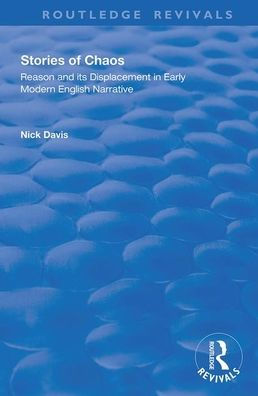
Stories of Chaos: Reason and its Displacement in Early Modern English Narrative in Chattanooga, TN
Current price: $31.99
Barnes and Noble
Stories of Chaos: Reason and its Displacement in Early Modern English Narrative in Chattanooga, TN
Current price: $31.99
Loading Inventory...
Size: OS
First published in 1999, this volume re-examines narrative design in
Sir Gawain and the Green Knight, The Faerie Queene, King Lear
and
Paradise Lost
. Written in a period newly set on finding practical application for available systems of reasoning, these texts confront in their different ways reason’s absolute limitation in the face of a Real which it cannot adequately represent to itself or recruit to its own purposes. An influential model for the staging of such a confrontation was the mythic, cosmological narrative of Plato’s
Timaeus
. In their rewriting of Plato’s narrative the English texts deploy but also destabilize the ancient conceptual polarization of the ‘rational’ and the ‘irrational’ or ‘chaotic’, rethought in the terms offered by their period’s innovatory practices of reasoning. The study establishes the critical importance of telling a story of chaos by comparing the narrative method of its chosen texts with that adopted by Freud and Lacan as a means of reflection on the psychoanalytic encounter with an ultimately chaotic Real.
This book has unusual interdisciplinary scope, and offers historically grounded, theoretically informed new readings of four major early modern English literary texts.
Sir Gawain and the Green Knight, The Faerie Queene, King Lear
and
Paradise Lost
. Written in a period newly set on finding practical application for available systems of reasoning, these texts confront in their different ways reason’s absolute limitation in the face of a Real which it cannot adequately represent to itself or recruit to its own purposes. An influential model for the staging of such a confrontation was the mythic, cosmological narrative of Plato’s
Timaeus
. In their rewriting of Plato’s narrative the English texts deploy but also destabilize the ancient conceptual polarization of the ‘rational’ and the ‘irrational’ or ‘chaotic’, rethought in the terms offered by their period’s innovatory practices of reasoning. The study establishes the critical importance of telling a story of chaos by comparing the narrative method of its chosen texts with that adopted by Freud and Lacan as a means of reflection on the psychoanalytic encounter with an ultimately chaotic Real.
This book has unusual interdisciplinary scope, and offers historically grounded, theoretically informed new readings of four major early modern English literary texts.
First published in 1999, this volume re-examines narrative design in
Sir Gawain and the Green Knight, The Faerie Queene, King Lear
and
Paradise Lost
. Written in a period newly set on finding practical application for available systems of reasoning, these texts confront in their different ways reason’s absolute limitation in the face of a Real which it cannot adequately represent to itself or recruit to its own purposes. An influential model for the staging of such a confrontation was the mythic, cosmological narrative of Plato’s
Timaeus
. In their rewriting of Plato’s narrative the English texts deploy but also destabilize the ancient conceptual polarization of the ‘rational’ and the ‘irrational’ or ‘chaotic’, rethought in the terms offered by their period’s innovatory practices of reasoning. The study establishes the critical importance of telling a story of chaos by comparing the narrative method of its chosen texts with that adopted by Freud and Lacan as a means of reflection on the psychoanalytic encounter with an ultimately chaotic Real.
This book has unusual interdisciplinary scope, and offers historically grounded, theoretically informed new readings of four major early modern English literary texts.
Sir Gawain and the Green Knight, The Faerie Queene, King Lear
and
Paradise Lost
. Written in a period newly set on finding practical application for available systems of reasoning, these texts confront in their different ways reason’s absolute limitation in the face of a Real which it cannot adequately represent to itself or recruit to its own purposes. An influential model for the staging of such a confrontation was the mythic, cosmological narrative of Plato’s
Timaeus
. In their rewriting of Plato’s narrative the English texts deploy but also destabilize the ancient conceptual polarization of the ‘rational’ and the ‘irrational’ or ‘chaotic’, rethought in the terms offered by their period’s innovatory practices of reasoning. The study establishes the critical importance of telling a story of chaos by comparing the narrative method of its chosen texts with that adopted by Freud and Lacan as a means of reflection on the psychoanalytic encounter with an ultimately chaotic Real.
This book has unusual interdisciplinary scope, and offers historically grounded, theoretically informed new readings of four major early modern English literary texts.
You May Also Like









More About Barnes and Noble at Hamilton Place
Barnes & Noble is the world’s largest retail bookseller and a leading retailer of content, digital media and educational products. Our Nook Digital business offers a lineup of NOOK® tablets and e-Readers and an expansive collection of digital reading content through the NOOK Store®. Barnes & Noble’s mission is to operate the best omni-channel specialty retail business in America, helping both our customers and booksellers reach their aspirations, while being a credit to the communities we serve.
2100 Hamilton Pl Blvd, Chattanooga, TN 37421, United States
Find Barnes and Noble at Hamilton Place in Chattanooga, TN
Visit Barnes and Noble at Hamilton Place in Chattanooga, TN
