
Home
Spenser's International Style
Barnes and Noble
Loading Inventory...
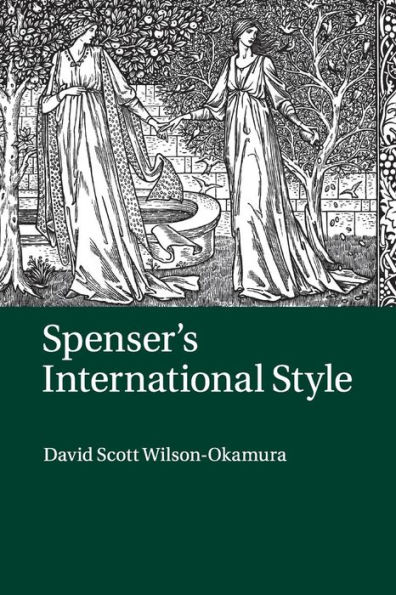
Spenser's International Style in Chattanooga, TN
Current price: $120.00
Barnes and Noble
Spenser's International Style in Chattanooga, TN
Current price: $120.00
Loading Inventory...
Size: Hardcover
Why did Spenser write his epic, The Faerie Queene, in stanzas instead of a classical meter or blank verse? Why did he affect the vocabulary of medieval poets such as Chaucer? Is there, as centuries of readers have noticed, something lyrical about Spenser's epic style, and if so, why? In this accessible and wide-ranging study, David Scott Wilson-Okamura reframes these questions in a larger, European context. The first full-length treatment of Spenser's poetic style in more than four decades, it shows that Spenser was English without being insular. In his experiments with style, Spenser faced many of the same problems, and found some of the same solutions, as poets writing in other languages. Drawing on classical rhetoric and using concepts that were developed by literary critics during the Renaissance, this is an account of long-term, international trends in style, illustrated with examples from Petrarch, Du Bellay, Ariosto, and Tasso.
Why did Spenser write his epic, The Faerie Queene, in stanzas instead of a classical meter or blank verse? Why did he affect the vocabulary of medieval poets such as Chaucer? Is there, as centuries of readers have noticed, something lyrical about Spenser's epic style, and if so, why? In this accessible and wide-ranging study, David Scott Wilson-Okamura reframes these questions in a larger, European context. The first full-length treatment of Spenser's poetic style in more than four decades, it shows that Spenser was English without being insular. In his experiments with style, Spenser faced many of the same problems, and found some of the same solutions, as poets writing in other languages. Drawing on classical rhetoric and using concepts that were developed by literary critics during the Renaissance, this is an account of long-term, international trends in style, illustrated with examples from Petrarch, Du Bellay, Ariosto, and Tasso.
You May Also Like









More About Barnes and Noble at Hamilton Place
Barnes & Noble is the world’s largest retail bookseller and a leading retailer of content, digital media and educational products. Our Nook Digital business offers a lineup of NOOK® tablets and e-Readers and an expansive collection of digital reading content through the NOOK Store®. Barnes & Noble’s mission is to operate the best omni-channel specialty retail business in America, helping both our customers and booksellers reach their aspirations, while being a credit to the communities we serve.
2100 Hamilton Pl Blvd, Chattanooga, TN 37421, United States
Find Barnes and Noble at Hamilton Place in Chattanooga, TN
Visit Barnes and Noble at Hamilton Place in Chattanooga, TN
