
Home
South Asia Migration Report 2017: Recruitment, Remittances and Reintegration
Barnes and Noble
Loading Inventory...
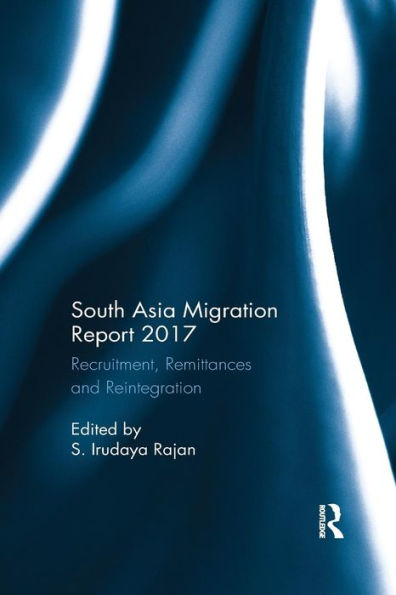
South Asia Migration Report 2017: Recruitment, Remittances and Reintegration in Chattanooga, TN
Current price: $210.00
Barnes and Noble
South Asia Migration Report 2017: Recruitment, Remittances and Reintegration in Chattanooga, TN
Current price: $210.00
Loading Inventory...
Size: Hardcover
South Asians comprise over 15 per cent of all international migrating population, among the highest in the world. The countries of the Persian Gulf are perhaps still the largest recipients of migrant workers. A unique economy has developed between these two regions, with all South Asian nations being major beneficiaries and featuring among the top twenty countries receiving maximum remittances globally.
The
South Asia Migration Report 2017
is the first of its kind, documenting migration profiles, diaspora, recruitment and remittances, both in individual countries as well as the South Asian region as a whole. It also discusses skilled, unskilled and internal migrations.
The volume:
includes on-the-ground studies from six nations: India, Pakistan, Bangladesh, Sri Lanka, Nepal and Afghanistan;
discusses public policy, effects of global recession on the region and its impact on migration; and
examines the process of reintegration of returning migrants.
This book will be indispensable for scholars and researchers of economics, development studies, migration and diaspora studies, labour studies and sociology. It will also be useful to policymakers and government institutions working in the area.
The
South Asia Migration Report 2017
is the first of its kind, documenting migration profiles, diaspora, recruitment and remittances, both in individual countries as well as the South Asian region as a whole. It also discusses skilled, unskilled and internal migrations.
The volume:
includes on-the-ground studies from six nations: India, Pakistan, Bangladesh, Sri Lanka, Nepal and Afghanistan;
discusses public policy, effects of global recession on the region and its impact on migration; and
examines the process of reintegration of returning migrants.
This book will be indispensable for scholars and researchers of economics, development studies, migration and diaspora studies, labour studies and sociology. It will also be useful to policymakers and government institutions working in the area.
South Asians comprise over 15 per cent of all international migrating population, among the highest in the world. The countries of the Persian Gulf are perhaps still the largest recipients of migrant workers. A unique economy has developed between these two regions, with all South Asian nations being major beneficiaries and featuring among the top twenty countries receiving maximum remittances globally.
The
South Asia Migration Report 2017
is the first of its kind, documenting migration profiles, diaspora, recruitment and remittances, both in individual countries as well as the South Asian region as a whole. It also discusses skilled, unskilled and internal migrations.
The volume:
includes on-the-ground studies from six nations: India, Pakistan, Bangladesh, Sri Lanka, Nepal and Afghanistan;
discusses public policy, effects of global recession on the region and its impact on migration; and
examines the process of reintegration of returning migrants.
This book will be indispensable for scholars and researchers of economics, development studies, migration and diaspora studies, labour studies and sociology. It will also be useful to policymakers and government institutions working in the area.
The
South Asia Migration Report 2017
is the first of its kind, documenting migration profiles, diaspora, recruitment and remittances, both in individual countries as well as the South Asian region as a whole. It also discusses skilled, unskilled and internal migrations.
The volume:
includes on-the-ground studies from six nations: India, Pakistan, Bangladesh, Sri Lanka, Nepal and Afghanistan;
discusses public policy, effects of global recession on the region and its impact on migration; and
examines the process of reintegration of returning migrants.
This book will be indispensable for scholars and researchers of economics, development studies, migration and diaspora studies, labour studies and sociology. It will also be useful to policymakers and government institutions working in the area.
You May Also Like








More About Barnes and Noble at Hamilton Place
Barnes & Noble is the world’s largest retail bookseller and a leading retailer of content, digital media and educational products. Our Nook Digital business offers a lineup of NOOK® tablets and e-Readers and an expansive collection of digital reading content through the NOOK Store®. Barnes & Noble’s mission is to operate the best omni-channel specialty retail business in America, helping both our customers and booksellers reach their aspirations, while being a credit to the communities we serve.
2100 Hamilton Pl Blvd, Chattanooga, TN 37421, United States
Find Barnes and Noble at Hamilton Place in Chattanooga, TN
Visit Barnes and Noble at Hamilton Place in Chattanooga, TN
