
Home
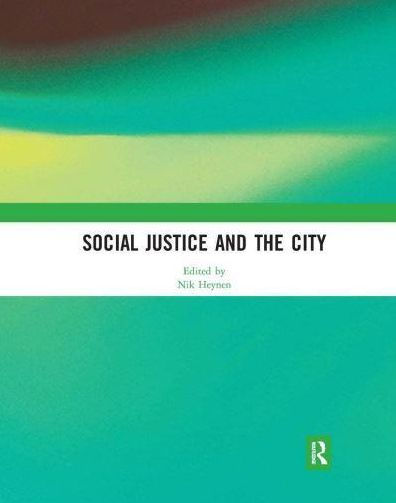
Social Justice and the City
Barnes and Noble
Loading Inventory...
Social Justice and the City in Chattanooga, TN
Current price: $190.00
Barnes and Noble
Social Justice and the City in Chattanooga, TN
Current price: $190.00
Loading Inventory...
Size: Hardcover
This special collection aims to offer insight into the state of geography on questions of social justice and urban life. While using social justice and the city as our starting point may signal inspiration from Harvey’s (1973) book of the same name, the task of examining the emergence of this concept has revealed the deep influence of grassroots urban uprisings of the late 1960s, earlier and contemporary meditations on our urban worlds (Jacobs, 1961, 1969; Lefebvre, 1974; Massey and Catalano, 1978) as well as its enduring significance built upon by many others for years to come. Laws (1994) noted how geographers came to locate social justice struggles in the city through research that examined the ways in which material conditions contributed to poverty and racial and gender inequity, as well as how emergent social movements organized to reshape urban spaces across diverse engagements including the U.S. Civil Rights Movement, anti-war protests, feminist and LGBTQ activism, the American Indian Movement, and disability access.
This book originally published as a special issue of
Annals of the American Association of Geographers
.
This book originally published as a special issue of
Annals of the American Association of Geographers
.
This special collection aims to offer insight into the state of geography on questions of social justice and urban life. While using social justice and the city as our starting point may signal inspiration from Harvey’s (1973) book of the same name, the task of examining the emergence of this concept has revealed the deep influence of grassroots urban uprisings of the late 1960s, earlier and contemporary meditations on our urban worlds (Jacobs, 1961, 1969; Lefebvre, 1974; Massey and Catalano, 1978) as well as its enduring significance built upon by many others for years to come. Laws (1994) noted how geographers came to locate social justice struggles in the city through research that examined the ways in which material conditions contributed to poverty and racial and gender inequity, as well as how emergent social movements organized to reshape urban spaces across diverse engagements including the U.S. Civil Rights Movement, anti-war protests, feminist and LGBTQ activism, the American Indian Movement, and disability access.
This book originally published as a special issue of
Annals of the American Association of Geographers
.
This book originally published as a special issue of
Annals of the American Association of Geographers
.
You May Also Like













More About Barnes and Noble at Hamilton Place
Barnes & Noble is the world’s largest retail bookseller and a leading retailer of content, digital media and educational products. Our Nook Digital business offers a lineup of NOOK® tablets and e-Readers and an expansive collection of digital reading content through the NOOK Store®. Barnes & Noble’s mission is to operate the best omni-channel specialty retail business in America, helping both our customers and booksellers reach their aspirations, while being a credit to the communities we serve.
2100 Hamilton Pl Blvd, Chattanooga, TN 37421, United States
Find Barnes and Noble at Hamilton Place in Chattanooga, TN
Visit Barnes and Noble at Hamilton Place in Chattanooga, TN
