
Home
Small Homes: The Right Size
Barnes and Noble
Loading Inventory...
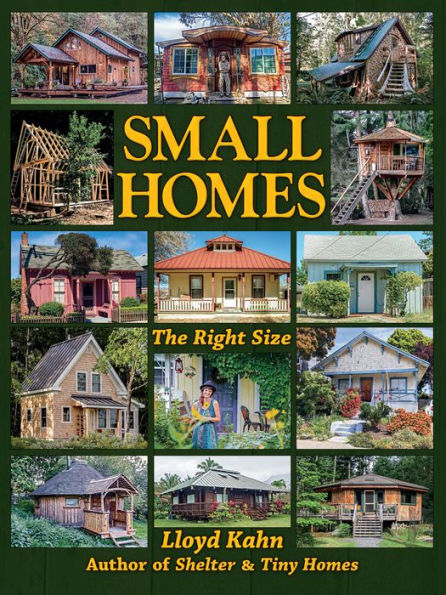
Small Homes: The Right Size in Chattanooga, TN
Current price: $29.95
Barnes and Noble
Small Homes: The Right Size in Chattanooga, TN
Current price: $29.95
Loading Inventory...
Size: OS
Find inspiration from DIY ownerbuilders who constructed their own small homes in this coffeetable book filled with photography.
Are tiny homes too little for you? Well, small is bigger than tiny! The average American home is 2,500 square feet—that’s too big. The tiny home averages 200–300 square feet—that’s too little. The small homes featured here are 400–1,200 square feet—just right! American homes are getting bigger and bigger, but small homes are less expensive, use fewer resources, are more efficient to heat and cool, and are less costly to maintain and repair. They are desirable for those who want to avoid a bank mortgage or high rents yet need more room than a tiny house can offer.
Lloyd Kahn has been a leader in the greenbuilding movement for over 40 years. In
Small Homes,
he presents 120 small homes via more than 1,000 fullcolor photographs. The homes vary from unique and artistic to simple and lowcost. Some are ordinary buildings that provide shelter at a reasonable cost, and some are inspiring examples of design, carpentry, craftsmanship, imagination, creativity, and homemaking. Some are built with natural materials, such as cob or straw, and some with recycled wood or lumber milled onsite. Some are old homes that have been remodeled, while many were designed and built from scratch. Many are in the country, some in small towns, and some in large cities. Dozens of builders share their knowledge of building and design, with artistic, practical, and/or economical homes in the United States, Canada, England, Scotland, France, Germany, Spain, New Zealand, and Lithuania.
Inside you’ll find
120 homes in the range of 400–1,200 square feet
Ownerbuilder techniques
Variety of construction methods
Inspiration from ownerbuilders
Small homes in both rural and urban areas
The underlying theme with Shelter’s books, which span more than 40 years, is that you can create your own home with your own hands, using mostly natural materials. A computer can’t build your home for you. You still need a hammer (or nail gun), a saw—and human hands.
Are tiny homes too little for you? Well, small is bigger than tiny! The average American home is 2,500 square feet—that’s too big. The tiny home averages 200–300 square feet—that’s too little. The small homes featured here are 400–1,200 square feet—just right! American homes are getting bigger and bigger, but small homes are less expensive, use fewer resources, are more efficient to heat and cool, and are less costly to maintain and repair. They are desirable for those who want to avoid a bank mortgage or high rents yet need more room than a tiny house can offer.
Lloyd Kahn has been a leader in the greenbuilding movement for over 40 years. In
Small Homes,
he presents 120 small homes via more than 1,000 fullcolor photographs. The homes vary from unique and artistic to simple and lowcost. Some are ordinary buildings that provide shelter at a reasonable cost, and some are inspiring examples of design, carpentry, craftsmanship, imagination, creativity, and homemaking. Some are built with natural materials, such as cob or straw, and some with recycled wood or lumber milled onsite. Some are old homes that have been remodeled, while many were designed and built from scratch. Many are in the country, some in small towns, and some in large cities. Dozens of builders share their knowledge of building and design, with artistic, practical, and/or economical homes in the United States, Canada, England, Scotland, France, Germany, Spain, New Zealand, and Lithuania.
Inside you’ll find
120 homes in the range of 400–1,200 square feet
Ownerbuilder techniques
Variety of construction methods
Inspiration from ownerbuilders
Small homes in both rural and urban areas
The underlying theme with Shelter’s books, which span more than 40 years, is that you can create your own home with your own hands, using mostly natural materials. A computer can’t build your home for you. You still need a hammer (or nail gun), a saw—and human hands.
Find inspiration from DIY ownerbuilders who constructed their own small homes in this coffeetable book filled with photography.
Are tiny homes too little for you? Well, small is bigger than tiny! The average American home is 2,500 square feet—that’s too big. The tiny home averages 200–300 square feet—that’s too little. The small homes featured here are 400–1,200 square feet—just right! American homes are getting bigger and bigger, but small homes are less expensive, use fewer resources, are more efficient to heat and cool, and are less costly to maintain and repair. They are desirable for those who want to avoid a bank mortgage or high rents yet need more room than a tiny house can offer.
Lloyd Kahn has been a leader in the greenbuilding movement for over 40 years. In
Small Homes,
he presents 120 small homes via more than 1,000 fullcolor photographs. The homes vary from unique and artistic to simple and lowcost. Some are ordinary buildings that provide shelter at a reasonable cost, and some are inspiring examples of design, carpentry, craftsmanship, imagination, creativity, and homemaking. Some are built with natural materials, such as cob or straw, and some with recycled wood or lumber milled onsite. Some are old homes that have been remodeled, while many were designed and built from scratch. Many are in the country, some in small towns, and some in large cities. Dozens of builders share their knowledge of building and design, with artistic, practical, and/or economical homes in the United States, Canada, England, Scotland, France, Germany, Spain, New Zealand, and Lithuania.
Inside you’ll find
120 homes in the range of 400–1,200 square feet
Ownerbuilder techniques
Variety of construction methods
Inspiration from ownerbuilders
Small homes in both rural and urban areas
The underlying theme with Shelter’s books, which span more than 40 years, is that you can create your own home with your own hands, using mostly natural materials. A computer can’t build your home for you. You still need a hammer (or nail gun), a saw—and human hands.
Are tiny homes too little for you? Well, small is bigger than tiny! The average American home is 2,500 square feet—that’s too big. The tiny home averages 200–300 square feet—that’s too little. The small homes featured here are 400–1,200 square feet—just right! American homes are getting bigger and bigger, but small homes are less expensive, use fewer resources, are more efficient to heat and cool, and are less costly to maintain and repair. They are desirable for those who want to avoid a bank mortgage or high rents yet need more room than a tiny house can offer.
Lloyd Kahn has been a leader in the greenbuilding movement for over 40 years. In
Small Homes,
he presents 120 small homes via more than 1,000 fullcolor photographs. The homes vary from unique and artistic to simple and lowcost. Some are ordinary buildings that provide shelter at a reasonable cost, and some are inspiring examples of design, carpentry, craftsmanship, imagination, creativity, and homemaking. Some are built with natural materials, such as cob or straw, and some with recycled wood or lumber milled onsite. Some are old homes that have been remodeled, while many were designed and built from scratch. Many are in the country, some in small towns, and some in large cities. Dozens of builders share their knowledge of building and design, with artistic, practical, and/or economical homes in the United States, Canada, England, Scotland, France, Germany, Spain, New Zealand, and Lithuania.
Inside you’ll find
120 homes in the range of 400–1,200 square feet
Ownerbuilder techniques
Variety of construction methods
Inspiration from ownerbuilders
Small homes in both rural and urban areas
The underlying theme with Shelter’s books, which span more than 40 years, is that you can create your own home with your own hands, using mostly natural materials. A computer can’t build your home for you. You still need a hammer (or nail gun), a saw—and human hands.
You May Also Like


![Small Changes [Red Marbled Vinyl] [Barnes & Noble Exclusive]](https://prodimage.images-bn.com/pimages/0602465904741_p0_v1_s600x595.jpg)







More About Barnes and Noble at Hamilton Place
Barnes & Noble is the world’s largest retail bookseller and a leading retailer of content, digital media and educational products. Our Nook Digital business offers a lineup of NOOK® tablets and e-Readers and an expansive collection of digital reading content through the NOOK Store®. Barnes & Noble’s mission is to operate the best omni-channel specialty retail business in America, helping both our customers and booksellers reach their aspirations, while being a credit to the communities we serve.
2100 Hamilton Pl Blvd, Chattanooga, TN 37421, United States
Find Barnes and Noble at Hamilton Place in Chattanooga, TN
Visit Barnes and Noble at Hamilton Place in Chattanooga, TN
