
Home
Semi-State Actors Cybersecurity
Barnes and Noble
Loading Inventory...
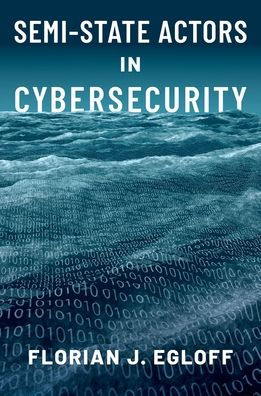
Semi-State Actors Cybersecurity in Chattanooga, TN
Current price: $34.99
Barnes and Noble
Semi-State Actors Cybersecurity in Chattanooga, TN
Current price: $34.99
Loading Inventory...
Size: Paperback
The universe of actors involved in international cybersecurity includes both state actors and semi- and non-state actors, including technology companies, state-sponsored hackers, and cybercriminals. Among these are semi-state actorsactors in a close relationship with one state who sometimes advance this state's interests, but are not organizationally integrated into state functions. In
Semi-State Actors in Cybersecurity
, Florian J. Egloff argues that political relations in cyberspace fundamentally involve concurrent collaboration and competition between states and semi-state actors. To understand the complex interplay of cooperation and competition and the power relations that exist between these actors in international relations, Egloff looks to a historical analogy: that of mercantile companies, privateers, and pirates.
Pirates, privateers, and mercantile companies were integral to maritime security between the 16th and 19th centuries. In fact, privateers and mercantile companies, like today's tech companies and private cyber contractors, had a particular relationship to the state in that they conducted state-sanctioned private attacks against foreign vessels. Pirates, like independent hackers, were sometimes useful allies, and other times enemies. These actors traded, explored, plundered, and controlled sea-lanes and territories across the world's oceanswith state navies lagging behind, often burdened by hierarchy.
Today, as cyberspace is woven into the fabric of all aspects of society, the provision and undermining of security in digital spaces has become a new arena for digital pirates, privateers, and mercantile companies. In making the analogy to piracy and privateering, Egloff provides a new understanding of how attackers and defenders use their proximity to the state politically and offers lessons for understanding how actors exercise power in cyberspace. Drawing on historical archival sources, Egloff identifies the parallels between today's cyber in-security and the historical quest for gold and glory on the high seas. The book explains what the presence of semi-state actors means for national and international security, and how semi-state actors are historically and contemporarily linked to understandings of statehood, sovereignty, and the legitimacy of the state.
Semi-State Actors in Cybersecurity
, Florian J. Egloff argues that political relations in cyberspace fundamentally involve concurrent collaboration and competition between states and semi-state actors. To understand the complex interplay of cooperation and competition and the power relations that exist between these actors in international relations, Egloff looks to a historical analogy: that of mercantile companies, privateers, and pirates.
Pirates, privateers, and mercantile companies were integral to maritime security between the 16th and 19th centuries. In fact, privateers and mercantile companies, like today's tech companies and private cyber contractors, had a particular relationship to the state in that they conducted state-sanctioned private attacks against foreign vessels. Pirates, like independent hackers, were sometimes useful allies, and other times enemies. These actors traded, explored, plundered, and controlled sea-lanes and territories across the world's oceanswith state navies lagging behind, often burdened by hierarchy.
Today, as cyberspace is woven into the fabric of all aspects of society, the provision and undermining of security in digital spaces has become a new arena for digital pirates, privateers, and mercantile companies. In making the analogy to piracy and privateering, Egloff provides a new understanding of how attackers and defenders use their proximity to the state politically and offers lessons for understanding how actors exercise power in cyberspace. Drawing on historical archival sources, Egloff identifies the parallels between today's cyber in-security and the historical quest for gold and glory on the high seas. The book explains what the presence of semi-state actors means for national and international security, and how semi-state actors are historically and contemporarily linked to understandings of statehood, sovereignty, and the legitimacy of the state.
The universe of actors involved in international cybersecurity includes both state actors and semi- and non-state actors, including technology companies, state-sponsored hackers, and cybercriminals. Among these are semi-state actorsactors in a close relationship with one state who sometimes advance this state's interests, but are not organizationally integrated into state functions. In
Semi-State Actors in Cybersecurity
, Florian J. Egloff argues that political relations in cyberspace fundamentally involve concurrent collaboration and competition between states and semi-state actors. To understand the complex interplay of cooperation and competition and the power relations that exist between these actors in international relations, Egloff looks to a historical analogy: that of mercantile companies, privateers, and pirates.
Pirates, privateers, and mercantile companies were integral to maritime security between the 16th and 19th centuries. In fact, privateers and mercantile companies, like today's tech companies and private cyber contractors, had a particular relationship to the state in that they conducted state-sanctioned private attacks against foreign vessels. Pirates, like independent hackers, were sometimes useful allies, and other times enemies. These actors traded, explored, plundered, and controlled sea-lanes and territories across the world's oceanswith state navies lagging behind, often burdened by hierarchy.
Today, as cyberspace is woven into the fabric of all aspects of society, the provision and undermining of security in digital spaces has become a new arena for digital pirates, privateers, and mercantile companies. In making the analogy to piracy and privateering, Egloff provides a new understanding of how attackers and defenders use their proximity to the state politically and offers lessons for understanding how actors exercise power in cyberspace. Drawing on historical archival sources, Egloff identifies the parallels between today's cyber in-security and the historical quest for gold and glory on the high seas. The book explains what the presence of semi-state actors means for national and international security, and how semi-state actors are historically and contemporarily linked to understandings of statehood, sovereignty, and the legitimacy of the state.
Semi-State Actors in Cybersecurity
, Florian J. Egloff argues that political relations in cyberspace fundamentally involve concurrent collaboration and competition between states and semi-state actors. To understand the complex interplay of cooperation and competition and the power relations that exist between these actors in international relations, Egloff looks to a historical analogy: that of mercantile companies, privateers, and pirates.
Pirates, privateers, and mercantile companies were integral to maritime security between the 16th and 19th centuries. In fact, privateers and mercantile companies, like today's tech companies and private cyber contractors, had a particular relationship to the state in that they conducted state-sanctioned private attacks against foreign vessels. Pirates, like independent hackers, were sometimes useful allies, and other times enemies. These actors traded, explored, plundered, and controlled sea-lanes and territories across the world's oceanswith state navies lagging behind, often burdened by hierarchy.
Today, as cyberspace is woven into the fabric of all aspects of society, the provision and undermining of security in digital spaces has become a new arena for digital pirates, privateers, and mercantile companies. In making the analogy to piracy and privateering, Egloff provides a new understanding of how attackers and defenders use their proximity to the state politically and offers lessons for understanding how actors exercise power in cyberspace. Drawing on historical archival sources, Egloff identifies the parallels between today's cyber in-security and the historical quest for gold and glory on the high seas. The book explains what the presence of semi-state actors means for national and international security, and how semi-state actors are historically and contemporarily linked to understandings of statehood, sovereignty, and the legitimacy of the state.
You May Also Like












More About Barnes and Noble at Hamilton Place
Barnes & Noble is the world’s largest retail bookseller and a leading retailer of content, digital media and educational products. Our Nook Digital business offers a lineup of NOOK® tablets and e-Readers and an expansive collection of digital reading content through the NOOK Store®. Barnes & Noble’s mission is to operate the best omni-channel specialty retail business in America, helping both our customers and booksellers reach their aspirations, while being a credit to the communities we serve.
2100 Hamilton Pl Blvd, Chattanooga, TN 37421, United States
Find Barnes and Noble at Hamilton Place in Chattanooga, TN
Visit Barnes and Noble at Hamilton Place in Chattanooga, TN
