
Home
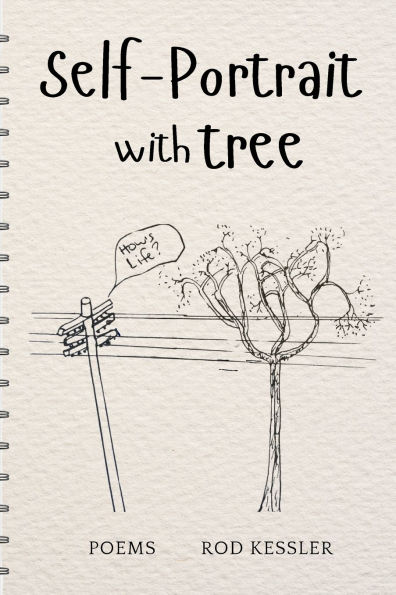
Self-Portrait with Tree: Poems
Barnes and Noble
Loading Inventory...
Self-Portrait with Tree: Poems in Chattanooga, TN
Current price: $10.00
Barnes and Noble
Self-Portrait with Tree: Poems in Chattanooga, TN
Current price: $10.00
Loading Inventory...
Size: OS
Most Americans dislike poetry because of how it's taught in the lower grades- or at least how it was taught when Kessler was a kid. A poem was a kind of scary intelligence test. At best, a puzzle. What is Emily Dickinson saying in "'Hope' is the thing with feathers"? Or What symbolism is Robert Frost employing in "The Road Not Taken"? As he tells it in
Self-Portrait with Tree
, Kessler was lucky in his teachers, the handful who could hear the mermaids singing, and found his way to Shelley and Whitman, Masters and Sandberg, Pound and Wilbur, Plath and Sexton, Sharon Olds and Philip Levine, and so on.
Over the years, Kessler thought of himself not as a poet but as a friend of poetry and of poets. His calling would be fiction writing. As a professor at Salem State, he was expected to teach fiction writing, of course, but not only that. There was poetry writing and nonfiction too (yes, and lots and lots of freshman comp). Over his three decades there, he wrote poetry along with his students, often shaping work to illustrate the issues of craft discussed in class.
He also wrote a novel, a long one topping over 600 pages in manuscript. (Whatever its merits, commercial appeal evidently was not one of them, and
Edelman Unsung
remains unpublished.) Among the book's characters is a poet-a mercurial, sometimes strident, sometimes witty, feminist poet. Her poems are a feature of this novel. Kessler wrote them.
This collection of poems is a mix: the poems the writer wrote for himself all along, the poems written with the didactic issues of craft in mind, the poems of his imagined feminist firebrand. Perhaps you can tell which is which.
It's been said that when poets turn to fiction writing, the results are often beautiful, with a prose surface that simply sings and with observations that are as subtle as they are precise. And yet, and yet, when we fiction writers turn to writing poetry . . . well, often it's best to just avert your eyes. May it not be the case here.
Self-Portrait with Tree
, Kessler was lucky in his teachers, the handful who could hear the mermaids singing, and found his way to Shelley and Whitman, Masters and Sandberg, Pound and Wilbur, Plath and Sexton, Sharon Olds and Philip Levine, and so on.
Over the years, Kessler thought of himself not as a poet but as a friend of poetry and of poets. His calling would be fiction writing. As a professor at Salem State, he was expected to teach fiction writing, of course, but not only that. There was poetry writing and nonfiction too (yes, and lots and lots of freshman comp). Over his three decades there, he wrote poetry along with his students, often shaping work to illustrate the issues of craft discussed in class.
He also wrote a novel, a long one topping over 600 pages in manuscript. (Whatever its merits, commercial appeal evidently was not one of them, and
Edelman Unsung
remains unpublished.) Among the book's characters is a poet-a mercurial, sometimes strident, sometimes witty, feminist poet. Her poems are a feature of this novel. Kessler wrote them.
This collection of poems is a mix: the poems the writer wrote for himself all along, the poems written with the didactic issues of craft in mind, the poems of his imagined feminist firebrand. Perhaps you can tell which is which.
It's been said that when poets turn to fiction writing, the results are often beautiful, with a prose surface that simply sings and with observations that are as subtle as they are precise. And yet, and yet, when we fiction writers turn to writing poetry . . . well, often it's best to just avert your eyes. May it not be the case here.
Most Americans dislike poetry because of how it's taught in the lower grades- or at least how it was taught when Kessler was a kid. A poem was a kind of scary intelligence test. At best, a puzzle. What is Emily Dickinson saying in "'Hope' is the thing with feathers"? Or What symbolism is Robert Frost employing in "The Road Not Taken"? As he tells it in
Self-Portrait with Tree
, Kessler was lucky in his teachers, the handful who could hear the mermaids singing, and found his way to Shelley and Whitman, Masters and Sandberg, Pound and Wilbur, Plath and Sexton, Sharon Olds and Philip Levine, and so on.
Over the years, Kessler thought of himself not as a poet but as a friend of poetry and of poets. His calling would be fiction writing. As a professor at Salem State, he was expected to teach fiction writing, of course, but not only that. There was poetry writing and nonfiction too (yes, and lots and lots of freshman comp). Over his three decades there, he wrote poetry along with his students, often shaping work to illustrate the issues of craft discussed in class.
He also wrote a novel, a long one topping over 600 pages in manuscript. (Whatever its merits, commercial appeal evidently was not one of them, and
Edelman Unsung
remains unpublished.) Among the book's characters is a poet-a mercurial, sometimes strident, sometimes witty, feminist poet. Her poems are a feature of this novel. Kessler wrote them.
This collection of poems is a mix: the poems the writer wrote for himself all along, the poems written with the didactic issues of craft in mind, the poems of his imagined feminist firebrand. Perhaps you can tell which is which.
It's been said that when poets turn to fiction writing, the results are often beautiful, with a prose surface that simply sings and with observations that are as subtle as they are precise. And yet, and yet, when we fiction writers turn to writing poetry . . . well, often it's best to just avert your eyes. May it not be the case here.
Self-Portrait with Tree
, Kessler was lucky in his teachers, the handful who could hear the mermaids singing, and found his way to Shelley and Whitman, Masters and Sandberg, Pound and Wilbur, Plath and Sexton, Sharon Olds and Philip Levine, and so on.
Over the years, Kessler thought of himself not as a poet but as a friend of poetry and of poets. His calling would be fiction writing. As a professor at Salem State, he was expected to teach fiction writing, of course, but not only that. There was poetry writing and nonfiction too (yes, and lots and lots of freshman comp). Over his three decades there, he wrote poetry along with his students, often shaping work to illustrate the issues of craft discussed in class.
He also wrote a novel, a long one topping over 600 pages in manuscript. (Whatever its merits, commercial appeal evidently was not one of them, and
Edelman Unsung
remains unpublished.) Among the book's characters is a poet-a mercurial, sometimes strident, sometimes witty, feminist poet. Her poems are a feature of this novel. Kessler wrote them.
This collection of poems is a mix: the poems the writer wrote for himself all along, the poems written with the didactic issues of craft in mind, the poems of his imagined feminist firebrand. Perhaps you can tell which is which.
It's been said that when poets turn to fiction writing, the results are often beautiful, with a prose surface that simply sings and with observations that are as subtle as they are precise. And yet, and yet, when we fiction writers turn to writing poetry . . . well, often it's best to just avert your eyes. May it not be the case here.
You May Also Like
![Bad Self Portraits [Cloudy Pink Vinyl and Custom Color Cover Art] [Barnes & Noble Exclusive]](https://prodimage.images-bn.com/pimages/0701237705422_p0_v2_s600x595.jpg)










More About Barnes and Noble at Hamilton Place
Barnes & Noble is the world’s largest retail bookseller and a leading retailer of content, digital media and educational products. Our Nook Digital business offers a lineup of NOOK® tablets and e-Readers and an expansive collection of digital reading content through the NOOK Store®. Barnes & Noble’s mission is to operate the best omni-channel specialty retail business in America, helping both our customers and booksellers reach their aspirations, while being a credit to the communities we serve.
2100 Hamilton Pl Blvd, Chattanooga, TN 37421, United States
Find Barnes and Noble at Hamilton Place in Chattanooga, TN
Visit Barnes and Noble at Hamilton Place in Chattanooga, TN