
Home
Russell
Barnes and Noble
Loading Inventory...
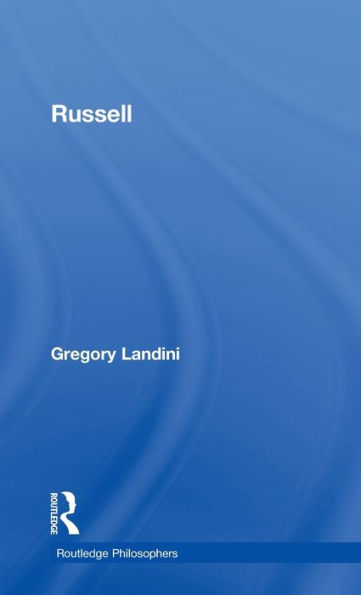
Russell in Chattanooga, TN
Current price: $190.00
Barnes and Noble
Russell in Chattanooga, TN
Current price: $190.00
Loading Inventory...
Size: OS
Bertrand Russell (1872–1970) was renowned as one of the founding figures of "analytic" philosophy, and for his lasting contributions to the study of logic, philosophy of language, philosophy of mathematics and epistemology. He was also famous for his popular works, where his humanism, ethics and antipathy towards religion came through in books such as
The Problems of Philosophy
,
Why I am Not A Christian
, and
The Conquest of Happiness.
Beginning with an overview of Russell’s life and work, Gregory Landini carefully explains Russell’s philosophy, to show why he ranks as one of the giants of British and Twentieth century philosophy. He discusses Russell’s major early works in philosophy of mathematics, including
The Principles of Mathematics
, wherein Russell illuminated and developed the ideas of Gottlob Frege; and the monumental three volume work written with Alfred North Whitehead,
Principia Mathematica
, where the authors attempted to show that all mathematical theory is part of logic, understood as a science of structure.
Landini discusses the second edition of
, to show Russell’s intellectual relationship with Wittgenstein and Ramsey. He discusses Russell’s epistemology and neutral monism before concluding with a discussion on Russell’s ethics, and the relationship between science and religion.
Featuring a chronology and a glossary of terms, as well as suggestions for further reading at the end of each chapter,
Russell
is essential reading for anyone studying philosophy, and is an ideal guidebook for those coming to Russell for the first time.
The Problems of Philosophy
,
Why I am Not A Christian
, and
The Conquest of Happiness.
Beginning with an overview of Russell’s life and work, Gregory Landini carefully explains Russell’s philosophy, to show why he ranks as one of the giants of British and Twentieth century philosophy. He discusses Russell’s major early works in philosophy of mathematics, including
The Principles of Mathematics
, wherein Russell illuminated and developed the ideas of Gottlob Frege; and the monumental three volume work written with Alfred North Whitehead,
Principia Mathematica
, where the authors attempted to show that all mathematical theory is part of logic, understood as a science of structure.
Landini discusses the second edition of
, to show Russell’s intellectual relationship with Wittgenstein and Ramsey. He discusses Russell’s epistemology and neutral monism before concluding with a discussion on Russell’s ethics, and the relationship between science and religion.
Featuring a chronology and a glossary of terms, as well as suggestions for further reading at the end of each chapter,
Russell
is essential reading for anyone studying philosophy, and is an ideal guidebook for those coming to Russell for the first time.
Bertrand Russell (1872–1970) was renowned as one of the founding figures of "analytic" philosophy, and for his lasting contributions to the study of logic, philosophy of language, philosophy of mathematics and epistemology. He was also famous for his popular works, where his humanism, ethics and antipathy towards religion came through in books such as
The Problems of Philosophy
,
Why I am Not A Christian
, and
The Conquest of Happiness.
Beginning with an overview of Russell’s life and work, Gregory Landini carefully explains Russell’s philosophy, to show why he ranks as one of the giants of British and Twentieth century philosophy. He discusses Russell’s major early works in philosophy of mathematics, including
The Principles of Mathematics
, wherein Russell illuminated and developed the ideas of Gottlob Frege; and the monumental three volume work written with Alfred North Whitehead,
Principia Mathematica
, where the authors attempted to show that all mathematical theory is part of logic, understood as a science of structure.
Landini discusses the second edition of
, to show Russell’s intellectual relationship with Wittgenstein and Ramsey. He discusses Russell’s epistemology and neutral monism before concluding with a discussion on Russell’s ethics, and the relationship between science and religion.
Featuring a chronology and a glossary of terms, as well as suggestions for further reading at the end of each chapter,
Russell
is essential reading for anyone studying philosophy, and is an ideal guidebook for those coming to Russell for the first time.
The Problems of Philosophy
,
Why I am Not A Christian
, and
The Conquest of Happiness.
Beginning with an overview of Russell’s life and work, Gregory Landini carefully explains Russell’s philosophy, to show why he ranks as one of the giants of British and Twentieth century philosophy. He discusses Russell’s major early works in philosophy of mathematics, including
The Principles of Mathematics
, wherein Russell illuminated and developed the ideas of Gottlob Frege; and the monumental three volume work written with Alfred North Whitehead,
Principia Mathematica
, where the authors attempted to show that all mathematical theory is part of logic, understood as a science of structure.
Landini discusses the second edition of
, to show Russell’s intellectual relationship with Wittgenstein and Ramsey. He discusses Russell’s epistemology and neutral monism before concluding with a discussion on Russell’s ethics, and the relationship between science and religion.
Featuring a chronology and a glossary of terms, as well as suggestions for further reading at the end of each chapter,
Russell
is essential reading for anyone studying philosophy, and is an ideal guidebook for those coming to Russell for the first time.
You May Also Like

















More About Barnes and Noble at Hamilton Place
Barnes & Noble is the world’s largest retail bookseller and a leading retailer of content, digital media and educational products. Our Nook Digital business offers a lineup of NOOK® tablets and e-Readers and an expansive collection of digital reading content through the NOOK Store®. Barnes & Noble’s mission is to operate the best omni-channel specialty retail business in America, helping both our customers and booksellers reach their aspirations, while being a credit to the communities we serve.
2100 Hamilton Pl Blvd, Chattanooga, TN 37421, United States
Find Barnes and Noble at Hamilton Place in Chattanooga, TN
Visit Barnes and Noble at Hamilton Place in Chattanooga, TN
