
Home
Rural education and critical thinking
Barnes and Noble
Loading Inventory...
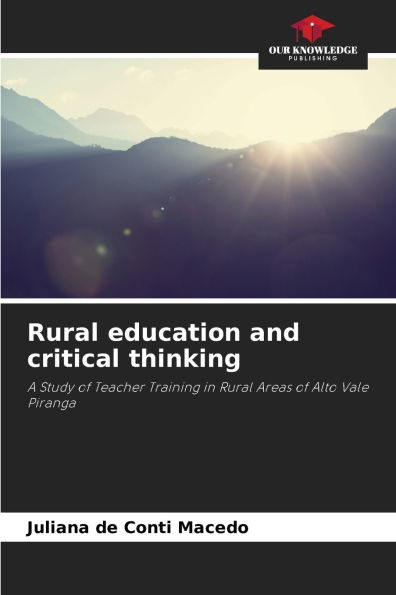
Rural education and critical thinking in Chattanooga, TN
Current price: $75.00
Barnes and Noble
Rural education and critical thinking in Chattanooga, TN
Current price: $75.00
Loading Inventory...
Size: OS
This research focuses on teacher training in the context of rural education in the Alto Vale Piranga region. It sought to examine the training process of its educators, both formal and informal, from the perspective of critical thinking. To contextualize the research, a description was made of the region where the subjects of the narratives are located, as well as its historical and cultural relevance. Next, a summary was provided of the particularities of the historical trajectory of rural education in Brazil, up to the emergence and consolidation of the concept of Rural Education. The research sought to understand the current situation of the Brazilian peasantry, the clashes between antagonistic projects of nation and education, and the new challenges of a critical and emancipatory training of educators working in the countryside. Finally, the analysis of the narratives reaffirmed the critical-political stance of the educators present in the research; however, hidden discursive contradictions were found. Thus, there is a need for critical thinking and dialectics as a fundamental theoretical and methodological basis in teacher training courses that aim at the human emancipation of rural workers.
This research focuses on teacher training in the context of rural education in the Alto Vale Piranga region. It sought to examine the training process of its educators, both formal and informal, from the perspective of critical thinking. To contextualize the research, a description was made of the region where the subjects of the narratives are located, as well as its historical and cultural relevance. Next, a summary was provided of the particularities of the historical trajectory of rural education in Brazil, up to the emergence and consolidation of the concept of Rural Education. The research sought to understand the current situation of the Brazilian peasantry, the clashes between antagonistic projects of nation and education, and the new challenges of a critical and emancipatory training of educators working in the countryside. Finally, the analysis of the narratives reaffirmed the critical-political stance of the educators present in the research; however, hidden discursive contradictions were found. Thus, there is a need for critical thinking and dialectics as a fundamental theoretical and methodological basis in teacher training courses that aim at the human emancipation of rural workers.
You May Also Like







More About Barnes and Noble at Hamilton Place
Barnes & Noble is the world’s largest retail bookseller and a leading retailer of content, digital media and educational products. Our Nook Digital business offers a lineup of NOOK® tablets and e-Readers and an expansive collection of digital reading content through the NOOK Store®. Barnes & Noble’s mission is to operate the best omni-channel specialty retail business in America, helping both our customers and booksellers reach their aspirations, while being a credit to the communities we serve.
2100 Hamilton Pl Blvd, Chattanooga, TN 37421, United States
Find Barnes and Noble at Hamilton Place in Chattanooga, TN
Visit Barnes and Noble at Hamilton Place in Chattanooga, TN
