
Home
Routledge Handbook on Global China
Barnes and Noble
Loading Inventory...
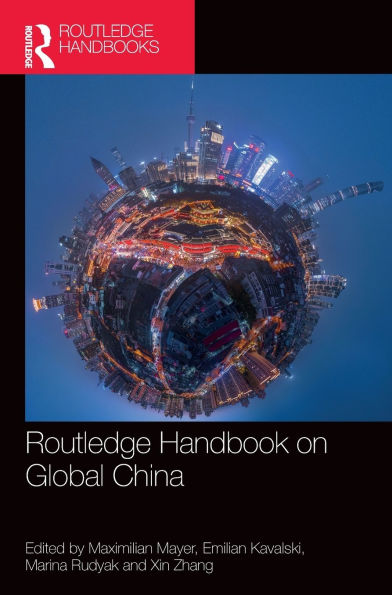
Routledge Handbook on Global China in Chattanooga, TN
Current price: $280.00
Barnes and Noble
Routledge Handbook on Global China in Chattanooga, TN
Current price: $280.00
Loading Inventory...
Size: Hardcover
This innovative Routledge Handbook sheds light on the complex and transformative nature of Global China, prompting a re- evaluation of existing theories on global and regional dynamics. It encourages theoretical innovation, methodological reflection and analytical transformation, providing new avenues for critical engagement with China’s global interactions. The chapters propose three key commitments for the study of Global China: Advocating for diverse viewpoints and non- binary frameworks, employing nuanced analysis to understand Beijing’s transnational relations and utilizing alternative methodological approaches to explore different trajectories for China in international affairs.
The Handbook also identifies and avoids epistemic traps that hinder the understanding of Global China, such as othering and strategic narcissism. It suggests five analytical frameworks related to relationality, global capitalist processes, language and discourse power, planetary- scale modernization and experimentalism to guide future research. By adopting these frameworks, researchers can gain a deeper understanding of the multifaceted factors shaping Global China within the broader global context of cooperation, competition and crisis.
Introduction, Chapter 21, and Epilogue of this book is freely available as a downloadable Open Access PDF at http://www.taylorfrancis.com under a Creative Commons [Attribution-Non Commercial-No Derivatives (CC BY-NC-ND)] 4.0 license.
The Handbook also identifies and avoids epistemic traps that hinder the understanding of Global China, such as othering and strategic narcissism. It suggests five analytical frameworks related to relationality, global capitalist processes, language and discourse power, planetary- scale modernization and experimentalism to guide future research. By adopting these frameworks, researchers can gain a deeper understanding of the multifaceted factors shaping Global China within the broader global context of cooperation, competition and crisis.
Introduction, Chapter 21, and Epilogue of this book is freely available as a downloadable Open Access PDF at http://www.taylorfrancis.com under a Creative Commons [Attribution-Non Commercial-No Derivatives (CC BY-NC-ND)] 4.0 license.
This innovative Routledge Handbook sheds light on the complex and transformative nature of Global China, prompting a re- evaluation of existing theories on global and regional dynamics. It encourages theoretical innovation, methodological reflection and analytical transformation, providing new avenues for critical engagement with China’s global interactions. The chapters propose three key commitments for the study of Global China: Advocating for diverse viewpoints and non- binary frameworks, employing nuanced analysis to understand Beijing’s transnational relations and utilizing alternative methodological approaches to explore different trajectories for China in international affairs.
The Handbook also identifies and avoids epistemic traps that hinder the understanding of Global China, such as othering and strategic narcissism. It suggests five analytical frameworks related to relationality, global capitalist processes, language and discourse power, planetary- scale modernization and experimentalism to guide future research. By adopting these frameworks, researchers can gain a deeper understanding of the multifaceted factors shaping Global China within the broader global context of cooperation, competition and crisis.
Introduction, Chapter 21, and Epilogue of this book is freely available as a downloadable Open Access PDF at http://www.taylorfrancis.com under a Creative Commons [Attribution-Non Commercial-No Derivatives (CC BY-NC-ND)] 4.0 license.
The Handbook also identifies and avoids epistemic traps that hinder the understanding of Global China, such as othering and strategic narcissism. It suggests five analytical frameworks related to relationality, global capitalist processes, language and discourse power, planetary- scale modernization and experimentalism to guide future research. By adopting these frameworks, researchers can gain a deeper understanding of the multifaceted factors shaping Global China within the broader global context of cooperation, competition and crisis.
Introduction, Chapter 21, and Epilogue of this book is freely available as a downloadable Open Access PDF at http://www.taylorfrancis.com under a Creative Commons [Attribution-Non Commercial-No Derivatives (CC BY-NC-ND)] 4.0 license.
You May Also Like








More About Barnes and Noble at Hamilton Place
Barnes & Noble is the world’s largest retail bookseller and a leading retailer of content, digital media and educational products. Our Nook Digital business offers a lineup of NOOK® tablets and e-Readers and an expansive collection of digital reading content through the NOOK Store®. Barnes & Noble’s mission is to operate the best omni-channel specialty retail business in America, helping both our customers and booksellers reach their aspirations, while being a credit to the communities we serve.
2100 Hamilton Pl Blvd, Chattanooga, TN 37421, United States
Find Barnes and Noble at Hamilton Place in Chattanooga, TN
Visit Barnes and Noble at Hamilton Place in Chattanooga, TN