
Home
Routledge Handbook of the History of Women's Economic Thought
Barnes and Noble
Loading Inventory...
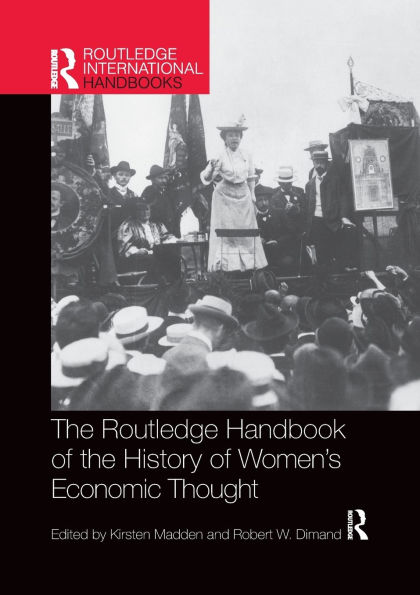
Routledge Handbook of the History of Women's Economic Thought in Chattanooga, TN
Current price: $66.99
Barnes and Noble
Routledge Handbook of the History of Women's Economic Thought in Chattanooga, TN
Current price: $66.99
Loading Inventory...
Size: OS
The marginalization of women in economics has a history as long as the discipline itself. Throughout the history of economics, women contributed substantial novel ideas, methods of inquiry, and analytical insights, with much of this discounted, ignored, or shifted into alternative disciplines and writing outlets.
This handbook presents new and much-needed analytical research of women’s contributions in the history of economic thought, focusing primarily on the period from the 1770s into the beginning of the 21st century. Chapters address the institutional, sociological and historical factors that have influenced women economists’ thinking, and explore women’s contributions to economic analysis, method, policies and debates. Coverage is international, moving beyond Europe and the US into the Arab world, China, India, Japan, Latin America, Russia and the Soviet Union, and sub-Saharan Africa. This new global perspective adds depth as well as scope to our understanding of women’s contribution to the history of economic thought.
The book offers crucial new insights into previously underexplored work by women in the history of economic thought, and will prove to be a seminal volume with relevance beyond that field, into women’s studies, sociology, and history.
This handbook presents new and much-needed analytical research of women’s contributions in the history of economic thought, focusing primarily on the period from the 1770s into the beginning of the 21st century. Chapters address the institutional, sociological and historical factors that have influenced women economists’ thinking, and explore women’s contributions to economic analysis, method, policies and debates. Coverage is international, moving beyond Europe and the US into the Arab world, China, India, Japan, Latin America, Russia and the Soviet Union, and sub-Saharan Africa. This new global perspective adds depth as well as scope to our understanding of women’s contribution to the history of economic thought.
The book offers crucial new insights into previously underexplored work by women in the history of economic thought, and will prove to be a seminal volume with relevance beyond that field, into women’s studies, sociology, and history.
The marginalization of women in economics has a history as long as the discipline itself. Throughout the history of economics, women contributed substantial novel ideas, methods of inquiry, and analytical insights, with much of this discounted, ignored, or shifted into alternative disciplines and writing outlets.
This handbook presents new and much-needed analytical research of women’s contributions in the history of economic thought, focusing primarily on the period from the 1770s into the beginning of the 21st century. Chapters address the institutional, sociological and historical factors that have influenced women economists’ thinking, and explore women’s contributions to economic analysis, method, policies and debates. Coverage is international, moving beyond Europe and the US into the Arab world, China, India, Japan, Latin America, Russia and the Soviet Union, and sub-Saharan Africa. This new global perspective adds depth as well as scope to our understanding of women’s contribution to the history of economic thought.
The book offers crucial new insights into previously underexplored work by women in the history of economic thought, and will prove to be a seminal volume with relevance beyond that field, into women’s studies, sociology, and history.
This handbook presents new and much-needed analytical research of women’s contributions in the history of economic thought, focusing primarily on the period from the 1770s into the beginning of the 21st century. Chapters address the institutional, sociological and historical factors that have influenced women economists’ thinking, and explore women’s contributions to economic analysis, method, policies and debates. Coverage is international, moving beyond Europe and the US into the Arab world, China, India, Japan, Latin America, Russia and the Soviet Union, and sub-Saharan Africa. This new global perspective adds depth as well as scope to our understanding of women’s contribution to the history of economic thought.
The book offers crucial new insights into previously underexplored work by women in the history of economic thought, and will prove to be a seminal volume with relevance beyond that field, into women’s studies, sociology, and history.
You May Also Like










More About Barnes and Noble at Hamilton Place
Barnes & Noble is the world’s largest retail bookseller and a leading retailer of content, digital media and educational products. Our Nook Digital business offers a lineup of NOOK® tablets and e-Readers and an expansive collection of digital reading content through the NOOK Store®. Barnes & Noble’s mission is to operate the best omni-channel specialty retail business in America, helping both our customers and booksellers reach their aspirations, while being a credit to the communities we serve.
2100 Hamilton Pl Blvd, Chattanooga, TN 37421, United States
Find Barnes and Noble at Hamilton Place in Chattanooga, TN
Visit Barnes and Noble at Hamilton Place in Chattanooga, TN
