
Home
Rome: The Shaping of Three Capitals
Barnes and Noble
Loading Inventory...
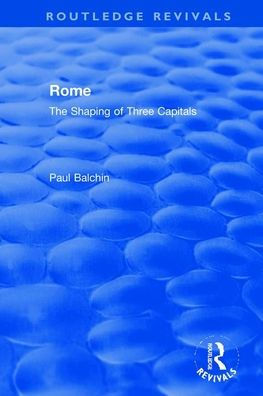
Rome: The Shaping of Three Capitals in Chattanooga, TN
Current price: $170.00
Barnes and Noble
Rome: The Shaping of Three Capitals in Chattanooga, TN
Current price: $170.00
Loading Inventory...
Size: Hardcover
First published in 2017,
Rome: The Shaping of Three Capitals
explores the impact of political history on the built environment of the Eternal City.
The book divides Rome’s history into three main periods: the rulership of the early kings from the 8th to the 6th centuries BC; the period of Etruscan culture and architecture up to the end of the Roman Empire in 5th century AD; and, the 6th century to 1870, when Rome stood as the ecclesiastical capital of the Catholic Church and the temporal state of the Papal States. The final section of the book examines the Risorgimento, the unification of Italy, and the development of the fascist state; a time when Rome became the capital of Italy and endeavoured to establish a new empire.
Exploring political instability and change, Balchin demonstrates the strong connection between politics and the physical shaping of the city through an examination of the successive styles of architecture, from Classical to Modernist.
Rome: The Shaping of Three Capitals
explores the impact of political history on the built environment of the Eternal City.
The book divides Rome’s history into three main periods: the rulership of the early kings from the 8th to the 6th centuries BC; the period of Etruscan culture and architecture up to the end of the Roman Empire in 5th century AD; and, the 6th century to 1870, when Rome stood as the ecclesiastical capital of the Catholic Church and the temporal state of the Papal States. The final section of the book examines the Risorgimento, the unification of Italy, and the development of the fascist state; a time when Rome became the capital of Italy and endeavoured to establish a new empire.
Exploring political instability and change, Balchin demonstrates the strong connection between politics and the physical shaping of the city through an examination of the successive styles of architecture, from Classical to Modernist.
First published in 2017,
Rome: The Shaping of Three Capitals
explores the impact of political history on the built environment of the Eternal City.
The book divides Rome’s history into three main periods: the rulership of the early kings from the 8th to the 6th centuries BC; the period of Etruscan culture and architecture up to the end of the Roman Empire in 5th century AD; and, the 6th century to 1870, when Rome stood as the ecclesiastical capital of the Catholic Church and the temporal state of the Papal States. The final section of the book examines the Risorgimento, the unification of Italy, and the development of the fascist state; a time when Rome became the capital of Italy and endeavoured to establish a new empire.
Exploring political instability and change, Balchin demonstrates the strong connection between politics and the physical shaping of the city through an examination of the successive styles of architecture, from Classical to Modernist.
Rome: The Shaping of Three Capitals
explores the impact of political history on the built environment of the Eternal City.
The book divides Rome’s history into three main periods: the rulership of the early kings from the 8th to the 6th centuries BC; the period of Etruscan culture and architecture up to the end of the Roman Empire in 5th century AD; and, the 6th century to 1870, when Rome stood as the ecclesiastical capital of the Catholic Church and the temporal state of the Papal States. The final section of the book examines the Risorgimento, the unification of Italy, and the development of the fascist state; a time when Rome became the capital of Italy and endeavoured to establish a new empire.
Exploring political instability and change, Balchin demonstrates the strong connection between politics and the physical shaping of the city through an examination of the successive styles of architecture, from Classical to Modernist.
You May Also Like














More About Barnes and Noble at Hamilton Place
Barnes & Noble is the world’s largest retail bookseller and a leading retailer of content, digital media and educational products. Our Nook Digital business offers a lineup of NOOK® tablets and e-Readers and an expansive collection of digital reading content through the NOOK Store®. Barnes & Noble’s mission is to operate the best omni-channel specialty retail business in America, helping both our customers and booksellers reach their aspirations, while being a credit to the communities we serve.
2100 Hamilton Pl Blvd, Chattanooga, TN 37421, United States
Find Barnes and Noble at Hamilton Place in Chattanooga, TN
Visit Barnes and Noble at Hamilton Place in Chattanooga, TN
