
Home
Roman Comedy against the Subject
Barnes and Noble
Loading Inventory...
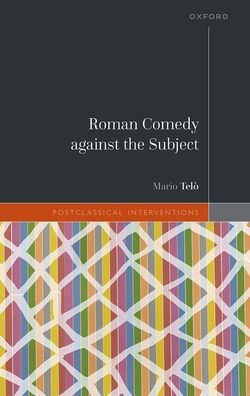
Roman Comedy against the Subject in Chattanooga, TN
Current price: $110.00
Barnes and Noble
Roman Comedy against the Subject in Chattanooga, TN
Current price: $110.00
Loading Inventory...
Size: Hardcover
Roman Comedy against the Subject
provides an expansive interpretation of four Roman comedies named after objectsPlautus's
Cistellaria
,
Aulularia
, and
Rudens
, and Terence's
Eunuchus
. In this book, the titular object provides an opportunity not to reconceive the relational politics of Roman comedy, but to conceive a different politics of familial and social relations with Roman comedy. Employing object-oriented ontology, psychoanalysis, queer theory, and Black critical theory, the book radically recasts perennial problems of Roman comedy and literature in general: the author, in relation to "mothering" (alternative maternities); character, in relation to neurodiversity; genre, in relation to sibling-like parentality; and the title itself, in relation to gendering and ungendering.
explores the aesthetic and political possibilities of becoming object, of embracing "itness." Rather than assimilating objects to subjects or vital agents, the book finds emancipatory potential in renouncing the normative and intrinsically exclusionary subjecthood of "he," "she," and "they," markers of privilege that are burdened by the violence of humanization and often dehumanizing of others. The introduction features nine brief but acute readings of object-oriented modern dramas: Tennessee Williams's
Glass Menagerie
, Yukio Mishima's
The Damask Drum
, Eugène Ionesco's
Les Chaises
, and Alice Childress's
String
, among others.
provides an expansive interpretation of four Roman comedies named after objectsPlautus's
Cistellaria
,
Aulularia
, and
Rudens
, and Terence's
Eunuchus
. In this book, the titular object provides an opportunity not to reconceive the relational politics of Roman comedy, but to conceive a different politics of familial and social relations with Roman comedy. Employing object-oriented ontology, psychoanalysis, queer theory, and Black critical theory, the book radically recasts perennial problems of Roman comedy and literature in general: the author, in relation to "mothering" (alternative maternities); character, in relation to neurodiversity; genre, in relation to sibling-like parentality; and the title itself, in relation to gendering and ungendering.
explores the aesthetic and political possibilities of becoming object, of embracing "itness." Rather than assimilating objects to subjects or vital agents, the book finds emancipatory potential in renouncing the normative and intrinsically exclusionary subjecthood of "he," "she," and "they," markers of privilege that are burdened by the violence of humanization and often dehumanizing of others. The introduction features nine brief but acute readings of object-oriented modern dramas: Tennessee Williams's
Glass Menagerie
, Yukio Mishima's
The Damask Drum
, Eugène Ionesco's
Les Chaises
, and Alice Childress's
String
, among others.
Roman Comedy against the Subject
provides an expansive interpretation of four Roman comedies named after objectsPlautus's
Cistellaria
,
Aulularia
, and
Rudens
, and Terence's
Eunuchus
. In this book, the titular object provides an opportunity not to reconceive the relational politics of Roman comedy, but to conceive a different politics of familial and social relations with Roman comedy. Employing object-oriented ontology, psychoanalysis, queer theory, and Black critical theory, the book radically recasts perennial problems of Roman comedy and literature in general: the author, in relation to "mothering" (alternative maternities); character, in relation to neurodiversity; genre, in relation to sibling-like parentality; and the title itself, in relation to gendering and ungendering.
explores the aesthetic and political possibilities of becoming object, of embracing "itness." Rather than assimilating objects to subjects or vital agents, the book finds emancipatory potential in renouncing the normative and intrinsically exclusionary subjecthood of "he," "she," and "they," markers of privilege that are burdened by the violence of humanization and often dehumanizing of others. The introduction features nine brief but acute readings of object-oriented modern dramas: Tennessee Williams's
Glass Menagerie
, Yukio Mishima's
The Damask Drum
, Eugène Ionesco's
Les Chaises
, and Alice Childress's
String
, among others.
provides an expansive interpretation of four Roman comedies named after objectsPlautus's
Cistellaria
,
Aulularia
, and
Rudens
, and Terence's
Eunuchus
. In this book, the titular object provides an opportunity not to reconceive the relational politics of Roman comedy, but to conceive a different politics of familial and social relations with Roman comedy. Employing object-oriented ontology, psychoanalysis, queer theory, and Black critical theory, the book radically recasts perennial problems of Roman comedy and literature in general: the author, in relation to "mothering" (alternative maternities); character, in relation to neurodiversity; genre, in relation to sibling-like parentality; and the title itself, in relation to gendering and ungendering.
explores the aesthetic and political possibilities of becoming object, of embracing "itness." Rather than assimilating objects to subjects or vital agents, the book finds emancipatory potential in renouncing the normative and intrinsically exclusionary subjecthood of "he," "she," and "they," markers of privilege that are burdened by the violence of humanization and often dehumanizing of others. The introduction features nine brief but acute readings of object-oriented modern dramas: Tennessee Williams's
Glass Menagerie
, Yukio Mishima's
The Damask Drum
, Eugène Ionesco's
Les Chaises
, and Alice Childress's
String
, among others.
You May Also Like












More About Barnes and Noble at Hamilton Place
Barnes & Noble is the world’s largest retail bookseller and a leading retailer of content, digital media and educational products. Our Nook Digital business offers a lineup of NOOK® tablets and e-Readers and an expansive collection of digital reading content through the NOOK Store®. Barnes & Noble’s mission is to operate the best omni-channel specialty retail business in America, helping both our customers and booksellers reach their aspirations, while being a credit to the communities we serve.
2100 Hamilton Pl Blvd, Chattanooga, TN 37421, United States
Find Barnes and Noble at Hamilton Place in Chattanooga, TN
Visit Barnes and Noble at Hamilton Place in Chattanooga, TN
