
Home
Rival Conceptions of Freedom Modern Iran: An Intellectual History the Constitutional Revolution
Barnes and Noble
Loading Inventory...
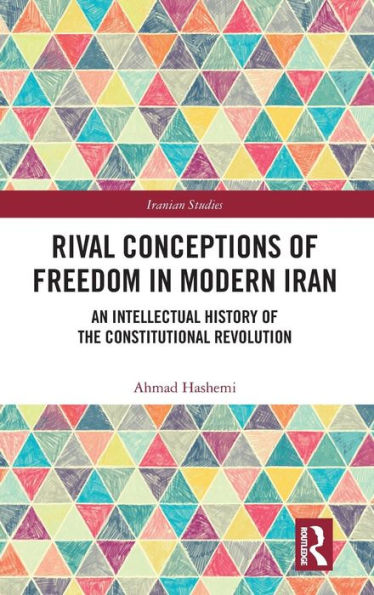
Rival Conceptions of Freedom Modern Iran: An Intellectual History the Constitutional Revolution in Chattanooga, TN
Current price: $190.00
Barnes and Noble
Rival Conceptions of Freedom Modern Iran: An Intellectual History the Constitutional Revolution in Chattanooga, TN
Current price: $190.00
Loading Inventory...
Size: Hardcover
Rival Conceptions of Freedom in Modern Iran
is an original historiographic examination of the idea of freedom in early modern Iran within a larger context of the formation of modern Muslim thought. The study develops an appropriate method for the historiography of ideas by taking into consideration cultural, linguistic, and socio-political limitations and obstacles to free thinking in closed societies.
The research shows how most locutions about freedom, uttered during early modern Iran, were formed within the horizon of the question of Iran’s decline and were somehow related to remedying such situations. It challenges previous studies which employed Isaiah Berlin’s distinction between positive and negative freedom as two fundamentally different concepts of freedom. It replaces Berlin’s dichotomy of positive and negative liberties with MacCallum’s triadic concept of freedom and argues that thinkers in early modern Iran could noticeably present rival interpretations of three variables of the concept of freedom, namely the agent, the constraint, and the purpose of freedom.
Rival Conceptions of Freedom in Modern Iran is a unique contribution to the histories of the 1905-11 Constitutional Revolution in Iran and comparative political thinking between Iran and Europe. It is an essential resource for scholars interested in Constitutionalism, History, Political Theory and Sociology within Middle Eastern Studies.
is an original historiographic examination of the idea of freedom in early modern Iran within a larger context of the formation of modern Muslim thought. The study develops an appropriate method for the historiography of ideas by taking into consideration cultural, linguistic, and socio-political limitations and obstacles to free thinking in closed societies.
The research shows how most locutions about freedom, uttered during early modern Iran, were formed within the horizon of the question of Iran’s decline and were somehow related to remedying such situations. It challenges previous studies which employed Isaiah Berlin’s distinction between positive and negative freedom as two fundamentally different concepts of freedom. It replaces Berlin’s dichotomy of positive and negative liberties with MacCallum’s triadic concept of freedom and argues that thinkers in early modern Iran could noticeably present rival interpretations of three variables of the concept of freedom, namely the agent, the constraint, and the purpose of freedom.
Rival Conceptions of Freedom in Modern Iran is a unique contribution to the histories of the 1905-11 Constitutional Revolution in Iran and comparative political thinking between Iran and Europe. It is an essential resource for scholars interested in Constitutionalism, History, Political Theory and Sociology within Middle Eastern Studies.
Rival Conceptions of Freedom in Modern Iran
is an original historiographic examination of the idea of freedom in early modern Iran within a larger context of the formation of modern Muslim thought. The study develops an appropriate method for the historiography of ideas by taking into consideration cultural, linguistic, and socio-political limitations and obstacles to free thinking in closed societies.
The research shows how most locutions about freedom, uttered during early modern Iran, were formed within the horizon of the question of Iran’s decline and were somehow related to remedying such situations. It challenges previous studies which employed Isaiah Berlin’s distinction between positive and negative freedom as two fundamentally different concepts of freedom. It replaces Berlin’s dichotomy of positive and negative liberties with MacCallum’s triadic concept of freedom and argues that thinkers in early modern Iran could noticeably present rival interpretations of three variables of the concept of freedom, namely the agent, the constraint, and the purpose of freedom.
Rival Conceptions of Freedom in Modern Iran is a unique contribution to the histories of the 1905-11 Constitutional Revolution in Iran and comparative political thinking between Iran and Europe. It is an essential resource for scholars interested in Constitutionalism, History, Political Theory and Sociology within Middle Eastern Studies.
is an original historiographic examination of the idea of freedom in early modern Iran within a larger context of the formation of modern Muslim thought. The study develops an appropriate method for the historiography of ideas by taking into consideration cultural, linguistic, and socio-political limitations and obstacles to free thinking in closed societies.
The research shows how most locutions about freedom, uttered during early modern Iran, were formed within the horizon of the question of Iran’s decline and were somehow related to remedying such situations. It challenges previous studies which employed Isaiah Berlin’s distinction between positive and negative freedom as two fundamentally different concepts of freedom. It replaces Berlin’s dichotomy of positive and negative liberties with MacCallum’s triadic concept of freedom and argues that thinkers in early modern Iran could noticeably present rival interpretations of three variables of the concept of freedom, namely the agent, the constraint, and the purpose of freedom.
Rival Conceptions of Freedom in Modern Iran is a unique contribution to the histories of the 1905-11 Constitutional Revolution in Iran and comparative political thinking between Iran and Europe. It is an essential resource for scholars interested in Constitutionalism, History, Political Theory and Sociology within Middle Eastern Studies.
You May Also Like








More About Barnes and Noble at Hamilton Place
Barnes & Noble is the world’s largest retail bookseller and a leading retailer of content, digital media and educational products. Our Nook Digital business offers a lineup of NOOK® tablets and e-Readers and an expansive collection of digital reading content through the NOOK Store®. Barnes & Noble’s mission is to operate the best omni-channel specialty retail business in America, helping both our customers and booksellers reach their aspirations, while being a credit to the communities we serve.
2100 Hamilton Pl Blvd, Chattanooga, TN 37421, United States
Find Barnes and Noble at Hamilton Place in Chattanooga, TN
Visit Barnes and Noble at Hamilton Place in Chattanooga, TN
