
Home
Religious Ethics and Migration: Doing Justice to Undocumented Workers
Barnes and Noble
Loading Inventory...
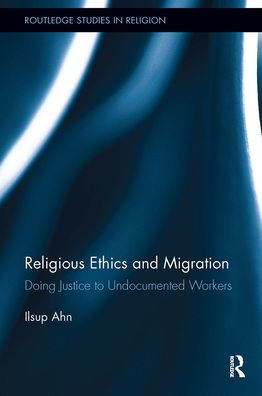
Religious Ethics and Migration: Doing Justice to Undocumented Workers in Chattanooga, TN
Current price: $54.99
Barnes and Noble
Religious Ethics and Migration: Doing Justice to Undocumented Workers in Chattanooga, TN
Current price: $54.99
Loading Inventory...
Size: Hardcover
What does it mean to provide justice for undocumented workers who have been living among us without proper legal documentation? How can we do justice to the undocumented migrants who have been doing the low-skilled, low-paid jobs unwanted by citizens? Why should we even try to do justice for people who violate the laws of the society?
Religious Ethics and Migration: Doing Justice to Undocumented Workers addresses these questions from a distinctive religious ethical perspective: the Christian theology of forgiveness and radical hospitality. In answering these questions, the author employs in-depth interdisciplinary dialogues with other relevant disciplines such as immigration history, global economics, political science, legal philosophy, and social theory. He argues that the political appropriation of a Christian theology of forgiveness and the radical hospitality modeled after it are the most practical and justifiable solutions to the current immigration crisis in North America. Critical and interdisciplinary in its approach, this book offers a unique, comprehensive, and balanced perspective regarding the urgent immigration crisis.
Religious Ethics and Migration: Doing Justice to Undocumented Workers addresses these questions from a distinctive religious ethical perspective: the Christian theology of forgiveness and radical hospitality. In answering these questions, the author employs in-depth interdisciplinary dialogues with other relevant disciplines such as immigration history, global economics, political science, legal philosophy, and social theory. He argues that the political appropriation of a Christian theology of forgiveness and the radical hospitality modeled after it are the most practical and justifiable solutions to the current immigration crisis in North America. Critical and interdisciplinary in its approach, this book offers a unique, comprehensive, and balanced perspective regarding the urgent immigration crisis.
What does it mean to provide justice for undocumented workers who have been living among us without proper legal documentation? How can we do justice to the undocumented migrants who have been doing the low-skilled, low-paid jobs unwanted by citizens? Why should we even try to do justice for people who violate the laws of the society?
Religious Ethics and Migration: Doing Justice to Undocumented Workers addresses these questions from a distinctive religious ethical perspective: the Christian theology of forgiveness and radical hospitality. In answering these questions, the author employs in-depth interdisciplinary dialogues with other relevant disciplines such as immigration history, global economics, political science, legal philosophy, and social theory. He argues that the political appropriation of a Christian theology of forgiveness and the radical hospitality modeled after it are the most practical and justifiable solutions to the current immigration crisis in North America. Critical and interdisciplinary in its approach, this book offers a unique, comprehensive, and balanced perspective regarding the urgent immigration crisis.
Religious Ethics and Migration: Doing Justice to Undocumented Workers addresses these questions from a distinctive religious ethical perspective: the Christian theology of forgiveness and radical hospitality. In answering these questions, the author employs in-depth interdisciplinary dialogues with other relevant disciplines such as immigration history, global economics, political science, legal philosophy, and social theory. He argues that the political appropriation of a Christian theology of forgiveness and the radical hospitality modeled after it are the most practical and justifiable solutions to the current immigration crisis in North America. Critical and interdisciplinary in its approach, this book offers a unique, comprehensive, and balanced perspective regarding the urgent immigration crisis.
You May Also Like








More About Barnes and Noble at Hamilton Place
Barnes & Noble is the world’s largest retail bookseller and a leading retailer of content, digital media and educational products. Our Nook Digital business offers a lineup of NOOK® tablets and e-Readers and an expansive collection of digital reading content through the NOOK Store®. Barnes & Noble’s mission is to operate the best omni-channel specialty retail business in America, helping both our customers and booksellers reach their aspirations, while being a credit to the communities we serve.
2100 Hamilton Pl Blvd, Chattanooga, TN 37421, United States
Find Barnes and Noble at Hamilton Place in Chattanooga, TN
Visit Barnes and Noble at Hamilton Place in Chattanooga, TN
