
Home
Religions around the Arctic: Source Criticism and Comparisons
Barnes and Noble
Loading Inventory...
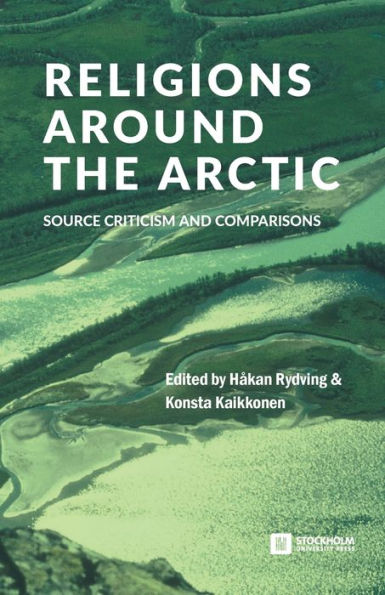
Religions around the Arctic: Source Criticism and Comparisons in Chattanooga, TN
Current price: $19.00
Barnes and Noble
Religions around the Arctic: Source Criticism and Comparisons in Chattanooga, TN
Current price: $19.00
Loading Inventory...
Size: OS
At a seminar at the University of Bergen, Norway, in September 2018, scholars from Denmark, Finland, Norway, and Sweden presented and discussed various forms of source criticism and comparison with examples from the Arctic and Sub-Arctic regions of Eurasia and North America. A selection of the papers read at the seminar are published in this volume.
Each of the chapters in the first part compares local phenomena from two or more cultural contexts: a Swedish, a Karelian, an Estonian and an Irish place name that include words for hostage (Stefan Olsson), Old Icelandic and Sami ancestor mountains (Eldar Heide), and Finno-Karelian bear incantations and Ob-Ugrian bear songs (Vesa Matteo Piludu).
The second part gives examples of different forms of source criticism in the analysis of indigenous Sami religion. The functions of a newly found ritual drum is discussed in relation to contemporary written sources (Dikka Storm & Trude Fonneland), the court proceedings from a witchcraft trial in 1692 is discussed with the help of Gérard Genette's category 'voice' (Liv Helene Willumsen), and a content analysis of an introduction to indigenous Sami religion shows that the editor added text of his own to the original manuscript (Konsta Kaikkonen).
In the third part, the area is widened to other parts of the Arctic. Here, a selection of theoretical perspectives is used to illuminate local empirical material. They give examples of how Native North American bear rituals and sweat bath traditions can be analysed with the help of an ecology of religion model and ritual theories, respectively (Riku Hämäläinen), of how Soviet researchers used the concepts of 'spirits' and 'gods' when they analysed the world view of the Nganasan (Olle Sundström), and of how representatives of academia have been instrumental in the 'finding, claiming, and authorizing' of Sakha religions (Liudmila Nikanorova).
Although the papers only deal with a few of the peoples living in the Arctic and Sub-Arctic regions, the examples of source critical and comparative problems they discuss are of great general relevance.
Each of the chapters in the first part compares local phenomena from two or more cultural contexts: a Swedish, a Karelian, an Estonian and an Irish place name that include words for hostage (Stefan Olsson), Old Icelandic and Sami ancestor mountains (Eldar Heide), and Finno-Karelian bear incantations and Ob-Ugrian bear songs (Vesa Matteo Piludu).
The second part gives examples of different forms of source criticism in the analysis of indigenous Sami religion. The functions of a newly found ritual drum is discussed in relation to contemporary written sources (Dikka Storm & Trude Fonneland), the court proceedings from a witchcraft trial in 1692 is discussed with the help of Gérard Genette's category 'voice' (Liv Helene Willumsen), and a content analysis of an introduction to indigenous Sami religion shows that the editor added text of his own to the original manuscript (Konsta Kaikkonen).
In the third part, the area is widened to other parts of the Arctic. Here, a selection of theoretical perspectives is used to illuminate local empirical material. They give examples of how Native North American bear rituals and sweat bath traditions can be analysed with the help of an ecology of religion model and ritual theories, respectively (Riku Hämäläinen), of how Soviet researchers used the concepts of 'spirits' and 'gods' when they analysed the world view of the Nganasan (Olle Sundström), and of how representatives of academia have been instrumental in the 'finding, claiming, and authorizing' of Sakha religions (Liudmila Nikanorova).
Although the papers only deal with a few of the peoples living in the Arctic and Sub-Arctic regions, the examples of source critical and comparative problems they discuss are of great general relevance.
At a seminar at the University of Bergen, Norway, in September 2018, scholars from Denmark, Finland, Norway, and Sweden presented and discussed various forms of source criticism and comparison with examples from the Arctic and Sub-Arctic regions of Eurasia and North America. A selection of the papers read at the seminar are published in this volume.
Each of the chapters in the first part compares local phenomena from two or more cultural contexts: a Swedish, a Karelian, an Estonian and an Irish place name that include words for hostage (Stefan Olsson), Old Icelandic and Sami ancestor mountains (Eldar Heide), and Finno-Karelian bear incantations and Ob-Ugrian bear songs (Vesa Matteo Piludu).
The second part gives examples of different forms of source criticism in the analysis of indigenous Sami religion. The functions of a newly found ritual drum is discussed in relation to contemporary written sources (Dikka Storm & Trude Fonneland), the court proceedings from a witchcraft trial in 1692 is discussed with the help of Gérard Genette's category 'voice' (Liv Helene Willumsen), and a content analysis of an introduction to indigenous Sami religion shows that the editor added text of his own to the original manuscript (Konsta Kaikkonen).
In the third part, the area is widened to other parts of the Arctic. Here, a selection of theoretical perspectives is used to illuminate local empirical material. They give examples of how Native North American bear rituals and sweat bath traditions can be analysed with the help of an ecology of religion model and ritual theories, respectively (Riku Hämäläinen), of how Soviet researchers used the concepts of 'spirits' and 'gods' when they analysed the world view of the Nganasan (Olle Sundström), and of how representatives of academia have been instrumental in the 'finding, claiming, and authorizing' of Sakha religions (Liudmila Nikanorova).
Although the papers only deal with a few of the peoples living in the Arctic and Sub-Arctic regions, the examples of source critical and comparative problems they discuss are of great general relevance.
Each of the chapters in the first part compares local phenomena from two or more cultural contexts: a Swedish, a Karelian, an Estonian and an Irish place name that include words for hostage (Stefan Olsson), Old Icelandic and Sami ancestor mountains (Eldar Heide), and Finno-Karelian bear incantations and Ob-Ugrian bear songs (Vesa Matteo Piludu).
The second part gives examples of different forms of source criticism in the analysis of indigenous Sami religion. The functions of a newly found ritual drum is discussed in relation to contemporary written sources (Dikka Storm & Trude Fonneland), the court proceedings from a witchcraft trial in 1692 is discussed with the help of Gérard Genette's category 'voice' (Liv Helene Willumsen), and a content analysis of an introduction to indigenous Sami religion shows that the editor added text of his own to the original manuscript (Konsta Kaikkonen).
In the third part, the area is widened to other parts of the Arctic. Here, a selection of theoretical perspectives is used to illuminate local empirical material. They give examples of how Native North American bear rituals and sweat bath traditions can be analysed with the help of an ecology of religion model and ritual theories, respectively (Riku Hämäläinen), of how Soviet researchers used the concepts of 'spirits' and 'gods' when they analysed the world view of the Nganasan (Olle Sundström), and of how representatives of academia have been instrumental in the 'finding, claiming, and authorizing' of Sakha religions (Liudmila Nikanorova).
Although the papers only deal with a few of the peoples living in the Arctic and Sub-Arctic regions, the examples of source critical and comparative problems they discuss are of great general relevance.
You May Also Like











More About Barnes and Noble at Hamilton Place
Barnes & Noble is the world’s largest retail bookseller and a leading retailer of content, digital media and educational products. Our Nook Digital business offers a lineup of NOOK® tablets and e-Readers and an expansive collection of digital reading content through the NOOK Store®. Barnes & Noble’s mission is to operate the best omni-channel specialty retail business in America, helping both our customers and booksellers reach their aspirations, while being a credit to the communities we serve.
2100 Hamilton Pl Blvd, Chattanooga, TN 37421, United States
Find Barnes and Noble at Hamilton Place in Chattanooga, TN
Visit Barnes and Noble at Hamilton Place in Chattanooga, TN
