
Home
Relating Psychotherapy: The Application of a New Theory
Barnes and Noble
Loading Inventory...
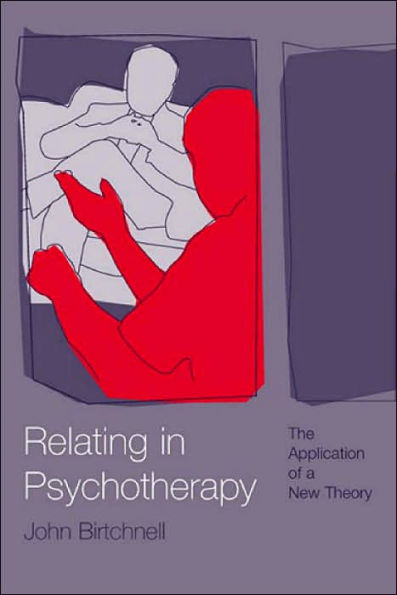
Relating Psychotherapy: The Application of a New Theory in Chattanooga, TN
Current price: $64.99
Barnes and Noble
Relating Psychotherapy: The Application of a New Theory in Chattanooga, TN
Current price: $64.99
Loading Inventory...
Size: Hardcover
In John Birtchnell's last book
How Humans Relate,
he proposed a new theory as the basis for a science of relating.
Relating in Psychotherapy
explains how the relevance of this theory relates to the practice of psychotherapy. The theory cuts across all schools of therapy, and is a way of describing each school in terms of relating in both the client and the therapist.
The theory is constructed around two major axes; a horizontal one concerning the degree to which we need to become involved with or separated from others, and a vertical one concerning the degree to which we choose to exercise power over others or permit others to exercise their power over us. With numerous clinical examples, John Birtchnell explains how we need to be competet in all four relating positions (close, distant, upper and lower), and argues that people who seek therapy usually lack competence in one or more of them, but through the course of therapy, their relating capabilities can be improved.
can have applications in psychotherapy and in couple and family therapy, and will be an invaluable resource for therapists, counsellors and other mental health professionals.
How Humans Relate,
he proposed a new theory as the basis for a science of relating.
Relating in Psychotherapy
explains how the relevance of this theory relates to the practice of psychotherapy. The theory cuts across all schools of therapy, and is a way of describing each school in terms of relating in both the client and the therapist.
The theory is constructed around two major axes; a horizontal one concerning the degree to which we need to become involved with or separated from others, and a vertical one concerning the degree to which we choose to exercise power over others or permit others to exercise their power over us. With numerous clinical examples, John Birtchnell explains how we need to be competet in all four relating positions (close, distant, upper and lower), and argues that people who seek therapy usually lack competence in one or more of them, but through the course of therapy, their relating capabilities can be improved.
can have applications in psychotherapy and in couple and family therapy, and will be an invaluable resource for therapists, counsellors and other mental health professionals.
In John Birtchnell's last book
How Humans Relate,
he proposed a new theory as the basis for a science of relating.
Relating in Psychotherapy
explains how the relevance of this theory relates to the practice of psychotherapy. The theory cuts across all schools of therapy, and is a way of describing each school in terms of relating in both the client and the therapist.
The theory is constructed around two major axes; a horizontal one concerning the degree to which we need to become involved with or separated from others, and a vertical one concerning the degree to which we choose to exercise power over others or permit others to exercise their power over us. With numerous clinical examples, John Birtchnell explains how we need to be competet in all four relating positions (close, distant, upper and lower), and argues that people who seek therapy usually lack competence in one or more of them, but through the course of therapy, their relating capabilities can be improved.
can have applications in psychotherapy and in couple and family therapy, and will be an invaluable resource for therapists, counsellors and other mental health professionals.
How Humans Relate,
he proposed a new theory as the basis for a science of relating.
Relating in Psychotherapy
explains how the relevance of this theory relates to the practice of psychotherapy. The theory cuts across all schools of therapy, and is a way of describing each school in terms of relating in both the client and the therapist.
The theory is constructed around two major axes; a horizontal one concerning the degree to which we need to become involved with or separated from others, and a vertical one concerning the degree to which we choose to exercise power over others or permit others to exercise their power over us. With numerous clinical examples, John Birtchnell explains how we need to be competet in all four relating positions (close, distant, upper and lower), and argues that people who seek therapy usually lack competence in one or more of them, but through the course of therapy, their relating capabilities can be improved.
can have applications in psychotherapy and in couple and family therapy, and will be an invaluable resource for therapists, counsellors and other mental health professionals.
You May Also Like

















More About Barnes and Noble at Hamilton Place
Barnes & Noble is the world’s largest retail bookseller and a leading retailer of content, digital media and educational products. Our Nook Digital business offers a lineup of NOOK® tablets and e-Readers and an expansive collection of digital reading content through the NOOK Store®. Barnes & Noble’s mission is to operate the best omni-channel specialty retail business in America, helping both our customers and booksellers reach their aspirations, while being a credit to the communities we serve.
2100 Hamilton Pl Blvd, Chattanooga, TN 37421, United States
Find Barnes and Noble at Hamilton Place in Chattanooga, TN
Visit Barnes and Noble at Hamilton Place in Chattanooga, TN
