
Home
Rehabilitate Marx!: The Czechoslovak Party Intelligentsia and Post-Stalinist Modernity
Barnes and Noble
Loading Inventory...
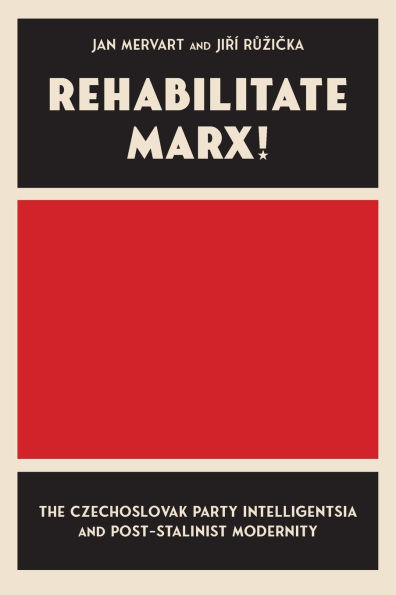
Rehabilitate Marx!: The Czechoslovak Party Intelligentsia and Post-Stalinist Modernity in Chattanooga, TN
Current price: $120.00
Barnes and Noble
Rehabilitate Marx!: The Czechoslovak Party Intelligentsia and Post-Stalinist Modernity in Chattanooga, TN
Current price: $120.00
Loading Inventory...
Size: Hardcover
Rehabilitate Marx!
conceptualizes new forms of socialist modernity during the postStalinist era in the second half of the 1950s and 1960s. After the demise of Stalinism, Czechoslovak intellectuals within the Communist Party realized that the primary challenge they faced wasn’t merely the further development of socialism, which would lead to communism, but that they needed to reformulate the entire socialist project. These intellectuals gradually abandoned the Marxist orthodoxy of their time and began searching for new interpretations of classic Marxist works that would provide an adequate conceptual framework for addressing contemporary problems. Mervart and Růžička present postStalinist thought as an autonomous sphere, showing a world of varying socialist visions.
conceptualizes new forms of socialist modernity during the postStalinist era in the second half of the 1950s and 1960s. After the demise of Stalinism, Czechoslovak intellectuals within the Communist Party realized that the primary challenge they faced wasn’t merely the further development of socialism, which would lead to communism, but that they needed to reformulate the entire socialist project. These intellectuals gradually abandoned the Marxist orthodoxy of their time and began searching for new interpretations of classic Marxist works that would provide an adequate conceptual framework for addressing contemporary problems. Mervart and Růžička present postStalinist thought as an autonomous sphere, showing a world of varying socialist visions.
Rehabilitate Marx!
conceptualizes new forms of socialist modernity during the postStalinist era in the second half of the 1950s and 1960s. After the demise of Stalinism, Czechoslovak intellectuals within the Communist Party realized that the primary challenge they faced wasn’t merely the further development of socialism, which would lead to communism, but that they needed to reformulate the entire socialist project. These intellectuals gradually abandoned the Marxist orthodoxy of their time and began searching for new interpretations of classic Marxist works that would provide an adequate conceptual framework for addressing contemporary problems. Mervart and Růžička present postStalinist thought as an autonomous sphere, showing a world of varying socialist visions.
conceptualizes new forms of socialist modernity during the postStalinist era in the second half of the 1950s and 1960s. After the demise of Stalinism, Czechoslovak intellectuals within the Communist Party realized that the primary challenge they faced wasn’t merely the further development of socialism, which would lead to communism, but that they needed to reformulate the entire socialist project. These intellectuals gradually abandoned the Marxist orthodoxy of their time and began searching for new interpretations of classic Marxist works that would provide an adequate conceptual framework for addressing contemporary problems. Mervart and Růžička present postStalinist thought as an autonomous sphere, showing a world of varying socialist visions.
You May Also Like












More About Barnes and Noble at Hamilton Place
Barnes & Noble is the world’s largest retail bookseller and a leading retailer of content, digital media and educational products. Our Nook Digital business offers a lineup of NOOK® tablets and e-Readers and an expansive collection of digital reading content through the NOOK Store®. Barnes & Noble’s mission is to operate the best omni-channel specialty retail business in America, helping both our customers and booksellers reach their aspirations, while being a credit to the communities we serve.
2100 Hamilton Pl Blvd, Chattanooga, TN 37421, United States
Find Barnes and Noble at Hamilton Place in Chattanooga, TN
Visit Barnes and Noble at Hamilton Place in Chattanooga, TN
