
Home
Regulation of the cell cycle phosphatase CDC25C in acute leukemia
Barnes and Noble
Loading Inventory...
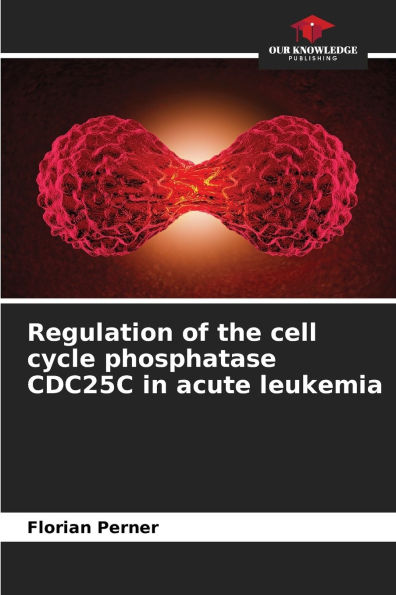
Regulation of the cell cycle phosphatase CDC25C in acute leukemia in Chattanooga, TN
Current price: $52.00
Barnes and Noble
Regulation of the cell cycle phosphatase CDC25C in acute leukemia in Chattanooga, TN
Current price: $52.00
Loading Inventory...
Size: OS
Internal tandem duplications in the FLT3 receptor gene (FLT3-ITD) are found in approximately 30% of patients with acute myeloid leukemia (AML). This oncogene influences various functions of the AML cell and leads to uncontrolled proliferation. Clinically, FLT3-ITD is associated with a poor prognosis in patients with AML. In this study, the influence of FLT3-ITD on the phosphatase CDC25C, which as a cell cycle regulator significantly influences the control of cell division, was investigated. The experiments described here showed that CDC25C is phosphorylated by FLT3-ITD and activated in an uncontrolled manner. In the leukemia cell model, a primarily protective effect of CDC25C was shown in the presence of oncogenic stress. The genetically non-intact cells were increasingly prevented from dividing by CDC25C. However, the simultaneous presence of the FLT3-ITD mutation resulted in a loss of this protective function. The significance of the mechanism described here therefore lies in the control of the response of the leukemia cell to damage within the DNA. However, CDC25C does not have an oncogenic function in the classical sense.
Internal tandem duplications in the FLT3 receptor gene (FLT3-ITD) are found in approximately 30% of patients with acute myeloid leukemia (AML). This oncogene influences various functions of the AML cell and leads to uncontrolled proliferation. Clinically, FLT3-ITD is associated with a poor prognosis in patients with AML. In this study, the influence of FLT3-ITD on the phosphatase CDC25C, which as a cell cycle regulator significantly influences the control of cell division, was investigated. The experiments described here showed that CDC25C is phosphorylated by FLT3-ITD and activated in an uncontrolled manner. In the leukemia cell model, a primarily protective effect of CDC25C was shown in the presence of oncogenic stress. The genetically non-intact cells were increasingly prevented from dividing by CDC25C. However, the simultaneous presence of the FLT3-ITD mutation resulted in a loss of this protective function. The significance of the mechanism described here therefore lies in the control of the response of the leukemia cell to damage within the DNA. However, CDC25C does not have an oncogenic function in the classical sense.
You May Also Like












More About Barnes and Noble at Hamilton Place
Barnes & Noble is the world’s largest retail bookseller and a leading retailer of content, digital media and educational products. Our Nook Digital business offers a lineup of NOOK® tablets and e-Readers and an expansive collection of digital reading content through the NOOK Store®. Barnes & Noble’s mission is to operate the best omni-channel specialty retail business in America, helping both our customers and booksellers reach their aspirations, while being a credit to the communities we serve.
2100 Hamilton Pl Blvd, Chattanooga, TN 37421, United States
Find Barnes and Noble at Hamilton Place in Chattanooga, TN
Visit Barnes and Noble at Hamilton Place in Chattanooga, TN
