
Home
Reducing Racial/Ethnic Disparities Reproductive and Perinatal Outcomes: The Evidence from Population-Based Interventions
Barnes and Noble
Loading Inventory...
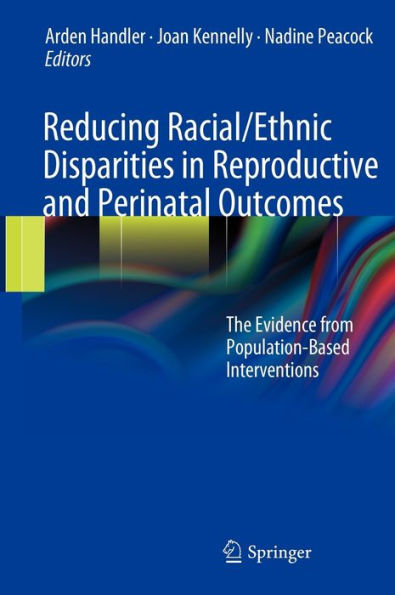
Reducing Racial/Ethnic Disparities Reproductive and Perinatal Outcomes: The Evidence from Population-Based Interventions in Chattanooga, TN
Current price: $169.99
Barnes and Noble
Reducing Racial/Ethnic Disparities Reproductive and Perinatal Outcomes: The Evidence from Population-Based Interventions in Chattanooga, TN
Current price: $169.99
Loading Inventory...
Size: Hardcover
Among women’s health concerns, reproductive issues, both prenatal and postpartum, hold particular prominence. Yet despite the many programs dedicated to improving women’s reproductive health, maternal and infant morbidity and mortality rates in minority communities remain unchanged—or have increased. Confronting this alarming statistic head-on,
Reducing Racial/Ethnic Disparities in Reproductive and Perinatal Outcomes
is the first book systematically examining public health interventions designed toward meeting this important and elusive goal. Its contributors offer the best thinking and practice on this complicated topic, clarifying the relationship between evidence-based medicine and evidence-based public health and its potential for increasing parity, considering interventions in the multiple contexts of women’s lives, reviewing the evidence base for each program or initiative featured, and describing methodologies for evaluating interventions. The resulting volume advocates for an integrative lifespan approach, including topics related to:
• Family planning
• STI and HIV/AIDS screening and treatment
• Smoking cessation and reducing exposure to environmental smoke
• Preconceptional well-woman care
• Depression screening and treatment
• Labor/delivery approaches and intrapartum care
• Emerging prenatal care interventions, from centering pregnancy to doula support
For professionals and graduate students in psychiatry, psychology, sociology, women’s health, and public health,
reframes a set of ongoing issues and guides the reader toward state-of-the-art solutions.
Reducing Racial/Ethnic Disparities in Reproductive and Perinatal Outcomes
is the first book systematically examining public health interventions designed toward meeting this important and elusive goal. Its contributors offer the best thinking and practice on this complicated topic, clarifying the relationship between evidence-based medicine and evidence-based public health and its potential for increasing parity, considering interventions in the multiple contexts of women’s lives, reviewing the evidence base for each program or initiative featured, and describing methodologies for evaluating interventions. The resulting volume advocates for an integrative lifespan approach, including topics related to:
• Family planning
• STI and HIV/AIDS screening and treatment
• Smoking cessation and reducing exposure to environmental smoke
• Preconceptional well-woman care
• Depression screening and treatment
• Labor/delivery approaches and intrapartum care
• Emerging prenatal care interventions, from centering pregnancy to doula support
For professionals and graduate students in psychiatry, psychology, sociology, women’s health, and public health,
reframes a set of ongoing issues and guides the reader toward state-of-the-art solutions.
Among women’s health concerns, reproductive issues, both prenatal and postpartum, hold particular prominence. Yet despite the many programs dedicated to improving women’s reproductive health, maternal and infant morbidity and mortality rates in minority communities remain unchanged—or have increased. Confronting this alarming statistic head-on,
Reducing Racial/Ethnic Disparities in Reproductive and Perinatal Outcomes
is the first book systematically examining public health interventions designed toward meeting this important and elusive goal. Its contributors offer the best thinking and practice on this complicated topic, clarifying the relationship between evidence-based medicine and evidence-based public health and its potential for increasing parity, considering interventions in the multiple contexts of women’s lives, reviewing the evidence base for each program or initiative featured, and describing methodologies for evaluating interventions. The resulting volume advocates for an integrative lifespan approach, including topics related to:
• Family planning
• STI and HIV/AIDS screening and treatment
• Smoking cessation and reducing exposure to environmental smoke
• Preconceptional well-woman care
• Depression screening and treatment
• Labor/delivery approaches and intrapartum care
• Emerging prenatal care interventions, from centering pregnancy to doula support
For professionals and graduate students in psychiatry, psychology, sociology, women’s health, and public health,
reframes a set of ongoing issues and guides the reader toward state-of-the-art solutions.
Reducing Racial/Ethnic Disparities in Reproductive and Perinatal Outcomes
is the first book systematically examining public health interventions designed toward meeting this important and elusive goal. Its contributors offer the best thinking and practice on this complicated topic, clarifying the relationship between evidence-based medicine and evidence-based public health and its potential for increasing parity, considering interventions in the multiple contexts of women’s lives, reviewing the evidence base for each program or initiative featured, and describing methodologies for evaluating interventions. The resulting volume advocates for an integrative lifespan approach, including topics related to:
• Family planning
• STI and HIV/AIDS screening and treatment
• Smoking cessation and reducing exposure to environmental smoke
• Preconceptional well-woman care
• Depression screening and treatment
• Labor/delivery approaches and intrapartum care
• Emerging prenatal care interventions, from centering pregnancy to doula support
For professionals and graduate students in psychiatry, psychology, sociology, women’s health, and public health,
reframes a set of ongoing issues and guides the reader toward state-of-the-art solutions.
You May Also Like









More About Barnes and Noble at Hamilton Place
Barnes & Noble is the world’s largest retail bookseller and a leading retailer of content, digital media and educational products. Our Nook Digital business offers a lineup of NOOK® tablets and e-Readers and an expansive collection of digital reading content through the NOOK Store®. Barnes & Noble’s mission is to operate the best omni-channel specialty retail business in America, helping both our customers and booksellers reach their aspirations, while being a credit to the communities we serve.
2100 Hamilton Pl Blvd, Chattanooga, TN 37421, United States
Find Barnes and Noble at Hamilton Place in Chattanooga, TN
Visit Barnes and Noble at Hamilton Place in Chattanooga, TN