
Home
Red Coats and Wild Birds: How Military Ornithologists Migrant Birds Shaped Empire
Barnes and Noble
Loading Inventory...
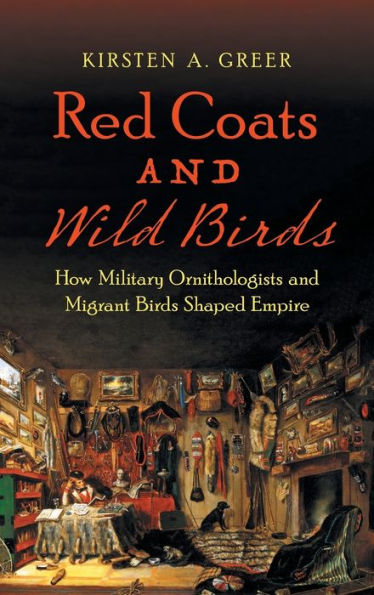
Red Coats and Wild Birds: How Military Ornithologists Migrant Birds Shaped Empire in Chattanooga, TN
Current price: $99.00
Barnes and Noble
Red Coats and Wild Birds: How Military Ornithologists Migrant Birds Shaped Empire in Chattanooga, TN
Current price: $99.00
Loading Inventory...
Size: Hardcover
During the nineteenth century, Britain maintained a complex network of garrisons to manage its global empire. While these bases helped the British project power and secure trade routes, they served more than just a strategic purpose. During their tours abroad, many British officers engaged in formal and informal scientific research. In this ambitious history of ornithology and empire, Kirsten A. Greer tracks British officers as they moved around the world, just as migratory birds traversed borders from season to season.
Greer examines the lives, writings, and collections of a number of ornithologistofficers, arguing that the transnational encounters between military men and birds simultaneously shaped military strategy, ideas about race and masculinity, and conceptions of the British Empire. Collecting specimens and tracking migratory bird patterns enabled these men to map the British Empire and the world and therefore to exert imagined control over it. Through its examination of the influence of bird watching on military science and soldiers’ contributions to ornithology,
Red Coats and Wild Birds
remaps empire, nature, and scientific inquiry in the nineteenthcentury world.
Greer examines the lives, writings, and collections of a number of ornithologistofficers, arguing that the transnational encounters between military men and birds simultaneously shaped military strategy, ideas about race and masculinity, and conceptions of the British Empire. Collecting specimens and tracking migratory bird patterns enabled these men to map the British Empire and the world and therefore to exert imagined control over it. Through its examination of the influence of bird watching on military science and soldiers’ contributions to ornithology,
Red Coats and Wild Birds
remaps empire, nature, and scientific inquiry in the nineteenthcentury world.
During the nineteenth century, Britain maintained a complex network of garrisons to manage its global empire. While these bases helped the British project power and secure trade routes, they served more than just a strategic purpose. During their tours abroad, many British officers engaged in formal and informal scientific research. In this ambitious history of ornithology and empire, Kirsten A. Greer tracks British officers as they moved around the world, just as migratory birds traversed borders from season to season.
Greer examines the lives, writings, and collections of a number of ornithologistofficers, arguing that the transnational encounters between military men and birds simultaneously shaped military strategy, ideas about race and masculinity, and conceptions of the British Empire. Collecting specimens and tracking migratory bird patterns enabled these men to map the British Empire and the world and therefore to exert imagined control over it. Through its examination of the influence of bird watching on military science and soldiers’ contributions to ornithology,
Red Coats and Wild Birds
remaps empire, nature, and scientific inquiry in the nineteenthcentury world.
Greer examines the lives, writings, and collections of a number of ornithologistofficers, arguing that the transnational encounters between military men and birds simultaneously shaped military strategy, ideas about race and masculinity, and conceptions of the British Empire. Collecting specimens and tracking migratory bird patterns enabled these men to map the British Empire and the world and therefore to exert imagined control over it. Through its examination of the influence of bird watching on military science and soldiers’ contributions to ornithology,
Red Coats and Wild Birds
remaps empire, nature, and scientific inquiry in the nineteenthcentury world.
You May Also Like

















More About Barnes and Noble at Hamilton Place
Barnes & Noble is the world’s largest retail bookseller and a leading retailer of content, digital media and educational products. Our Nook Digital business offers a lineup of NOOK® tablets and e-Readers and an expansive collection of digital reading content through the NOOK Store®. Barnes & Noble’s mission is to operate the best omni-channel specialty retail business in America, helping both our customers and booksellers reach their aspirations, while being a credit to the communities we serve.
2100 Hamilton Pl Blvd, Chattanooga, TN 37421, United States
Find Barnes and Noble at Hamilton Place in Chattanooga, TN
Visit Barnes and Noble at Hamilton Place in Chattanooga, TN