
Home
Reading T. S. Eliot: The Rose Garden and After (1930s-1950s)
Barnes and Noble
Loading Inventory...
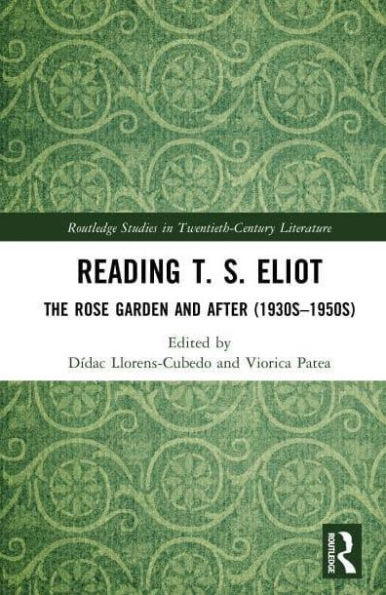
Reading T. S. Eliot: The Rose Garden and After (1930s-1950s) in Chattanooga, TN
Current price: $190.00
Barnes and Noble
Reading T. S. Eliot: The Rose Garden and After (1930s-1950s) in Chattanooga, TN
Current price: $190.00
Loading Inventory...
Size: Hardcover
In “Burnt Norton,” the poetic speaker enters a rose garden, a space of envisioned timeless illumination. This experience sets in motion a spiritual quest, which will confer unity upon
Four Quartets
. For the poet himself, it inaugurates a creative phase (mid-1930s to late-1950s) that strengthens his sense of faith and community. Eliot, increasingly interested in playwriting, completed his meditative masterpiece (
) while undertaking his ambitious project to revive verse drama. Devotion to drama reflects Eliot’s stronger social awareness, leading him to adopt popular forms: the pageant (
The Rock
), drawing-room comedy (
The Cocktail Party
,
The Confidential Clerk
, and
The Elder Statesman
), and children’s literature (
Old Possum’s Book of Practical Cats
). As a critic, he widened his scope to write about social issues (
The Idea of a Christian Society
Notes Towards a Definition of Culture
). These aspects of Eliot’s career are influenced by concrete historical and biographical circumstances such as the impact of war and his ongoing relationship with Emily Hale, who played a decisive role as his muse, guide, and mentor in his newfound passion for the stage.
Reading T. S. Eliot: The Rose Garden and After (1930s-1950s)
presents original work by numerous scholars addressing these facets of Eliot’s writing.
Four Quartets
. For the poet himself, it inaugurates a creative phase (mid-1930s to late-1950s) that strengthens his sense of faith and community. Eliot, increasingly interested in playwriting, completed his meditative masterpiece (
) while undertaking his ambitious project to revive verse drama. Devotion to drama reflects Eliot’s stronger social awareness, leading him to adopt popular forms: the pageant (
The Rock
), drawing-room comedy (
The Cocktail Party
,
The Confidential Clerk
, and
The Elder Statesman
), and children’s literature (
Old Possum’s Book of Practical Cats
). As a critic, he widened his scope to write about social issues (
The Idea of a Christian Society
Notes Towards a Definition of Culture
). These aspects of Eliot’s career are influenced by concrete historical and biographical circumstances such as the impact of war and his ongoing relationship with Emily Hale, who played a decisive role as his muse, guide, and mentor in his newfound passion for the stage.
Reading T. S. Eliot: The Rose Garden and After (1930s-1950s)
presents original work by numerous scholars addressing these facets of Eliot’s writing.
In “Burnt Norton,” the poetic speaker enters a rose garden, a space of envisioned timeless illumination. This experience sets in motion a spiritual quest, which will confer unity upon
Four Quartets
. For the poet himself, it inaugurates a creative phase (mid-1930s to late-1950s) that strengthens his sense of faith and community. Eliot, increasingly interested in playwriting, completed his meditative masterpiece (
) while undertaking his ambitious project to revive verse drama. Devotion to drama reflects Eliot’s stronger social awareness, leading him to adopt popular forms: the pageant (
The Rock
), drawing-room comedy (
The Cocktail Party
,
The Confidential Clerk
, and
The Elder Statesman
), and children’s literature (
Old Possum’s Book of Practical Cats
). As a critic, he widened his scope to write about social issues (
The Idea of a Christian Society
Notes Towards a Definition of Culture
). These aspects of Eliot’s career are influenced by concrete historical and biographical circumstances such as the impact of war and his ongoing relationship with Emily Hale, who played a decisive role as his muse, guide, and mentor in his newfound passion for the stage.
Reading T. S. Eliot: The Rose Garden and After (1930s-1950s)
presents original work by numerous scholars addressing these facets of Eliot’s writing.
Four Quartets
. For the poet himself, it inaugurates a creative phase (mid-1930s to late-1950s) that strengthens his sense of faith and community. Eliot, increasingly interested in playwriting, completed his meditative masterpiece (
) while undertaking his ambitious project to revive verse drama. Devotion to drama reflects Eliot’s stronger social awareness, leading him to adopt popular forms: the pageant (
The Rock
), drawing-room comedy (
The Cocktail Party
,
The Confidential Clerk
, and
The Elder Statesman
), and children’s literature (
Old Possum’s Book of Practical Cats
). As a critic, he widened his scope to write about social issues (
The Idea of a Christian Society
Notes Towards a Definition of Culture
). These aspects of Eliot’s career are influenced by concrete historical and biographical circumstances such as the impact of war and his ongoing relationship with Emily Hale, who played a decisive role as his muse, guide, and mentor in his newfound passion for the stage.
Reading T. S. Eliot: The Rose Garden and After (1930s-1950s)
presents original work by numerous scholars addressing these facets of Eliot’s writing.
You May Also Like









More About Barnes and Noble at Hamilton Place
Barnes & Noble is the world’s largest retail bookseller and a leading retailer of content, digital media and educational products. Our Nook Digital business offers a lineup of NOOK® tablets and e-Readers and an expansive collection of digital reading content through the NOOK Store®. Barnes & Noble’s mission is to operate the best omni-channel specialty retail business in America, helping both our customers and booksellers reach their aspirations, while being a credit to the communities we serve.
2100 Hamilton Pl Blvd, Chattanooga, TN 37421, United States
Find Barnes and Noble at Hamilton Place in Chattanooga, TN
Visit Barnes and Noble at Hamilton Place in Chattanooga, TN
